Porsche Cayenne running reports have been thin on the ground lately as not used the car much since November, when I disappeared to Kenya for the Safari Rally. After that, I cleared off to Spain for a fortnight before spending Christmas at home.
The UK weather was mild through the end of last year – mild enough to use the Clio Cup or our Polo on summer tyres – but the mornings recently turned frosty and we finally had some snow here last weekend. It was time to bring the Cayenne into service, and try out some new winter tyres that were fitted to the car at the start of November.
You may not have heard of the tyres in question: Gislaved Euro Frost 5. Founded in Gislaved, Sweden in 1893, Gislaved Tyres built a useful reputation for their ability in snow and icy conditions. When the company was a century old, it was bought by Continental AG and remains part of that group to this day. So the Gislaved brand has some credibility.
I have previously run both Pirelli and Continental winter tyres on the Cayenne, but part-worn versions of either are hard to find and tend to be a few years old. The original equipment Pirelli Scorpions in particular go rock hard after a while and are useless in cold weather at that stage, so when I found a good price online for Gislaveds in the Cayenne’s size of 255/55 R18, I bought a set and had them fitted and balanced.
I bolted them to the Cayenne at home (in my new garage – nice one) as part of some work to change driveshaft bolts and other bits so only drove them long enough to move the car around. Then I headed off to Africa. When we got the Cayenne out last week, I used it on the school run for a few days, then did a few client visits in it and tried the tyres at higher speed. Finally there was some snow last Sunday so that was worth trying too.
Given the cost of just £86 per tyre – £344 for all four – I have to say I am pleased with performance. They didn’t need much weight to balance and are very comfortable on the car. The Cayenne tracks well at speeds up to the maximum rating for these tyres (130mph) and the Gislaveds are not as noisy as some reviews claim. No more noisy than Pirelli Scorpions, that’s for sure. Economy is unchanged at 18 miles per gallon on LPG. Dry grip is fine: slightly more squirm than a Continental summer tyre but not entirely lifeless. There is no tyre squeal on hard dry cornering. But it is on icy roads where these tyres do their thing.
No surprise that the Gislaveds recently made it to the final of Auto-Bild’s winter tyre test, beating more than thirty alternatives. Up against the market leading brands – all of whom advertise with Auto-Bild – these tyres rated in the high teens overall but the big picture was quite encouraging.
On frost-covered roads where other cars are clearly being careful, the Cayenne on Gislaveds is very surefooted. Icy corners present no problems for the Gislaveds: a tiny little slide on sheet ice, which stops almost as soon as it starts, thanks in part to PASM but aided by the grippy tread compound, which feels sticky to the fingers even in sub-zero temperatures.
We often argue over N-rated tyres on Porsche cars but so far I find nothing much wrong with these tyres for the price I paid. Michelin Latitude Alpin XLs in N-rated 109V cost £50 more apiece, so £200 extra a set for tyres that will come off in February/March and be replaced by smoother summer rubber on the 19-inch wheels. Doesn’t seem to make that much sense when winters are this mild nowadays.
Elsewhere on the Cayenne, nothing much to report. The odometer has just hit 154,000 miles and while I have written a for sale ad for it, it’s not been advertised as yet and is unlikely to go on sale anytime soon. I’ve bought some grey carpet to trim the new false boot floor and the starter is getting ever-slower in this cold weather so I reckon it is coming up for rebuild. I’ve got a used one in the garage to send out. Also, the plastic handle to remove the detachable towball has snapped: I blame the last man to borrow the car for overtightening it. He knows who he is!
Had a bit of a Porsche blog sabbatical while working on other projects and building my new Porschehaus garage & office. Porsche’s Mission E concept, a new 911 with turbochargers as standard and Magnus smashing his 911 into a parked truck with a journalist on board didn’t get me excited enough to pick up a keyboard, but today’s news regarding Porsche’s parent Volkswagen kickstarted some action.
A year after this story first broke in the UK’s Sunday Times (as reported on ConsultEV), America’s Environmental Protection Agency has ordered the recall of almost half a million Volkswagen group cars sold in the US since 2008, after uncovering cheat software in Volkswagen group diesel cars designed to lower emissions when being run through emissions testing. The defeat device software knocks Nitrogen Dioxide emissions down for testing, but NO2 emissions are up to 40 times higher than levels permitted in the USA at all other times.
Toxic by inhalation, Kings College in London blamed Nitrogen Dioxide for 9,500 deaths in the city during 2010. The Nitrogen Dioxide emissions cheat software has so far been located on just five VW And Audi cars tested by the EPA, but every car found to be running the cheat software will incur a penalty of some $40k for its manufacturer. The maths apparently totals to almost $18 billion for Volkswagen in the US.
The bigger story will come from the fallout in Volkswagen’s other markets, paticularly back home in Germany. Also count on a slew of class action lawsuits against VW in the super-litigious USA. Perhaps the most bemusing aspect to this story is that emissions cheating is absolutely commonplace in vehicle testing. From my own conversations with car manufacturer-employed friends over the years, it seems that most if not all modern manufacturer ECUs are programmed with cheat software, designed to recognise throttle patterns common to rolling road emissions testing and shut down as much combustion as possible while the tests are being carried out.
A recent European Union report says that real-world emissions from cars can be up to 40% higher than seen in emissions approval testing, so this Volkswagen story is just the tip of the iceberg. You’d think the EPA would have known about this all along. I smell a rat in a Tesla lab coat, or maybe an EPA bod who stopped getting hush money. Either way, you know the discovery is no real shock to the emissions testing system: it’s a PR campaign designed to shock consumers and batter VW.
How does this affect Porsche? Well, imagine if your dad was fined $18 billion and 50,000 Americans started suing him. You would bloody know about it.
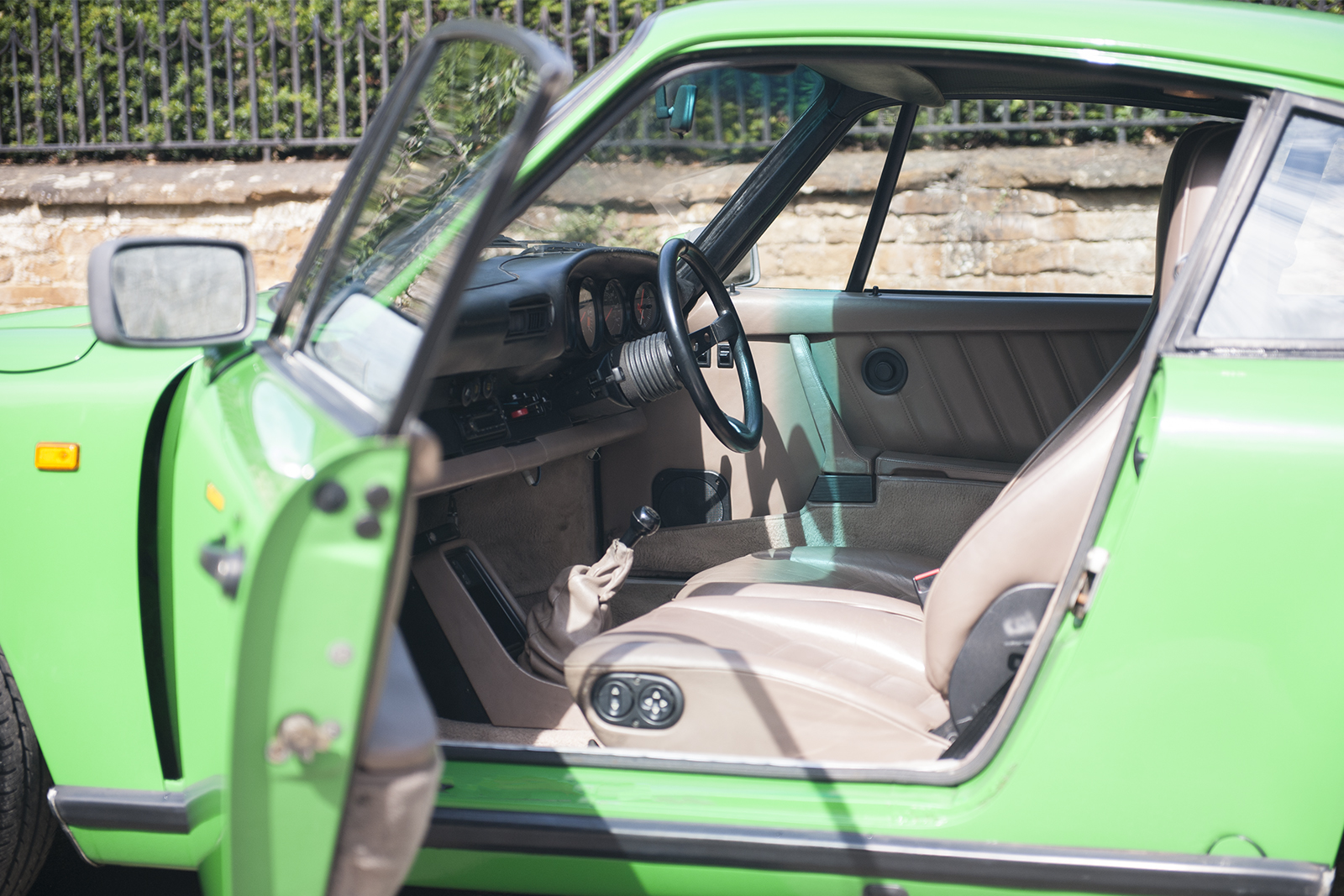
Regular readers will know that I occasionally sell classic Porsche cars for friends. My designer friend James has asked me to sell this interesting 911 for him, due to lack of time to use it (car is now sold – thanks all). It’s a 1985 Porsche 911 3.2 Carrera Coupe with above average mileage, but it’s had a huge amount of work done professionally and is now a very nice car. I’ll be putting it on eBay and Pistonheads later, so get in touch if it’s something you’re looking for.
Porsche 911 Restoration
Bought by James in 2007, this right-hand drive 1985 911 Carrera showed 185,000 miles on the clock, had been much enjoyed by its one previous owner and needed some restoration. James took the car to Tuthill Porsche and had the bodywork restored: the front wings were replaced, and common impact-bumper 911 rust spots like the inner front wing tops, front bumper mounts, windscreen apertures, sills and kidney bowls were repaired before the car was repainted in its apparently original colour of Viper Green.
At this time, the aluminium bumpers were also replaced with lightweight Ruf-style bumpers: anyone who has taken the bumpers off their impact-bumper car knows how much weight that saves and how much better the car feels to drive. Impact-bumper blades could easily be refitted if one preferred that style, or fit Speedline wheels for the full Ruf look.
Classic Porsche Maintenance Costs
The original colour is Speedway Green, which is a shade away from its current colour. Greens like this were not offered on 3.2 Carrera Coupes, so consider this car one of one. I have the bills for the last seven years and more than £10,000 has been spent on mechanical upkeep at Tuthills, including a full gearbox rebuild with replacement crownwheel and pinion, and a recent service, new brakes, new Bosch battery and MOT, costing £1500. This does not include the body restoration or the engine rebuild, both carried out at Tuthills.
I spent most of yesterday driving this 911 and it is superb on the road: as good as any 3.2 I have ever driven. The rebuilt engine pulls cleanly and is very strong on power: a treat to use with that rebuilt Porsche 915 transmission. The interior is good: Grey Beige leather with electric front seat height, all working fine. Hand stitched extended leather to door pulls and storage pocket lids: another factory option.
Porsche 911 3.2 Carrera for sale
Seats are in good shape, with only minor bolster wear showing on the driver’s side. The 911 also has a Momo steering wheel, which is very nice to use. The sunroof works well, as does the optional rear wiper on the flat rear engine cover. Rear seats are in nice condition: no rear seat belts are fitted. The car has a Sony CD player and comes with the jack, compressor and the original toolkit (that needs restoration but a nice job for someone).
I had a good look around the car and found a few minus points.
The sunroof seal needs replacing
Crack in the front bumper under one side grille
The leather dashtop has a small split to the left of the binnacle
Optional black headlining sagging around the sunroof
Front wiper arms a bit scruffy
One rear floor carpet is missing: an aftermarket mat is in its place
Heater works but service invoice notes that the flaps could do with replacing
Bodywork is always the big concern on a 911, and no 911 is rust free. Expect to do a bit here and there over the next five years to keep the bodywork in A1 condition. I can see a few little bits but nothing overly concerning. Other than that it looks a good example and drives exceptionally well on very good tyres. I will update this post with more history as and when it becomes available.
Classic Porsche 911 Prices
As for price, let me put my professional Porsche valuations hat on for this bit. Solid 911 Carreras in similar condition generally hit the market with 125-135k miles and now sell for about £38-40k privately. They also usually come with Fuchs wheels: a set would cost circa £1500. This car has clocked up about 25k miles since restoration, so now has 212k miles on the clock, but remember this Porsche has had a huge amount invested in its upkeep over the last eight years and I cannot fault how it drives.
Adjusting for the mileage, the absence of Fuchs – which most buyers will budget to fit – and making a generous adjustment for the condition issues raised above, I’ve set a selling price of £24,995 (now sold) to buy a great classic 911 that is ready to use right now.
The car is with me near Banbury. I can pick you up from the nearest train station (Banbury) or if you are up in Scotland or in Ireland etc, you can fly in to Birmingham and catch a direct train down to inspect. It is ready to drive home once taxed and insured. I can also organise transport to any UK port for overseas shipping. Contact me with any questions.
In the week that German prosecutors suspended investigations into twelve members of the Porsche supervisory board accused of 2008 stock market manipulation by a number of hedge funds, I resolved the battle between my Porsche 944 and a Worcestershire hedge.
Long-time readers will remember that I bought this early 944 on eBay in 2007, and collected it from Chichester, where it had lain unloved in a leaky garage for more than ten years. It was a case of out of the frying pan into the fishery for the 944, as I parked it on a friend’s farm & fishing lake, where it was subsequently absorbed into the landscape. Now he wants his farmyard back to build a house on, the 944 had to be dragged out of the way.
Arriving at the farm with Rob Campbell of Porsche bodywork restorers, Racing Restorations, both he and my farmer mate were sure that the car would be ruined after five years sitting in the brambles. Obviously I was on the 944’s side: I knew it had survived.
We set about pulling the hedge apart, but the farmer insisted we leave it alone so it looked better after the car was removed – hilarious given the state of the place, but he is the boss. I shifted a few thorns out of the way and hooked a chain onto the front anti-roll bar, we attached that to a tractor and the car was pulled free. Nothing like a nice bit of weekend gardening.
The 944 looks fine: plenty of dirt but there’s no more rust than it had when it was parked up. One sill is holed and the battery tray still leaks: we can easily sort all that out. I need to find a bit of storage near either Banbury or Daventry where the 944 can sit until my garage gets a roof on next month, then it can come home for a bit and I’ll do a few jobs, such as fitting a repaired fusebox and loom and trying to get it started.
Here’s some video of the moment when it was pulled from the undergrowth. A female friend compared it to childbirth: yikes!
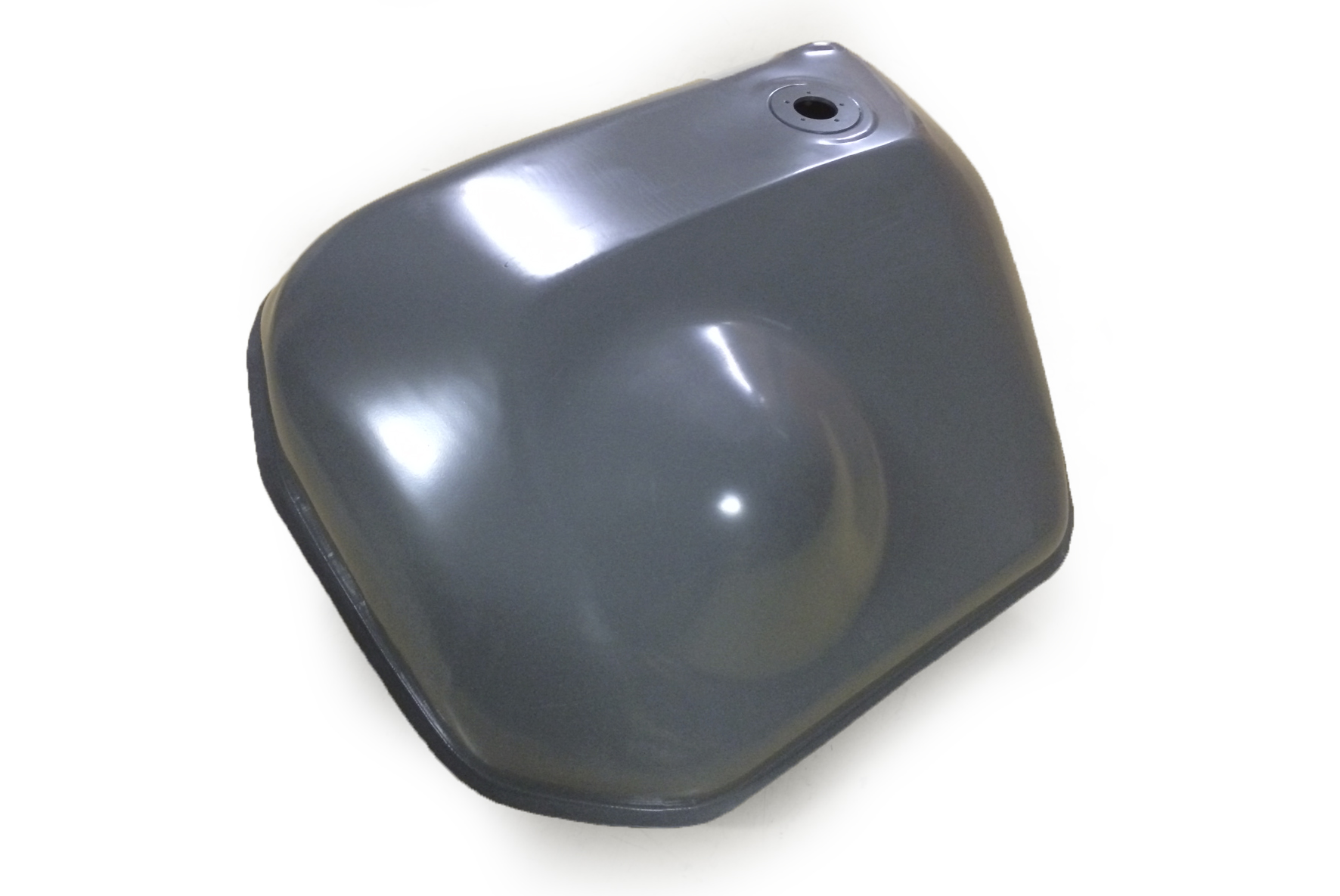
EB Motorsport has just added a 100-litre steel fuel tank to its ever-expanding range of classic Porsche 911 parts.
Recreating the classic 911 sports purpose tank, which was available as a factory option on pre-1973 road and race 911s from the end of 1966, the all-steel fuel tank is internally baffled to keep the contents under control on track or in press-on motoring.
“We’d been looking for a top quality fuel tank for our 1965 SWB 911 race car for a while,” says EB’s Mark Bates, sideways hero of last month’s Goodwood Aldington Trophy. “As with so many Porsche parts nowadays, it’s hard to find something that will last as long as the original parts. After speaking to various people, we found a supplier who could manufacture to our specifications in high grade steel that would not start to rust soon after fitment.”
The 100-litre steel tanks for Porsche 911 were originally available as either side- or centre-fill. Side fill using the standard wing-mounted petrol filler flap was normally used on road cars, but was also seen on a number of ST rally models. Centre fill was more common on racing cars, including the 911R.
EB Motorsport offers both options. The standard tank comes fitted with the side filler neck and is finished in black, ready to fit in the car. The tank can also be supplied with a blank top, finished in grey primer, ready to be fitted with the optional centre filler neck or professional quick release race fittings.
The 100-litre fuel tank with or without side fill costs £2200. The optional centre filler neck and cap are priced at £285. An extended fuel sender, to allow accurate reading of the fuel level in the larger capacity tank, adds £295 to the total.
All prices plus VAT and postage. Contact EB Motorsport for more details via the website at www.eb-motorsport.com.
This website uses cookies to improve your experience. We'll assume you're ok with this, but you can opt-out if you wish.AcceptRead More
Privacy & Cookies Policy
Privacy Overview
This website uses cookies to improve your experience while you navigate through the website. Out of these, the cookies that are categorized as necessary are stored on your browser as they are essential for the working of basic functionalities of the website. We also use third-party cookies that help us analyze and understand how you use this website. These cookies will be stored in your browser only with your consent. You also have the option to opt-out of these cookies. But opting out of some of these cookies may affect your browsing experience.
Necessary cookies are absolutely essential for the website to function properly. This category only includes cookies that ensures basic functionalities and security features of the website. These cookies do not store any personal information.
Any cookies that may not be particularly necessary for the website to function and is used specifically to collect user personal data via analytics, ads, other embedded contents are termed as non-necessary cookies. It is mandatory to procure user consent prior to running these cookies on your website.