by John Glynn | Nov 4, 2016 | Classic Porsche Blog, Art and Books
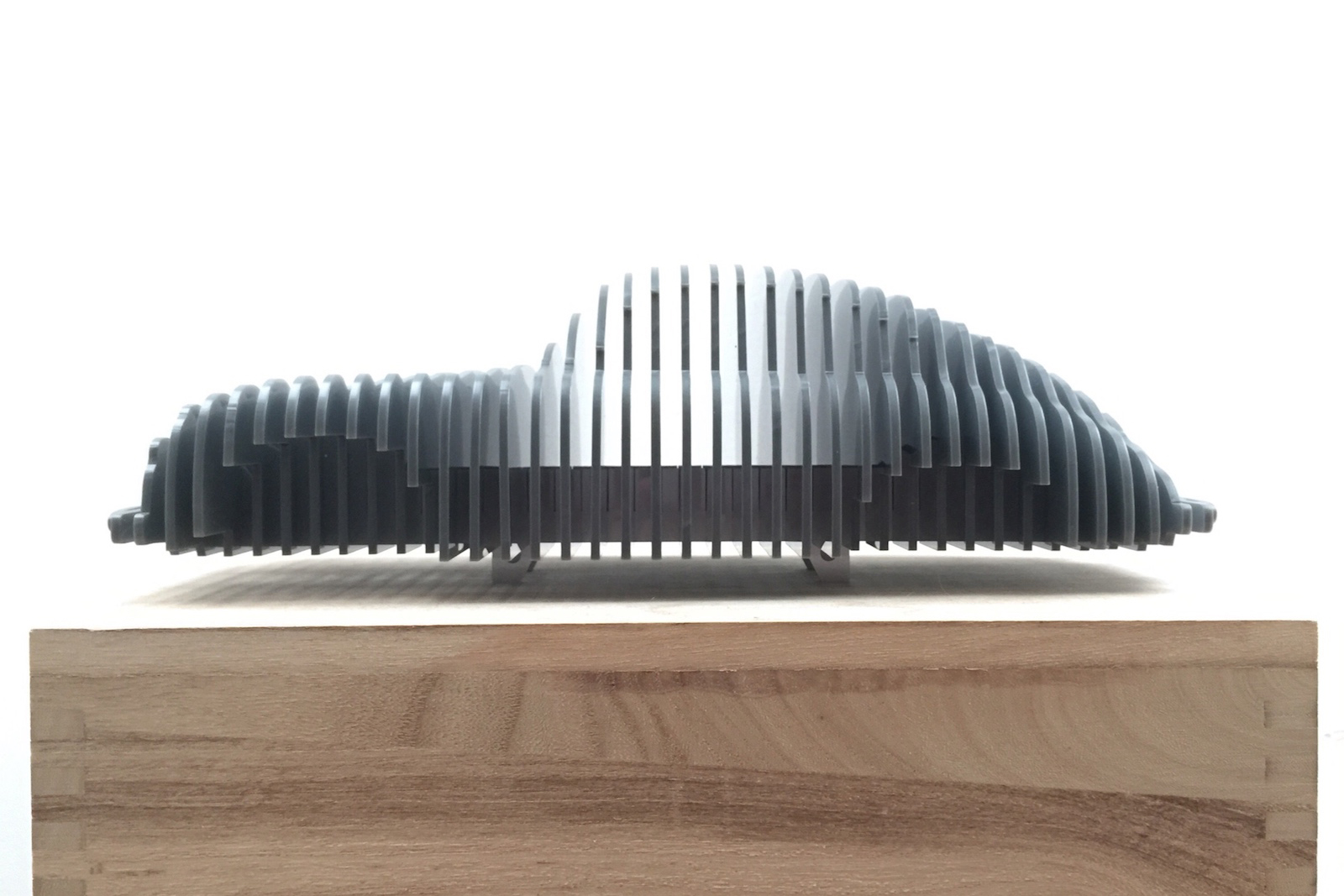
As classic Porsches assume the air of treasured possessions such as fine art or jewellery, so more artful representations of the cars arrive on the market to remind us of our passion. Many artists have produced representations of the classic Porsche 911 and 356 models, but these recent sculptures from Rotterdam artist, Stefan de Beer, really caught my eye.
The former car restorer and trained artist has created his Porsche studies with long-time creative partner, Brigitte Broer. The shapes speak for themselves, but I really love the concept of louvred sections, which call to mind the cooling fins on an air-cooled Porsche engine.

“After a successful career as a racecar designer, I returned to my early love for art and architecture,” says Stefan. “Long ago I started my education at the Academy of the Arts, after a few years I switched to car design at TU Delft, the Polytechnisch Bureau Arnhem and the Art Center College of Design in Switzerland. After twelve years as a car designer and engineer, I sold my business and returned to the Academy to start all over again and study art and architecture. Since 2007, I have found a perfect balance between art, architecture and old sportscars.”
Each of Stefan’s sculptures begins with 3D laser scan of a full-size car. CAD techology then is employed to generate a digital representation, at which point the artist select his sections, and transfers those dimensions to a pattern-making machine.
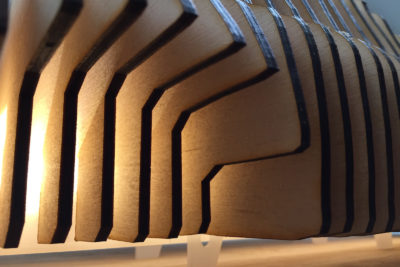
The laser pattern cutter transfers the profiles to high quality acrylic and wood materials for just the right effect. Each sculpture is then assembled by hand. The shapes can also be fitted with a lighting attachment, and even engraved with custom registration plates. The last bit might be a step too far for me – less is more, after all. Every piece comes with a ‘Certificate of Authenticity’, bearing the unique number of the sculpture and the signatures of the makers.
We’ve seen lots of other louvres on classic Porsches this year but none have felt as fresh and airy as these. Order direct from the partnership here.

by John Glynn | Jun 26, 2016 | Market & Prices, Classic Porsche Blog
Britain has voted to leave the EU and the pound has taken the first of what is likely to be a series of nosedives, as the implications of the vote and the political fallout play through the stock markets.
Economic uncertainty is now a major talking point and consumer confidence has been hit, with a couple of Porsche dealers I spoke to on Friday reporting cancelled deals in the Brexit vote aftermath. Buying a £70k Porsche for weekends seems superfluous for some given the unknown future that British workers are facing, not to mention the enhanced investment oportunities that became available on the FTSE 100 after the vote, where shares in banks, airlines and UK housebuilders fell by up to 40%.
The strongest enquiries on Friday came from buyers with Euros to spend. Some dealers had stockpiled LHD Porsches ready to list, which may have been a canny play, most effective on rarer Porsche models with a high ticket price: GT3 RS 4.0s, Carrera GTs and the like. But cheaper classic Porsches also look slighty better value, with a £50k Porsche costing $68,520 or €61,919 on June 26 compared to $73,463 or €65,110 on June 22nd, the day before the UK referendum*.
(Update July 1: £50k has now slipped to $67,162/€60,496)
Porsche prices down 7% (for US buyers)
Falls of 7% in the dollar price or 5% in euros over four days may be just the start. At the time of the referendum, many dealers had still not corrected asking prices for softening classic car sentiment seen since the start of 2016, so that has yet to be implemented. Dealers now also face falling domestic demand from uncertain consumers, who will likely avoid big-ticket purchases until they know what the future of UK plc holds for them.
What could happen next? One scenario (and one that played out in the 2008 crash) is that, as the consequences of the referendum vote and EU exit begin to take hold and luxury car sales tail off, there will be casualties. Traders holding stock by means of a bank stocking loan or private investment will come under pressure should they be unable to make their repayment schedules. Repossessed stock would likely end up at auction, selling for knock-down prices, which will further undermine public confidence. This is not going to happen immediately, but the likelihood of recession grows with every day there is instability at the top of UK governance.
Second Referendum
Alternative scenarios currently doing the rounds include the possibility of a second referendum to head off the disintegration of the United Kingdom, as Scotland voted to stay in the EU and the winning margin for Leave was less than 2% on a turnout of less than 75%. A second referendum seems unlikely at the minute, but as the original referendum was not legally binding and an online petition called for a second vote captured 3 million signatures in less than three days, who knows what might happen next.
Another possibility is that it will all be fine, with the UK economy entering a period of prolonged expansion, jobs for all and revitalised public services. However likely one feels this may be, it’s not going to happen next week, so the short term outlook is less positive. Prices will feel some effect.
*source: fxtop.com

by John Glynn | Jun 20, 2016 | Market & Prices, Porsche News
I had an interesting conversation with a well connected dealer friend a few days ago regarding the UK market for RHD Porsche 991 GT3 RS, which suggested that the days of six-figure markups for the latest 911 RS were over and done.
A nice RS had just arrived in stock and was offered to a number of prospects at well below the average market price. Some of his would-be buyers replied with claims of cars being offered behind closed doors for much less than the price my friend offered. Evidence went backwards and forwards until a much lower price was eventually agreed as the RS seller was keen to move on. The seller still cleared the best part of £45k profit out of the deal after paying the dealer’s fixed-price commission.
Average Market Prices for Porsche 991 GT3 RS
Average selling prices for 991 GT3 RS are not easy to calculate without access to accurate transaction data, but the average asking price is pretty straightforward. The premier classified ads site currently has 22 991 GT3 RS models on offer in the UK with prices from £195,000 to £289,995 (22 is not exactly what one might call rare). Average asking price for these cars is a heady £246,000.
This data does not tell the whole story. Amongst these 22 911s are cars with far more than delivery mileage – over 3,000 miles in some cases – and one zero-mileage LHD example. Stripping these cars out and confining data to just RHD cars with fewer than 400 miles on the clock reduces our sample to just twelve cars. Average asking price for these cars jumps to £252,270.
Cost New versus Average Price for 991 GT3 RS
A brand new Porsche 991 GT3 RS bought with no options will set you back £130,296 cost new from Porsche Cars Great Britain, but no one buys a standard RS. A sensible options package of decent paint (£1800), leather trim to the 918 seats (£2k), LED lights (£2k), Front Axle Lift (£2k), PCCB ceramic brakes (£6k), Sport Chrono (£1k) and PCM with Sound Package Plus and phone prep (approx £3k) adds the best part of £20k, which takes the cost new to £149,755.
This £150k list price is for a brand new car with 10 miles or less on delivery, built to your spec and you are the first owner in the log book. The only snag is you cannot order one new: production has been allocated to an oversubscribed list. However, it does indicate what the manufacturer believes their car should be priced at, given the cost to build and their standard margin.
Taking this £150k list price against today’s average UK asking price of £252,270, we see a premium of more than £100k for a car that’s already had one or more owners and may come with up to 400 miles on the clock. If you think that sounds pretty extreme, there is more than one story of a slot on the 991 GT3 RS waiting list being sold for as much as £200k over list at the height of the fever.
Porsche 991 GT3 RS Price Premiums Shrinking
I’ve not driven a 991 GT3 or an RS – these cars simply do not interest me as a driver – but I have looked at plenty up close. The overall impression is of a car that can get away with a £150k price tag, but not a hundred thousand pounds more than that. Lack of supply when the cars were newly-announced sent prices soaring, but now that the RS is two year-old technology and the demand from collectors has likely been satisfied, the low supply premiums are shrinking.
With prices of £190-195k rumoured for cars sold under the radar, that puts the premium closer to £40k for a delivery mileage, one-owner 991 GT3 RS. No doubt some will insist these prices are not happening, but I do trust my source.
Porsche is not building any more 991 GT3 RSs as far as I know, so the chances of these cars – even 10k-mile examples – selling for less than list price in the near future is unlikely, but exactly where over-list premiums will settle is uncertain for now. Will they drop much below £40k? That is entirely possible: premiums usually keep coming down until there is a sudden injection of demand, or supply shrinks as the market soaks up everything available.
Common drivers behind increased demand is a screamingly low price (exchange rate changes for overseas RHD buyers) or a sudden influx of liquidity to the buyer pool, such as city bonuses, pension payouts, capital gains tax breaks or similar. It’s unlikely that a vote against Brexit in this Thursday’s referendum would cause RS prices circa £260k to suddenly look sensible if people are paying less than £200k elsewhere, but there would likely be a lift in demand for sensibly-priced desirable cars like the 991 GT3 RS if economic uncertainty was eased.
Given this prospect, sensible dealers might be considering a reprice right about now. £200k is still £50k profit on list for a well-specced example. Perhaps sellers are not paying attention to the rest of the market, or banking on a big hit to Sterling exchange rates on Thursday. That’s a pretty big gamble if there are only ten buyers out there and they all do deals tomorrow and Wednesday.

by John Glynn | Jun 15, 2016 | Porsche News
Interesting vibes on the grapevine today, as rumours emerged of an imminent consolidation of Volkswagen’s various parts businesses ahead of a potential asset sale to cover the dieselgate bills, with Ducati and Scania Trucks also mooted as possible sell-offs.
AutoNews.com reports that former Porsche CEO and now Volkswagen boss, Matthias Müller, outlined his plans for a strategic review of Volkswagen’s twelve vehicle brands and numerous side businesses with the VW Supervisory Board on Tuesday. The chief’s strategy is said to have met with approval and is being lined up for public release. No doubt the timing is crucial: this month’s delayed AGM is fast approaching and there has been little support for Volkswagen’s move to ratify the decisions of its management in the dieselgate crisis to date.
Shareholders don’t trust Volkswagen management
Three powerful investor groups in Germany, Brussels and London working on behalf of shareholders (apparently including the City of New York’s pension fund) are distinctly unimpressed with Volkswagen’s handling of dieselgate. The watchdogs are calling for the appointment of independent auditors to investigate the “entire complex surrounding the manipulated software for Volkswagen diesel cars”, in place of VW’s chosen agents. As the Porsche family owns 52% of VW shares and voting rights, this is unlikely to be voted through, in which case the groups are reserving the right to push for a court to appoint a special audit.
The company needs some shareholder-comforting evidence of how it is taking steps to increase business focus and reduce corporate bloating by June 22nd, and Müller is keen to provide it. Consolidation of the myriad VW-brand parts units into one company employing 70,000 people at more than twenty locations worldwide may emerge as the top priority to bring down costs and provide a cost-effective business with a guaranteed income which could be split off for sale, in much the same way as the GM and Ford component wings were split off in the Detroit crisis.
Suspects for Volkswagen Downsize
Volkswagen may then look at its empire for straightforward rationalisation: cutting off anything that doesn’t fit with its ambition targeting global leadership in connected electric cars. The main automotive group consists of twelve different marques from seven European countries: Volkswagen Passenger Cars, Audi, SEAT, ŠKODA, Bentley, Bugatti, Lamborghini, Porsche, Ducati, Volkswagen Commercial Vehicles, Scania and MAN.
Behind those brands lies a wider group portfolio, including manufacturing large-bore diesel engines for marine and stationary applications (turnkey power plants), turbochargers, turbomachinery (steam and gas turbines), compressors and chemical reactors. VAG also produces vehicle transmissions, wind turbine gear units, slide bearings and couplings, as well as testing systems for the mobility sector.
Volkswagen’s powerful financial services unit offers a wide range of products, including dealer and customer financing, leasing, banking and insurance, and fleet management. Any one or more of these portfolio organisations could well be sliced off by the ex-Stuttgart surgeon general and allowed to swim free in the great global goldfish bowl.

by John Glynn | May 4, 2016 | Porsche News, Porsche People
News came yesterday of the sad but inevitable departure of Wolfgang Hatz from Porsche and the Volkswagen Group. The talented engineer – Head of R&D at Porsche since 2011 – has tendered his resignation, which the Supervisory Board has accepted.
Volkswagen’s Head of Engines and Transmissions Development had weathered the storm surrounding the VW diesel emissions scandal since the story broke by taking temporary leave from the company in September last year. There is no doubt in my mind that the former Porsche and now VW CEO, Matthias Müller, was standing by Hatz, intending to bring back his right hand man once the investigation into the emissions fraud had proved Hatz’ innocence.
Müller’s loyalty is spot on, but a return was always going to be difficult. No evidence of any wrongdoing on Hatz’ part has been found, but the political situation at Volkswagen continues to frustrate the CEO’s preferred course. Currently embroiled in horribly complex negotiations with the powerful unions who sit on Volkswagen’s management board regarding the future of Volkswagen production in Germany, power plays at board level have blocked Hatz’s return.
Looking at how reappointment would be perceived in the media, and how that would then affect VWs public image while the emissions issue rolls on without a confirmed fix, that is probably sensible. Seen from an engineering point of view, it is not the best news. No doubt Hatz is a valuable asset and a much respected colleague, but the arguments against Hatz – presumably led by the unions – have apparently won the day.

Wolfgang Hatz at Volkswagen & Porsche
Wolfgang Hatz worked as an engineer and project leader in engine development for BMW AG and BMW Motorsport from 1983 until 1989. Joining Porsche at the end of the 1980s, Hatz worked on the Porsche F1 engine amongst his projects before leaving Stuttgart and heading for Opel, becoming Technical Director of Motorsport there, before moving to Fiat in 1997 as Head of Engines and Transmissions Development.
Hatz served four years with Fiat, before joining the Volkswagen Group in 2001 to oversee Engines and Transmissions Development at Audi. He assumed overall charge of VW Engines and Transmissions in February 2007. Business analysts had pondered whether Wolfgang could ever return to his position in VW management, given the scale of the issue facing Volkswagen. Now this has been answered, big question number two is, where will we see him next?
What next for Wolfgang?
Hatz is respected and admired, and this VW story is fading news inside the engineering community. With so much happening around powertrains in the wake of dieselgate and future opportunities offered by increased connectivity, a man with so much experience is bound to have many options, so we have not seen the last of Wolfgang’s talents in vehicle production and motorsport. VW can’t be any fun at the minute, so escaping the unions and dieselgate drudgery is a good thing: he should write a book about his adventures in racing while he has a bit of time.
Succeeding Hatz is Dr Michael Steiner, who takes the reins of Porsche R&D with immediate effect. A Weissach man for almost fifteen years, Steiner has most recently been busy overseeing Complete Vehicle Engineering/Quality Management. Before this, he was head of Panamera development and came to Porsche following seven years at Mercedes.
Filling Hatz’ shoes is a hell of a challenge: time will tell whether Steiner is up to it. His predecessor headed development on some of the greatest Porsche cars ever manufactured, including the 918 Spyder, the 919 LMP1 Hybrid and the Mission E concept car which enters production at the end of 2020.
Hatz welcomed the new broom, saying: “I look back fondly on my time at Porsche AG and am very happy that Michael Steiner is taking over as my successor.” Meanwhile, the rest of us (including his good friend, Matthias Müller) watch another another talented engineer signing out of Stuttgart for the very last time. No doubt Weissach has many more talented engineers to call upon, but every time one of the old guard heads off to pastures new, the badge moves closer to complete assimilation.


