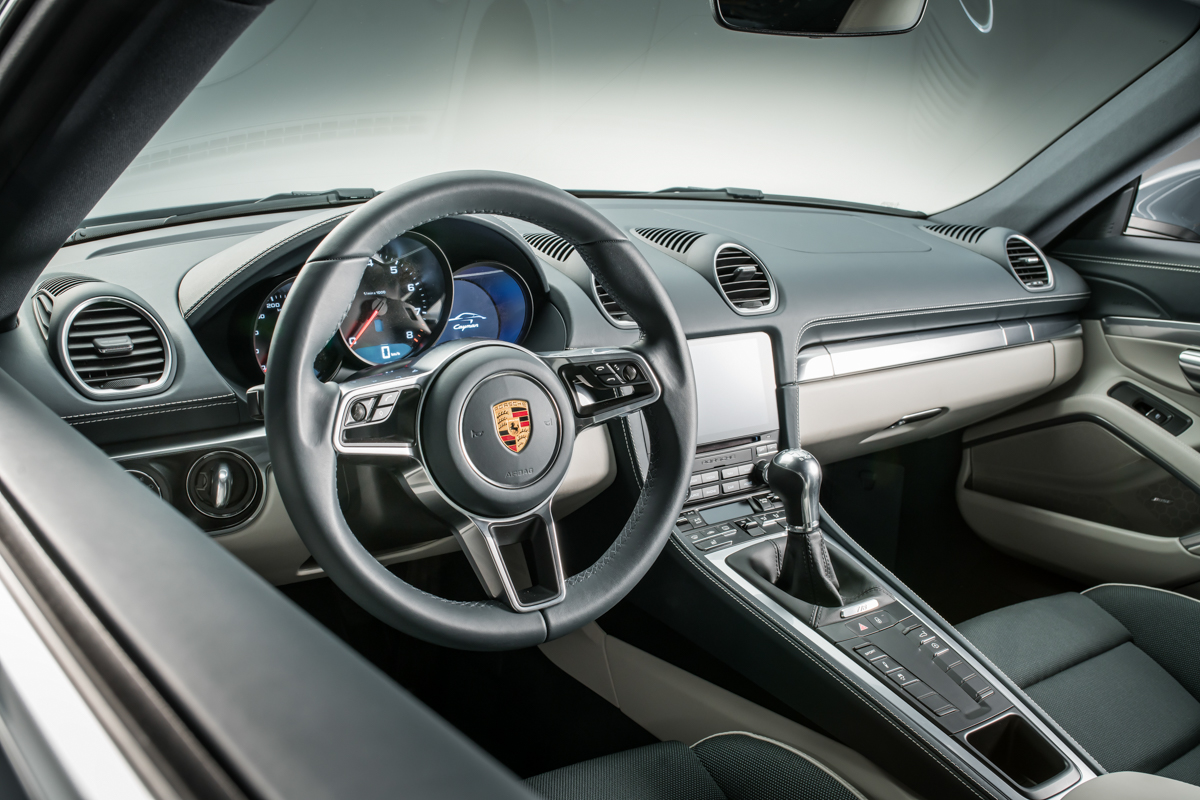
Porsche has launched the new 718 Cayman with four-cylinder turbocharged engines, redesigned dashboards and LED lights setting it apart from the previous model. Basic price for the 2-litre 300 hp Cayman is £39,878, with the basic 2.5-litre, 350 hp Cayman costing from £48,834: a difference of £8956.
Porsche Cayman now cheaper than Boxster
The new list prices position Cayman below its soft-top Boxster sibling, which starts at £41,739.00 for the 2-litre manual. Add £1922 for PDK, taking the pre-options price to £43,661. Boxster S starts at £50695: £8956 more than the 2-litre car: same as the 718 Cayman.
There are subtle differences under the skin, with firmer springs and anti-roll bars and tweaked damper settings. Steering is ten per cent ‘more direct’ and rear wheels are a half inch wider, general increased lateral grip. The Porsche Torque Vectoring (PTV) electronically-controlled rear limited slip differential is an option. Brakes have been upgraded, now with 330mm front discs and 299mm rears. 2-litre Cayman uses the previous Cayman S calipers, while the 718 Cayman S gets 911 Carrera calipers, with 6mm thicker discs.
Outgoing Cayman was quite a pretty car and the new one looks pretty similar to me. Front end is maybe a bit sharper, with bigger intakes and new LED running lights. 918-style LED headlamps with four-point daytime running lights are an option. The rear now has a gloss black badge panel with four brake lights, which Porsche says “appear to float freely”.
The Cayman will need more than floaty brake lights to capture buyers imagination. Porsche sports cars (i.e. sports cars and not sports SUVs) now account for something like 30% of sales and the 911 takes the lion’s share of that. Caymans are hard work in the used market and struggle to find buyers quickly, even when keenly priced, which keeps trade demand and residual values challenging.
Company car users have been known to opt for Caymans and no doubt will continue to do so, but it’s hard not to wonder about the strength of support amongst private buyers for Cayman, given the cost of a reasonably-equipped example and the number of more versatile premium alternatives now available.
Having a relevant, desirable sports car other than the evergreen 911 is important to preserve brand perception/positioning for the SUVs, so the four-cylinder engines and price drop to below the soft top probably make sense. They make much more sense than diluting the 718’s place in history by pimping those numbers on the back of a Cayman, regardless of how floaty the brake lights are.
Volkswagen today confirmed an agreement in principle with the US Department of Justice (Environmental Division), the Environment Protection Agency (EPA), and the California Air Resources Board (CARB), with the full involvement of the Federal Trade Commission (FTC) with regard to what it calls “the diesel issue”.
Most reasonable people would likely regard deliberate misrepresentation of the poisonous gas emissions output of 11 million cars sold around the world as rather more than just an “issue”. No doubt the details of the settlement reached in the USA to satisfy the DoJ, EPA and FTC will confirm this when (or if) they are made public. Any settlement will likely be measured in the billions of dollars and outstrip all previous fines for corporate malpractice.
VW US Class Action Lawsuit settlement
The San Francisco district judge overseeing the complex class action lawsuit has gagged all parties regarding the proposed terms of the settlement terms, but auto industry valuation leaders have already estimated the likely cost of buy-backs and/or compensation at something approaching $7 billion in the US, where just half a million from the 11 million cars affected were sold. Other corporate pundits have put possible federal penalties for VW in the US at somewere around $20 billion. Get your head around that one.
Other sources suggest that a proportion of owners will not avail themselves of the Volkswagen offers, with commentators noting that many US VW diesel owners “like their cars and like how they drive – they don’t want to give them up or get them fixed”. Perhaps a mooted $5k cheque per car will bring them to the dealerships.
Zero VW Emissions Compensation in UK and Europe
UK and European owners will not be so fortunate, as VW continues to insist that its customers outside of America have not been disadvantaged by choosing to buy a Volkswagen. This creates a brilliant opportunity for debate, where Volkswagen will surely have its nose rubbed in rather pungent defeat, unless the lobbyists currently pounding EU corridors of power have pulled some almighty strings.
German Economy continues to wobble
Meanwhile, today’s Times reports that German Manufacturing Purchasing Managers’ Index (PMI) has dropped to its lowest since July 2015, which the paper considers to be a strong indication of unwinding eurozone growth. The continued decline in PMI will have considerable political and economic repercussions in a Germany that remains wrapt with right-wing tension.
Shares in Germany’s car manufacturers also fell sharply today, as Daimler (Benz) declared a 32% fall in first-quarter profits and admitted that, following a request from the US Justive Department, it was also conducting an investigation into its emissions testing processes. This follows Mitsubishi’s recent admission that it falsified Japanese emissions test results by overinflating the tyres of cars being tested. I still think we are at the tip of the iceberg – who will be next?
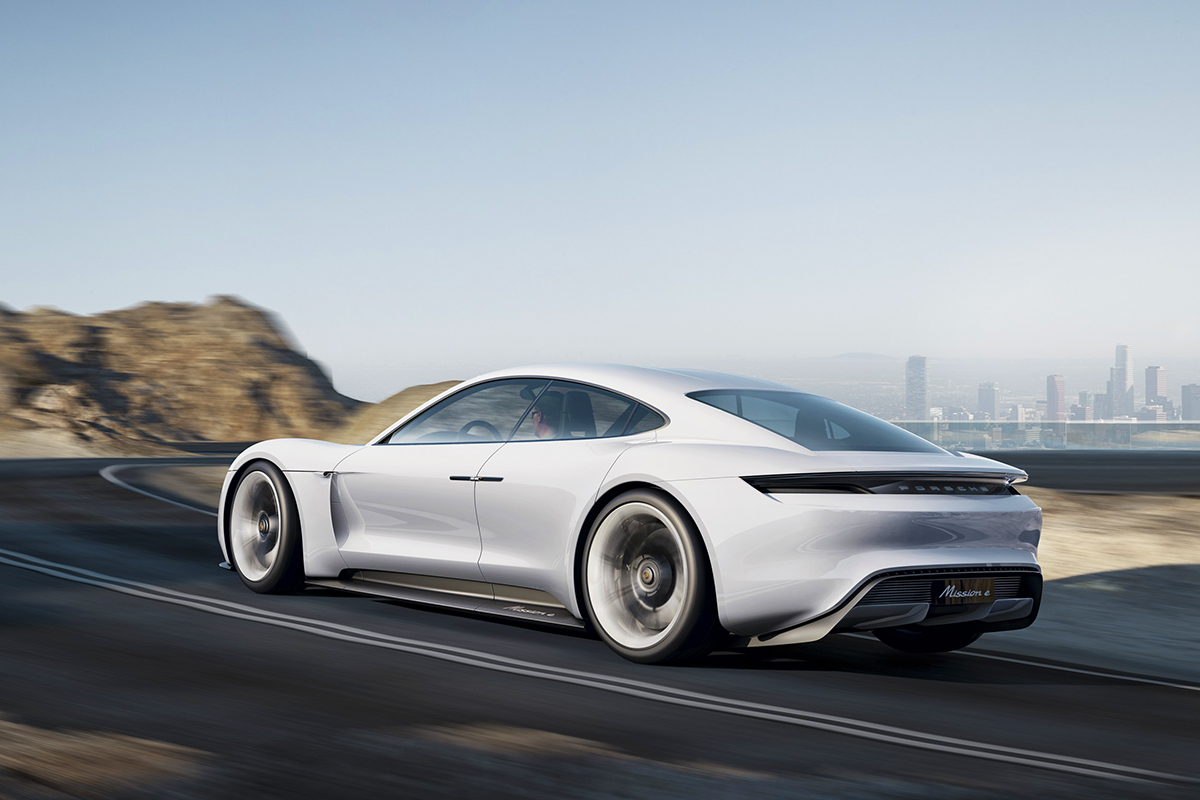
Porsche CEO, Dr Oliver Blume, has revealed that the company will spend one billion Euros* (just under $1.1 million at today’s exchange rates) putting the Mission E concept into production by the end of this decade. The all-electric car will be built at Zuffenhausen, which is receiving the lion’s share – €700 million – of total investment.
“We are not just experimenting around to see what comes out of it,” says Blume. “We’re investing heavily in our future because we are convinced of doing the right thing at the right time. The next few years will see a new paint shop and a separate assembly plant in Zuffenhausen. The existing engine plant will be expanded for the production of electric drives. In addition, we will be extending the existing body shop. All together, more than 1000 jobs will be created there.”
Low Oil Prices vs Mission E Electric Vehicles
Newspaper headlines predicting the end of electric vehicles thanks to low oil prices continue to sound ridiculous to most straight thinking people, and Blume is on the same page. “You don’t have to be a clairvoyant to predict that the oil price will go up again. The current trend is deceptive.
“We don’t want to and can’t reverse the developments [already made] – we have no choice. Our innovations are the crucial factor. They are what it all depends on. Market leadership does not come from subsidies but from superior technology. Once we have it, everything comes automatically.”
Is Porsche really targeting market leadership in electric vehicles? If yes, could it ever get there? Porsche has no plans to dilute its brand by bringing small or medium electric cars to market but, by continuing to stretch its hybrid and pure electric expertise in premium product development and fitting that technology to the ultimate cars of the future, Porsche will pick up opportunities to licence derivations of its electric powertrains elsewhere, in much the same way as the company licenced patented transmission synchros for decades. No doubt Porsche electric drivetrain technology will also inform cheaper hybrid and full-electric powertrains used by other brands within the Volkswagen parent company.
How Much is a Billion?
*UK readers informed mainly by 1960s road test articles note that one billion is now accepted to equate to one thousand million and that the ‘British Billion’ – a million million – is now classed as one trillion. Denis Healey officially adopted the thousand-million billion for UK Treasury reporting in the 1970s (apparently).
Official UK Porsche dealer, Porsche Centre Bolton has lost a court battle with the aggrieved would-be buyer of a Porsche 911 GT3 RS 4.0 who was gazumped by the dealership following confirmation of order.
Portrayed in a slightly frantic local press report as a duped and dispossessed pensioner (the buyer may not be entirely delighted about this), local enthusiast and classic car restorer Kevin Hughes (67) put a £10,000 deposit down on a 997 GT3 RS 4.0 back in March 2011 and was emailed by the sales department to say “I can confirm that you will get the first one from Porsche Centre Bolton if we get one, which I am very confident that we will”.
Some time later, OPC Bolton told Mr Hughes that they had actually not received any 4-litres, and returned his deposit. When Mr Hughes discovered that they had in fact been allocated a 4-litre RS but had secretly sold it to someone else, the shit hit the fan and Hughes commenced proceedings against OPC Bolton’s owners, Pendragon Sabre Ltd.
The deposit was paid in March 2011, but the case has only just come to court. This tells you that the legal costs are not insignificant. The court ruled that OPC Bolton had lied, found in favour of Hughes and awarded him £35,000 in damages, which was said to be the current value of a RHD 4-litre minus the original cost new. They also awarded costs, so Pendragon will have to pay Hughes’ legal bills as well as its own.
“Plain as a pikestaff” is how the judge described the binding contract between Mr Hughes and OPC Bolton. By paying a deposit up front, Kevin Hughes had done more than just expressed a passing interest and the sales team had promised him the first car in writing. The secret sale behind Hughes’ back of the one car which the dealership received was therefore a clear breach of contract, according to the judge.
Given that RHD 4-litres are fetching far more than £170k to collectors, I think Pendragon has got away lightly. Thanks to a decade valuing cars for a living and now running my UK Porsche insurance valuations service, I get called in to legal disputes as an expert every once in a while. Hughes’ legal team should have googled a values expert for this one: their client might be a hundred grand better off now.
An old friend of mine works at OPC Bolton. I’m sure there are two sides to the story – maybe one day I will hear the rival viewpoint – but it seems to have looked pretty cut and dried to the judge.
Porsche has announced worldwide sales of 225,000 cars during 2015, beating the previous year’s all-time record by just under twenty percent. As with all Porsche sales releases, the opening gambit is that Porsche continues to “focus completely on building highly emotional sports cars” before confirming the Macan SUV as the biggest seller, with the Cayenne SUV in a close second place.
“The figures reflect the pulling power of our brand as well as the appeal of our products which we have launched on the market in the past few years,” says Dr. Oliver Blume, Porsche CEO, who then says that sales are not the primary measure of Porsche’s success. “What is much more important for us are customer enthusiasm, return on sales and secure jobs.”
Last year’s most enthusiastic customers were in China, where 58,000 car buyers committed to a new vehicle bearing the Porsche badge. China outperformed the USA by some 6,500 deals: the country was up 24% year-on-year, while America managed a 10% rise in the same period. Germany accounted for nearly 29,000 cars all on its own, part of a 24% rise in European sales.
Prolific Porsche Production
Think about 225,000 new Porsches hitting the roads in 2015. Add at least the same again in 2016 and the 190,000 cars Porsche delivered in 2014: a total of almost 650,000 cars sold in thirty-six months. Consider the brand’s future as part of the wider Volkswagen group strategy to rationalise its products and implement billions of Euros in platform sharing economies, driving higher unit margins as it regains market share and ask yourself just how long that historic badge can stay any way exclusive.
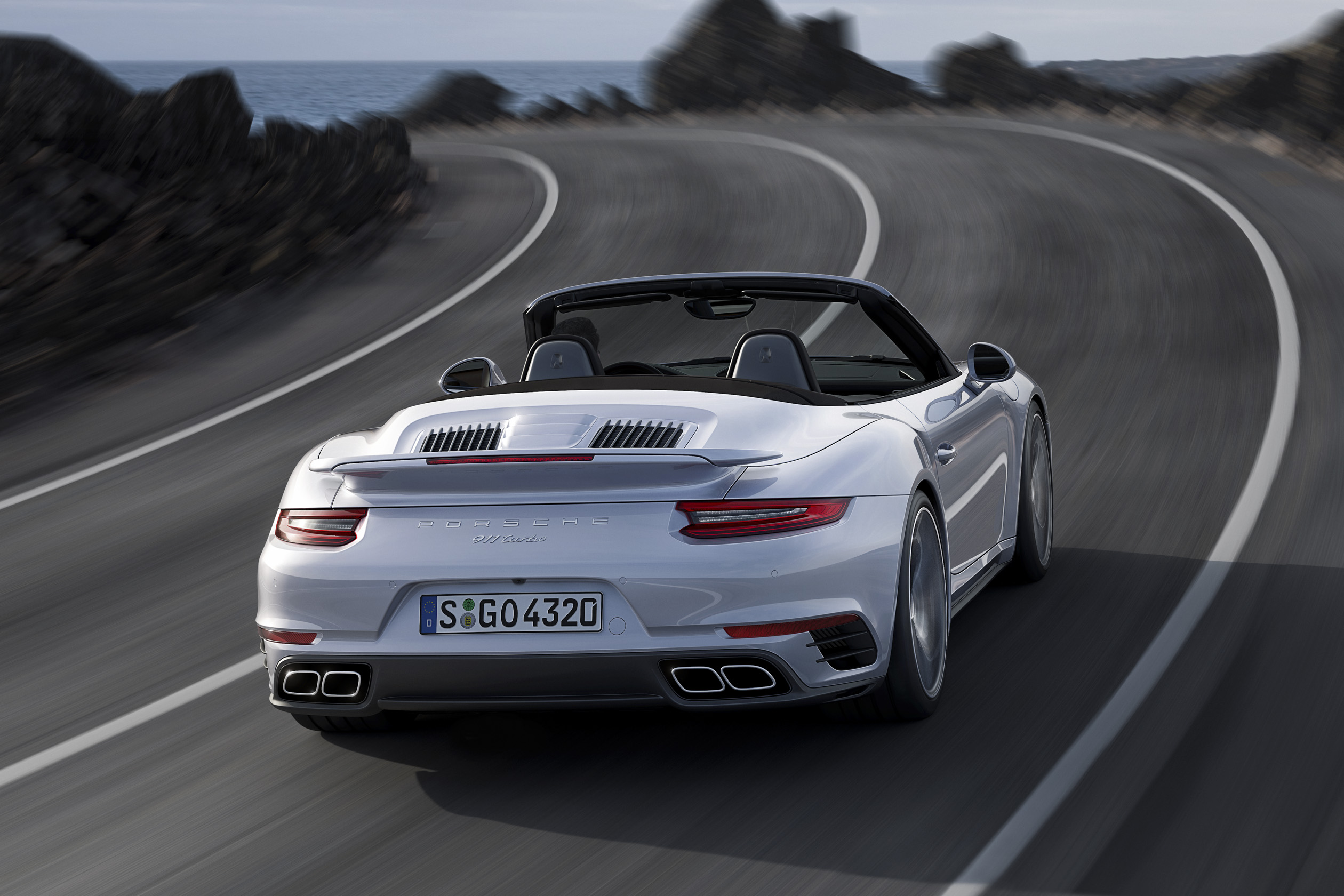
Porsche sold 32,000 911s in 2015: up 4% on 2014. Boxster/Cayman recorded a mere 1% increase. The 911 may go racing, but how long can the brand credibly claim that its primary business is sports car manufacture when five of every six cars on Porsche delivery trucks has three rear seat belts? When does the sports car connection lose relevance?
Do sports car buyers want Porsches?
Assuming sports cars still have a place in the world, has Porsche got what sports car buyers want? The cheapest Porsche sports car is a basic Boxster, with UK prices starting at £39,500 for a car without options. Porsche has reportedly abandoned plans to build a baby Boxster so there is no sign of a modern day 914. The decision has to be connected to brand strategy, as no doubt there is a market for a smaller Porsche roadster priced circa £30k and development would not cost a fortune. It is hard to believe that a compact roadster product line would have as negative an affect on long term 911 sales as 200,000 Audi-derived Porsche SUVs rolling off the lines every twelve months.
I enjoyed driving a fully loaded (Volkswagen Group) Seat Ibiza 1.2 TSI for two weeks in Spain last month. The driving position was perfect, controls all very slick and, try as I might, I could not get the sporty turbocharged hatchback to drink fuel at scary mpg. Put the same chassis & drivetrain in a roadster chassis with a sensible price tag and you have a capable MX5 competitor.
Whereas independent Porsche might have gone down the baby Boxster route, no one at Volkswagen is going to endorse a turbocharged 1.2-litre Porsche sports car. So buyers are left with the choice of spending £40k for the most basic Boxster versus MX5s starting at less than £20k. The Boxster has build quality in its favour, but the fun-to-drive Mazda is also well built and the latest model has just been lightened by more than 100 kilograms as part of a push for market dominance. A Seat Turbo roadster might take the fight to Mazda, but upmarket Porsche can’t attack the MX.
911: overpriced and overplastic
Over Christmas, I visited Porsche’s 991 online configurator and ended up with an orange 911 Carrera costing £85k with a reasonable but not excessive spec. Bearing previous 991 drives in mind and imagining the likelihood of ordering an £85k Carrera had I the means to do so, I couldn’t envision an enduring sense of occasion with a new VW-diluted 991 parked on the driveway.
Road testers rave about the latest 911, but how many of them will ever buy one brand new? And how much weight does press opinion truly carry in real-world buying decisions? Ownership costs have to make sense, as does brand positioning. Most new car buyers have no interest in WEC or motorsport activities, so much brand perception comes down to what people see on the roads. When mass public consciousness of Porsche’s place in the world can be summed up as a volume manufacturer of expensive SUVs, it is hard to see overwhelming positives for the sports car lines. I’m not saying they’re doomed, but there has to be a downside.
RIP David Bowie
David Bowie died this morning, so BBC 6 Music has been celebrating his remarkable impact all day. I once read an interview where Bowie spoke about meeting some kids who congratulated him on a passable cover version of Nirvana’s “Man who Sold the World”. “Fuck off you little tossers,” smiled Bowie, who wrote the song in 1970 but ended up reminding audiences of this when he performed it, after Nirvana’s cover became the more well known version amongst a new generation. Don’t mess with legends without doing your homework.
This website uses cookies to improve your experience. We'll assume you're ok with this, but you can opt-out if you wish.AcceptRead More
Privacy & Cookies Policy
Privacy Overview
This website uses cookies to improve your experience while you navigate through the website. Out of these, the cookies that are categorized as necessary are stored on your browser as they are essential for the working of basic functionalities of the website. We also use third-party cookies that help us analyze and understand how you use this website. These cookies will be stored in your browser only with your consent. You also have the option to opt-out of these cookies. But opting out of some of these cookies may affect your browsing experience.
Necessary cookies are absolutely essential for the website to function properly. This category only includes cookies that ensures basic functionalities and security features of the website. These cookies do not store any personal information.
Any cookies that may not be particularly necessary for the website to function and is used specifically to collect user personal data via analytics, ads, other embedded contents are termed as non-necessary cookies. It is mandatory to procure user consent prior to running these cookies on your website.