by John Glynn | Feb 20, 2017 | Classic Porsche Blog, Project Cars
The Canary Islands are volcanic isles located off the north-west coast of Africa, just a half-hour flight from the Western Sahara Desert. I first visited the Canaries in 1993 and instantly fell in love with the islands and the people. I have since returned here many times, visiting each of the islands over the years, but Gran Canaria remains my favourite.
The locals say that Gran Canaria is like a mini-continent. Divided by a mountainous centre, the south gets most sunshine, so is where the resorts are. In the north is Las Palmas, Spain’s ninth biggest city and the islands’ governmental centre. 850,000 people live on this island, including many extranjeros (immigrants) from across Europe, Africa and Latin America. This Irish immigrant has spent the last seven days here and as always, it has been a pleasure.

Thanks to beautiful weather all year around, a huge working sea port and a very busy airport, Gran Canaria welcomes hundreds of thousands of visitors each year. The mix of global influences has earned GC a reputation for tolerance and an openness to many cultures. This has certainly been my experience. I have made some good friends in Gran Canaria and am interested in possibly owning a house here, hence my frequent visits in recent months. We will see how that goes.
A Lesson in Spanish Philosophy
Canarian history goes back thousands of years and each island is truly unique in character, but today the Canaries are a part of modern Spain. Here we speak español (small e) and follow the rhythms of Spanish life and culture. There is little point in rushing anywhere, as you will only catch up to the bloke in front. Make time for life and life will make time for you is how things tend to go.

Catching up to slower moving people reminds me of the famous Spanish philosopher, José Ortega y Gasset, who believed that a person was the combination of both life and circumstance. “Yo soy yo y mi circunstancia” as he put it. To Ortega y Gasset, circunstancia meant those things forced upon us. He saw life as a constant tug-of-war between the freedom we were born with and our dictated fate.
In the fight between freedom and fate, Ortega y Gasset’s concept is the start of all art. We accept that fate will befall us but inside that acceptance, we select a destiny. Some become part of what the philosopher’s 1929 essays call “The Mass”, while some select a different path.
“The mass crushes beneath it everything that is different, everything that is excellent, individual, qualified and select. Anybody who is not like everybody, who does not think like everybody, runs the risk of being eliminated.”

To escape this fate, Ortega Y Gasset believed that a person must make an active decision to live a life of effort. “For me, then, nobility is synonymous with a life of effort, ever set on excelling oneself, in passing beyond what one is to what one sets up as a duty and an obligation. In this way, the noble life stands opposed to the common or inert life, which reclines statically upon itself, condemned to perpetual immobility, unless an external force compels it to come out of itself.”
The concepts of Ortega y Gasset and others were at the heart of a lively bilingual conversation I enjoyed with my friends Rafael and Jorge over coffee last night. Rafael – a Doctor of Philosophy – is a former consultant to the Swedish government and has just completed another PhD, pondering the practical applications of preventative psychology. His lifelong friend, Jorge, is a Porsche restorer. Both are living “a noble life” that Ortega y Gasset would be proud of.

Pons Vintage Cars
Based just outside Santa Brigida, here in Gran Canaria, Jorge Pons takes the idea of Porsche restoration to the nth degree. While most of the Porsche restorers I have met and worked with add their own touches, that is not the way of Jorge. Pons Vintage Cars believes that, if it is not in the manual, it is not on the car.
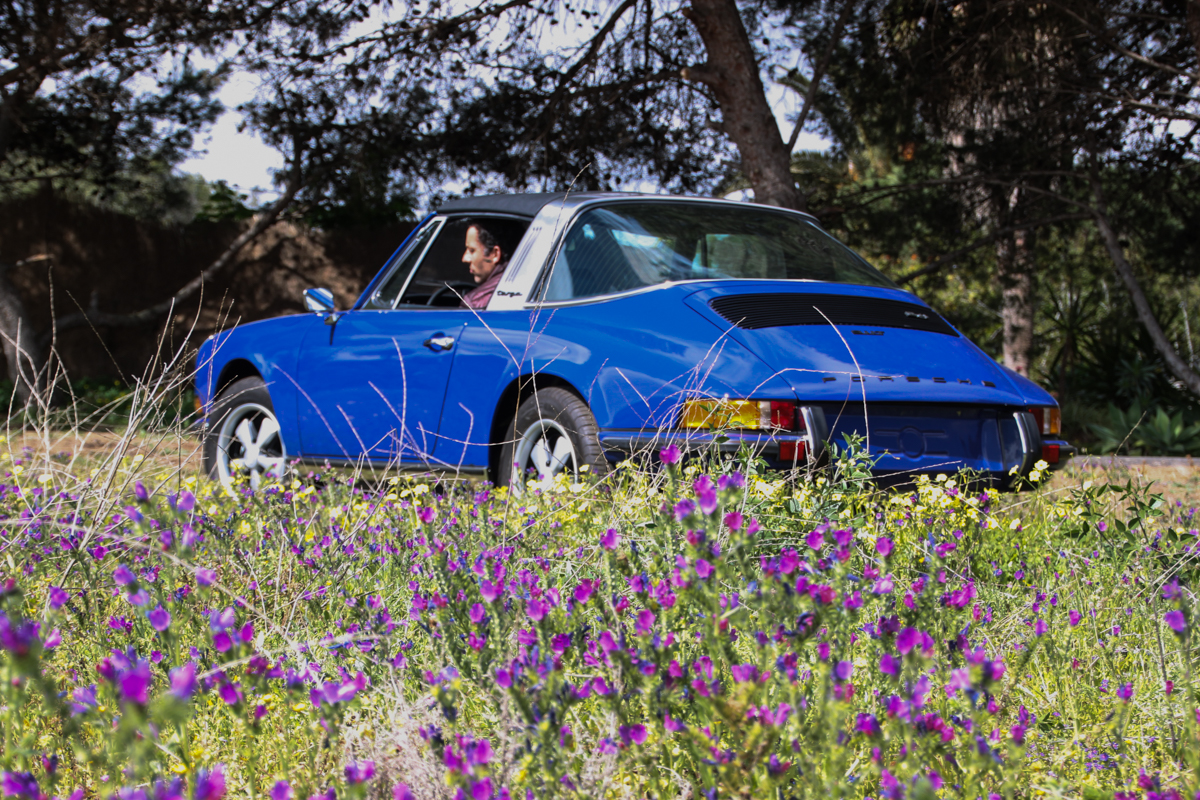
The Dalmatian Blue (Oxford Blue) 1973 Porsche 911 2.4T Targa seen here is a perfect example. And I mean it is a perfect example. Restored over ten months from start to finish, this superb 2.4 T Targa is immaculate inside and out. I had the pleasure of a short drive in this 911 around Jorge’s family estate and it was a delightful experience.

All of Jorge’s 911s are completed to an exacting standard. The ’73 Targa is the seventh car in as many years to come from his wonderfully pastoral workshop. Set amongst the mountains overlooking the wild blue Atlantic and surrounded by palm trees, a group of four much-loved donkeys (burros in Spain) follow progress in the glass-walled garage through wise and appreciative eyes. As a donkey- and a Porsche-lover, I think it is perfect.
Dalmatian Blue Porsche 911 T Targa
Dalmatian Blue is one of my favourite Porsche colours but it is not very common. I have only seen one other 911 in Dalmatian Blue and that was a hot rod built by my friend Gib Bosworth, eventually finished by another good friend. How many Dalmatian/Oxford Blue Targas were ever built in the final year of early 911 production (and how many matching-number examples remain) is anyone’s guess, but it can’t be that many. This could easily be the the best one available.

Anyone seeking a well restored example of classic Porsche engineering should contact Jorge Pons to discuss this car for sale. Gran Canaria is just a plane ride away and shipping is easy. Pons does not ask a fortune for his work – the projects are not about the money – but the prices are not negotiable. This one is up for €125,000, which seems reasonable, given that some dealers in Germany are asking more than €150k for similar cars that will not have taken ten painstaking months to restore. I m back in Essen in april and I have no doubt that cars this good will be into the €160k+ bracket.
Now finished the 911T Targa, Jorge has switched to a superb Irish Green 1970 Porsche 911 T Coupe. This car recently returned from the paint shop following an incredible bare-metal restoration, all recorded on camera. It is beautiful: the paintwork is a joy to behold. I leave Gran Canaria tomorrow, but am very excited to see what progress will have been made when I return to the island in May.
by John Glynn | Dec 15, 2016 | Classic Porsche Blog, Race and Rally
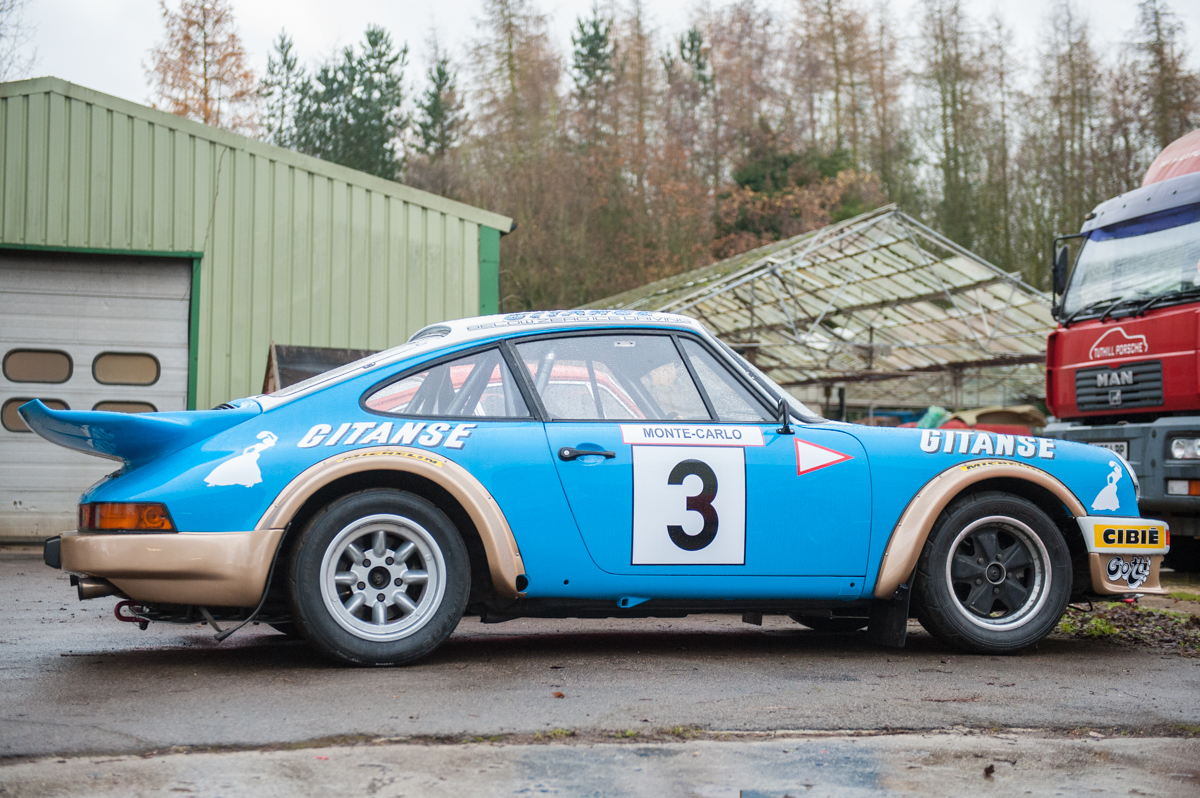
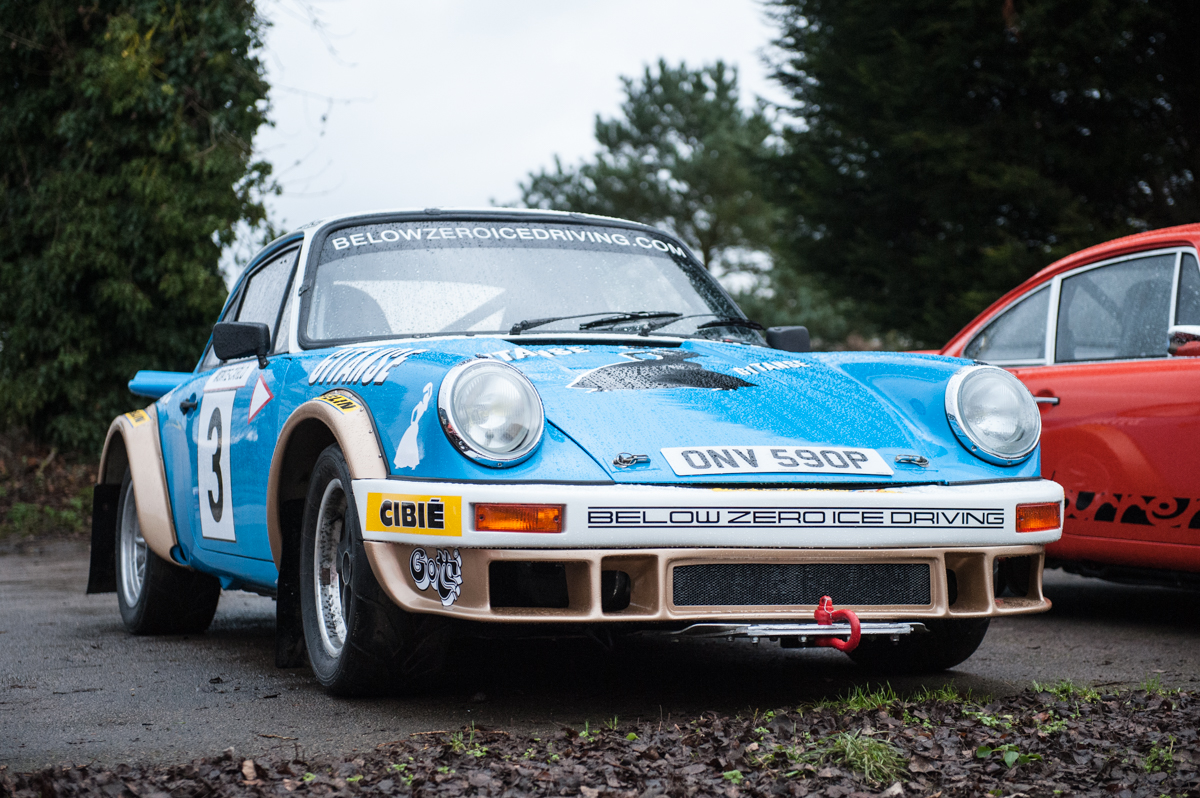
My friend Simon Kelly has just had his Porsche 911 SC repainted by Tuthills in a cool Alméras Frères tribute livery. I managed to get a few pics of the finished item before jumping on the plane to Gran Canaria.
Almeras won the 1978 Monte Carlo Rally with an SC in the famous Blue and Gold ‘Gitanes’ cigarettes livery: probably the high point of the SC’s motorsport career. Tobacco advertising is a sensitive topic in Europe nowadays and many owners modify tribute livery branding slightly, to ensure their cars do not fall foul of any rules. Simon also tweaked the design of his decals a bit, to be sure the livery would not upset the wrong people.

“I wasn’t quite sure what I would do regarding the tobacco thing and, in the end, I had a last-minute wobble. I did some reading about it and it’s a grey area with governing bodies, regulators and the media all having a different take on what’s acceptable. I didn’t want the tobacco ban causing problems for the car, so for a quite life I used the French spelling of ‘gypsy’ instead of the Catalan.

“The decals were made by our mutual friend, Rick Cannell at Highgate House, and are a lovely job. Rick made them the same way as the originals would have been done, using layered vinyl and not the printed vinyl which is more common nowadays. Your photos remind me that I need to send Tuthills some new number plates I had made in the proper style!”

Regular readers may recognise Simon’s car as one I did a feature on back in the day, when it was painted grey and red. Built by Tuthills using one of EB Motorsport’s first Group 4 Almeras-style arch kits, Simon bought the car in 2011, selling an RSR replica and 968 Sport to buy this one instead.
The car has been a regular at the Below Zero Ice Driving camp in Sweden every winter and is heading back again for 2017, hence the font and rear guards and towing eyes, to drag it off the snow banks. I think this is going to look great on a white background – here’s to taking many more pics!

by John Glynn | Nov 13, 2016 | Classic Porsche Blog, Modified Porsche Hot Rods
I’ve been a bit of an air-cooled 911 accessories shopping guide of late! My friends at KW Suspension in Germany have just released a new suspension kit (and reminded me of an older one) for impact-bumper Porsche 911 models and I promised I would share.

The first kit is an adjustable damper upgrade for G-model 911s which works with the torsion bar system. Part of the KW Suspension “Classic Range”, this KW Variant 3 setup is a complete car set of compression and rebound adjustable shock absorbers. The kit does not require a conversion to coilovers, but instead retains the car’s torsion bar system. The mild steel damper bodies are galvanised for longer life.

KW Suspension Coilovers for Torsion Bar Delete
Further up the price scale is the Clubsport 2-way coilover kit, which allows torsion bar deletion. KW recommends this lighter system with aluminium damper bodies primarily for motorsport use, but check your competition regs carefully before committing to the spend. Supplied with adjustable aluminium monoball front top mounts, the upside-down front dampers are adjustable for both rebound and compression.
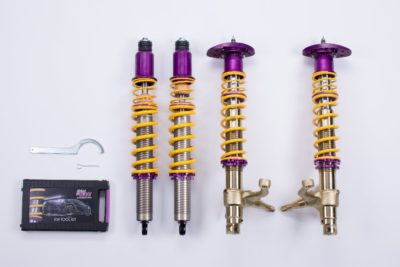
Rebound is adjusted at the piston rod end and provides sixteen clicks of adjustment. Compression adjustment is carried out via a 12-position adjuster on the upper damper housing. “Increased rebound forces ensure tighter handling and a significantly reduced rolling of the body,” say KW. “At very high speeds, the steering precision is improved at the driving dynamic limit, while on the uneven and wavy road surfaces, a lower rebound stage is advantageous.”

Both kits are TUV approved for use on the roads. The Variant 3 kit costs £2062 plus VAT in the UK and is available from KW dealers. No price on the 2-ways: I expect you might need to be sitting down for that one 😀

by John Glynn | Nov 11, 2016 | Classic Porsche Blog, Porsche News
My friend Guy Allen has released a new Porsche print. An atmospheric rendition of the SWB car in flight, it’s another great example of why Guy is one of the UK’s busiest illustrators.
Guy’s previous Porsche work is all over Ferdinand. I’ve commissioned him a few times for impactbumpers t-shirt artwork and we’ve also released prints of this work together. Those prints all sold out long ago, and I would not be surprised to see this one sell out just as quickly.

The SWB 911 has enjoyed a renaissance in recent years. Once ignored as the runt of the litter due to the twitchy handling and smaller engines, contemporary Porsche fans now rightly regard its Germanic purity and unique driving experience as a pivotal step in Porsche history. The SWB cars were the original lightweights and the thread of their lineage must be carefully picked through the model lines – some 911s follow the founding philosophy much closer than others.
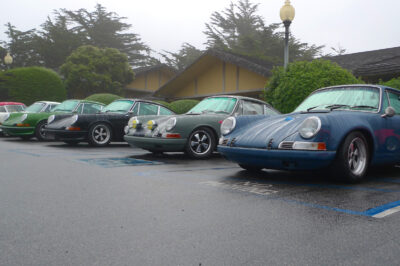
My first proper experience of a SWB car came while I still lived in Ireland. A friend’s dad was a keen rally driver and also owned a garage. He had a SWB car in for some work and I would see that driving around quite a bit. It was LHD and may even have been something famous once upon a time, but I never got close enough for a proper look. Years later, when Jamie and I shot a well-known piece featuring two SWB 911s on our first trip to California (Short but Sweet: read it here), I remembered that early rally car and thought how well it would have slotted in with Bob Tilton and Chris Nielsen’s rally inspired R Gruppe machines. I should have bought a SWB project car then, but I missed that particular boat – they are now well out of my reach.

Experience the SWB cars in depth and you gain a unique understanding of the original 911 ethos, but race a SWB car hard and win with it, and you enter another dimension of 911 folklore. The UK saw a huge jump in SWB enthusiasm when the 73rd Goodwood Members’ Meeting featured the Aldington Trophy: a race for pre-’66 SWB 911s only. Mark Bates raced the EB Motorsport SWB 911 at Goodwood among a select group of its peers and spent most of the lap going sideways in some very close battles. Mark finished on the podium after a great hour of racing and people still talk to me about that mental race – a fine day in the SWB story.
Away from the circuits, SWB 911s make highly prized road cars, but finding original interior parts and trim is now perhaps the hardest part of a SWB restoration. There is plenty of choice as to who restores your SWB car but, with waiting lists as long as they are at the very best workshops, it might be quicker to learn the skills to restore it yourself! Plenty of Porsche fans are doing just that and, as a DIY diehard, I think that is brilliant.
Guy’s SWB Porsche print is produced on archive quality heavyweight paper. It is a limited edition of 200 large-format A2-sized prints (A2 is 420 x 594 mm). The prints are signed and numbered and you can take a closer look at them here.
by John Glynn | Nov 4, 2016 | Classic Porsche Blog, Art and Books
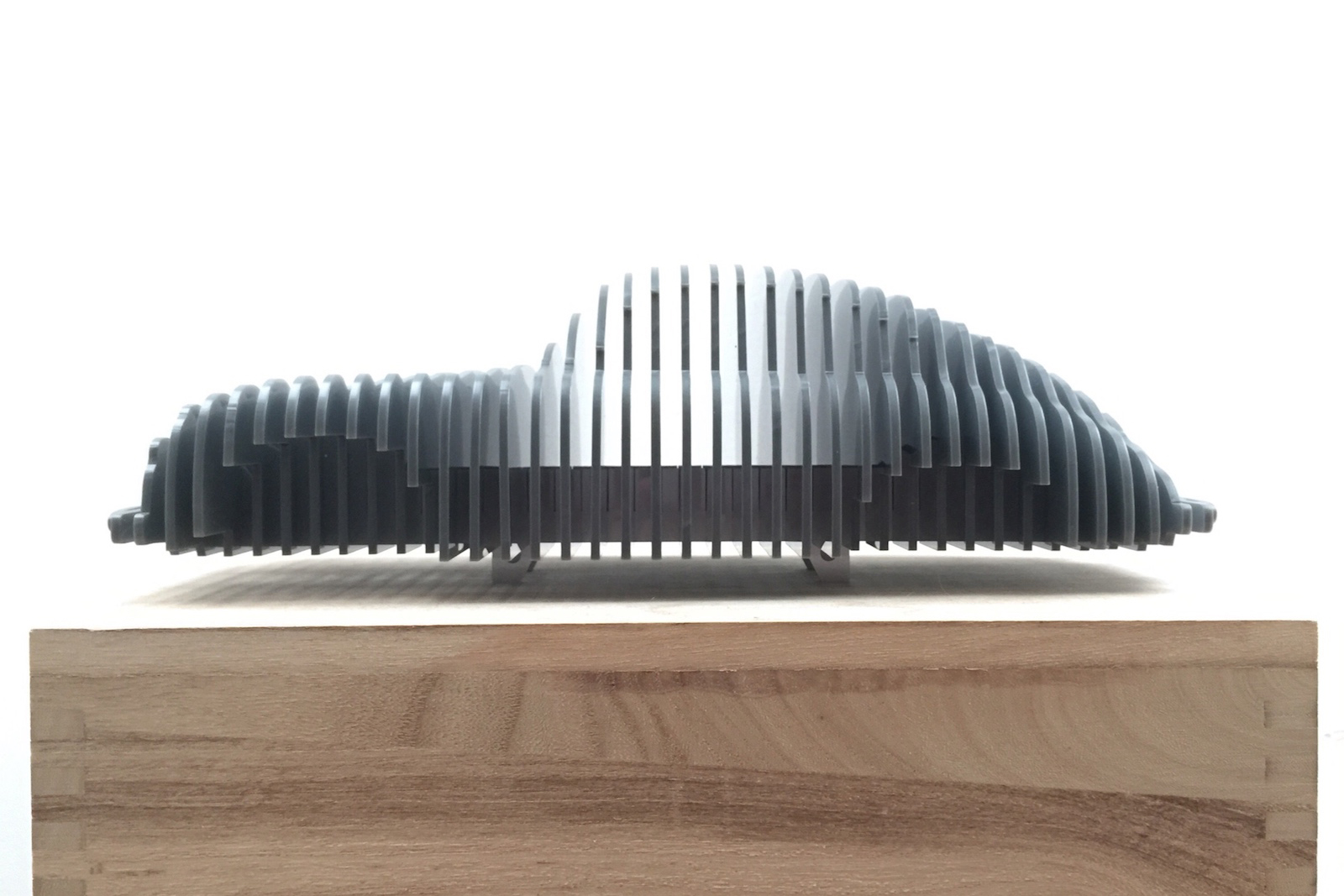
As classic Porsches assume the air of treasured possessions such as fine art or jewellery, so more artful representations of the cars arrive on the market to remind us of our passion. Many artists have produced representations of the classic Porsche 911 and 356 models, but these recent sculptures from Rotterdam artist, Stefan de Beer, really caught my eye.
The former car restorer and trained artist has created his Porsche studies with long-time creative partner, Brigitte Broer. The shapes speak for themselves, but I really love the concept of louvred sections, which call to mind the cooling fins on an air-cooled Porsche engine.

“After a successful career as a racecar designer, I returned to my early love for art and architecture,” says Stefan. “Long ago I started my education at the Academy of the Arts, after a few years I switched to car design at TU Delft, the Polytechnisch Bureau Arnhem and the Art Center College of Design in Switzerland. After twelve years as a car designer and engineer, I sold my business and returned to the Academy to start all over again and study art and architecture. Since 2007, I have found a perfect balance between art, architecture and old sportscars.”
Each of Stefan’s sculptures begins with 3D laser scan of a full-size car. CAD techology then is employed to generate a digital representation, at which point the artist select his sections, and transfers those dimensions to a pattern-making machine.
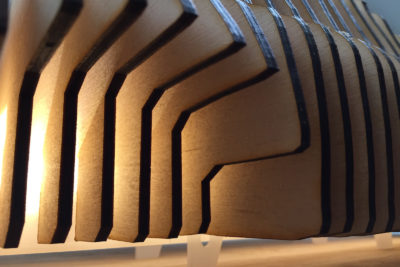
The laser pattern cutter transfers the profiles to high quality acrylic and wood materials for just the right effect. Each sculpture is then assembled by hand. The shapes can also be fitted with a lighting attachment, and even engraved with custom registration plates. The last bit might be a step too far for me – less is more, after all. Every piece comes with a ‘Certificate of Authenticity’, bearing the unique number of the sculpture and the signatures of the makers.
We’ve seen lots of other louvres on classic Porsches this year but none have felt as fresh and airy as these. Order direct from the partnership here.

by John Glynn | Sep 21, 2016 | Classic Porsche Blog, Porsche News
Ferdinand Porsche’s second postwar visit to the USA was in August 1952. The trip was arranged by Max Hoffman, who had visited Austria for a summer vacation and brought news of a possible consultancy opportunity with Studebaker. This gave the Porsche chief a very good reason to travel.
To discuss the Studebaker project and to catch up with what else was going on across the Atlantic, Ferry, Dodo (his wife) and engineer Karl Rabe (pic, left) sailed to America on board the Queen Elizabeth from Cherbourg to New York. The following passage is from “We at Porsche”: Ferry’s autobiography, which was written with the help of John Bentley.
“I went on to Detroit and called on an old friend, Zora Arkus-Duntov, who had transformed the original lifeless Chevrolet Corvette into a world-famous sports car – in fact the only true machine of this type built in the United States. He took me to the Research Centre of General Motors where I met Bill Mitchell, the chief of styling. We talked about new cars and walked through his office where he had some models. He pointed to a particular one and held it up. Here was a typical example of the communications problem between styling and engineering.
“”To get a nice looking front end on this car,” Mitchell said, “the engine must be lowered. I therefore modified the carburetion system to bring it lower and made other changes in the engine.”
“Arkus-Duntov, who was standing beside me, did not react favourably. “What nonsense,” he said. “There is no way to build such an engine.”
“This was all I needed to realise how far apart a stylist was from an engineer. If it was necessary to bring these two minds together, a third person would be needed who had a clear idea of what could and could not be done by both parties. Such an individual need not be either the best stylist or the best engineer, but he must know exactly how to bring about the most effective compromise.”
Given the unique look of the 356 and the first 911s ahead, Ferry’s opinion on the need for compromise between styling and engineering is interesting. One could say that this was the key skill of Erwin Komenda (pic, centre), who brought such life to the early Porsche products. A talented engineer and a great visual artist, Komenda was perhaps the ultimate agent of positive compromise.
The original meaning of ‘compromise’ suggests a joint agreement, from the Latin ‘com’ (together) and ‘promittere’ (promise). The word has taken on a negative aspect in recent times, as in “compromised security”, which is just a soft PR way of saying broken, failed or ineffective. This sense of compromise is not how Porsche would have viewed it, but some of the compromises made on later models could be regarded as counterproductive. There is seldom an upside in compromised principles to reach shallow goals.
However styling and engineering were balanced, durability was never negotiable. Reliability was Ferry’s first priority in all things Porsche. Herr Doctor would sacrifice anything else to ensure Porsches were reliable, as no Porsche should ever be seen broken down. He would not have handled a flat tyre in a car with no spare wheel very well.