by John Glynn | Mar 9, 2015 | Porsche News
Guido Lorenz has the job of Business Counsellor for the district of Rottenburg-Stuttgart. A student of Catholic theology from 1974 to 1980 at the University of Tübingen (home to some of the most influential religious thinkers of modern times), Guido took on his current role in 1983. He has been a sounding board and social advisor for Stuttgart’s workforce ever since.
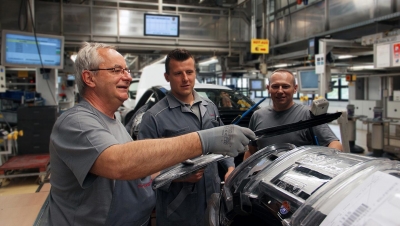
Within weeks of starting his almost impossible appointment, Guido paid his first visit to the Porsche Zuffenhausen assembly lines. Last month, Lorenz spent two weeks working on the production lines, getting to know his workmates and understanding how things have changed at Porsche across three decades.

The Spirit of Porsche
“The previous structures were much more hierarchical,” notes Guido. “Today, every member of the team knows how to carry out every single operation. This improves the mutual understanding within the group. There is a really good team spirit among the colleagues here, regardless of gender, age or origin. Team leaders, shop stewards and foremen all make their contribution to this.
“It’s impressive how strongly all Porsche employees identify with the brand. When you look at the sports cars, it’s easy to understand why.”
Guido Lorenz on the Porsche production lines makes a decent PR story, but this man is not here to make companies feel good. His vocation lies with the workforce. As people will not open their hearts to him at the drop of a hat, he often works alongside his compatriots to develop trust and encourage communication. Previous missions have included spells as a bin man, mailman and long-distance truck driver.
With additional qualifications in marriage guidance and psychological counselling, Lorenz has expanded his remit over the last thirty years to include both employed and unemployed people. Decent conditions, jobs for young workers and fair wages and distribution of wealth have never been far from Lorenz’s agenda, which one assumes must have caused some friction through his career.
Dean of Stuttgart, Monsignor Christian Hermes, recently led a celebration of Lorenz’s contribution to working life in the city. “I know that you experience solidarity with the workers, but also amongst the unemployed. Man and his work have not only an economic value, but a human dignity: we must not let this be threatened by our own consumption needs and the mechanisms of repression.”

Brought up as a Catholic, I met no end of inspirational people through that faith over my formative years. None were doctrine obsessed: they understood the joy of shared effort, and possessed a huge internal appetite for work. This is something I have certainly absorbed.
Any sprinklings of religious fervour left me long ago, but there is an enduring sense of solidarity and collective spirituality in the connections people make. It is comforting to see that Porsche is not oblivious to the gentle power of Guido Lorenz and others like him. Those gifted with Guido’s faith in humanity can help so many people to experience a meaningful life, without bringing heaven and hell into it.

by John Glynn | Mar 4, 2015 | Classic Porsche Blog, Modified Porsche Hot Rods
I bumped into Stéphane via the Cult of Porsche Instagram channel. He’s building a cool 1980 Porsche 911 SC backdate down in France, so I got him to send me some pics and explain his love for the badge.
“I’m 33, and live in La Rochelle in Poitou Charentes. I’ve loved Porsche since I saw one for the first time, maybe when I was 6 or 7. My father owned a 1966 911. It was the only “new” car he bought. He drove a lot of cars (Jaguar Mk2, R8 Gordini, Audi Quattro, Mercedes 190SL, Mustang…) but the 911 was his favourite.
“My dad lost his good situation at the end of the 1980s and never had the ability to buy sports cars again. For me, the Porsche 911 was only an unaffordable dream. I worked hard and hoped to have my own Porsche and take a ride with my father. Sadly, he died in 2010.
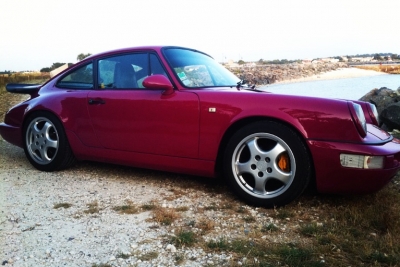
“I bought my first Porsche 4 years ago: a 2001 Boxster. A while later, I changed it for a 1981 Guards Red 911 SC. I then the red one to do some work on my house. In 2012, I found this 1981 Porsche 911 SC (above) in Perpignan with a 964RS conversion. Turns out it was in mint condition! I was not a huge fan of this colour, but it was a really good base for my project.

“When I bought it, I planned to respray it in black, with 17” Fuchs, but 17s are too heavy for my 204bhp 3-litre engine! So I decided to buy original SC bumpers and started to work on the body. One day, I some photos of the Gérard Larousse 70′ 911 and decided to backdate my SC.

“Inspired by the R Gruppe, Rod Emory, Magnus Walker, I made my own colour. The rest of the spec is like this:
- Front wings, hood, and bumpers are in poly, from Rennspeed
- Wheels: 7 x15 and 9×15 Minilite from Historika
- Tyres: Toyo in 205/50/15 and 225/50 15
- Bilstein Club dampers
- Wevo shifter
- BF Torino Nürburgring seats
- Schroth 3-point harnesses
- Nardi steering wheel
- RS style door cards (homemade)
- Aluminium grille on the rear (homemade, inspired by Kremer)
- Dual chamber stainless steel exhaust (no brand, probably homemade)
- Powerflex Black Series Bushes
- Goodridge brake hoses
- EBC Red brake pads
“I think the next stage will be adding a roll cage in a few months. I’d love a PMO conversion with 964 camshafts. Until then, I’ll drive, drive, drive and enjoy my new toy, hoping my father can ear my flat six.”
An excellent project and no doubt dad would love it: well done mate. Follow Stéphane on Instagram here.

by John Glynn | Feb 23, 2015 | Classic Porsche Blog, Market & Prices
The Silverstone Auctions sale at RaceRetro 2015 brought mixed results for classic Porsche 911s. A number of promising Porsche entries were withdrawn pre-sale – a nice 2.7 911 and early 911T amongst them – but a pair of cars caught my eye from either end of the classic price spectrum.
Porsche 930/911 Turbo Targa at auction
This right-hand drive 5-speed Porsche 911 Turbo Targa is a rare car that sold well inside predictions, suggesting the body might have hidden a few more secrets than the auction description suggested. Not sure how likely that is as the pics make it seem pretty reasonable: maybe it was just the Marmite widebody Targa effect.

The very last year (1989) of Porsche 930 with a Targa roof is a very rare car, but the £35,438 this car sold for would just about buy a very nice 3.2 Carrera Targa nowadays. With the clutch replaced in the last 5k miles and a service 2k miles ago, if this a solid 930 with no major oil leaks, someone did well for themselves.

1965 Porsche 911 SWB prices
Elsewhere in 911-land, this apparently very nice LHD 1965 SWB Porsche 911 2.0 blew its £100-120k estimate well out of the water, selling at £133,875. Owned by a Norwegian since 1998, the description for the left-hand drive European example made no real mention of history prior to the current owner, save some details on a rebuild for the matching numbers engine some twenty years ago.

Four owners have kept this SWB looking straight and apparently honest. With the general condition described as “usable with a fair patina”, the decision to send the car to auction paid off. Matching numbers 1965 911s are highly sought-after now, and to exceed the estimate by over 10% shows just how fevered the market can get for early SWB cars. I can’t help feeling that these cars have not reached their peak: I’d rather buy SWB than RS at current prices and I can’t be alone on that.

Porsche 911 Auction Prices UK
I see from the Silverstone Auctions site that a bespoke “Porsche Sale” is planned for October. I have decided to sell my non-sunroof LHD Series 1 Porsche 924 Turbo this year, and it could take me that long to find enough time to put the trim back on the newly-painted bodywork. Might be an interesting story to put the car through auction and see how it does.

by John Glynn | Feb 23, 2015 | Classic Porsche Blog, Race and Rally
The Le Mans Automobile Club de l’Ouest (ACO) has announced the Classic Le Mans 2016 dates. The eighth edition of Le Mans Classique will be held on 8, 9 and 10 July 2016.
In July 2014, more than 110,000 spectators made their way to la Sarthe, admiring almost 500 race cars on the track and 8,000 vintage cars in a general enclosure accommodating 180 clubs representing 80 marques.
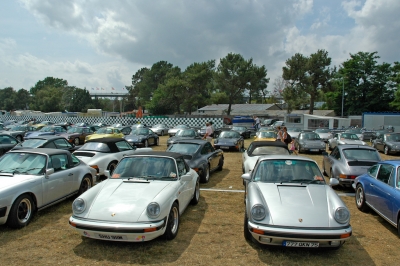
Having attended four CLMs in a row from 2006, I skipped the last one but will be back for 2016. The organisers promise more special features for the next Le Mans Classic, so I hope they don’t muck up the essential charm of the format, which is open access to the paddocks and lots of night-time qualifying.
Anyone coming in from overseas is guaranteed to enjoy the Classic Le Mans. Many competitors running lower down the order keep the speed in check, but the guys at the front run a bona fide race. The eras are split into tranches, which allows fans to plan their viewing and be in certain places for particular groups of cars.

I like watching all of them race, but following 917s, GT40s and 935s from various sections of the circuit over the course of the weekend is cool. I recommend a grandstand seat for night practice and qualifying, and then get out in the country to experience proper speed on the Mulsanne.
It’s easy to drive out to Arnage or Maison Blanc, soak up the energy of the cars as they hammer around the circuit and contemplate the level of endurance these cars were built with back in the day, and how hard the drivers had to push to win at Le Mans.

Not much has changed – Le Mans is still Le Mans – but teams are now huge: massive operations with a lot of data collected that can help show how the car is performing. Back in the golden age, it was quite a different story: you just had to drive the crap out of it and hope things stayed together.
More info on the Classic Le Mans website. Hope to see some of you there!

by John Glynn | Feb 8, 2015 | Classic Porsche Blog, Project Cars
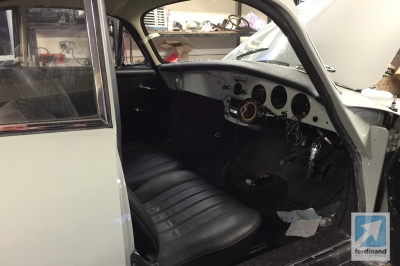
This smart Porsche 356 Carrera 2 is currently going back together following a forty-year spell as a project car. Owned by the right reverend Francis Tuthill, the main man took it apart in the 1970s when it had a bit of rust in the sills. It’s taken a mere four decades to find time to put it back together.
Before the 356 boys chime in with a million questions, I don’t have all the details to hand at present: it was a flying visit en route to somewhere else when Francis grabbed me with the usual: “you don’t want to be taking pictures of that. I’ll show you the real story.” One does not refuse such offers.

I hear this car is one of four right-hand drive cars manufactured: other sources reckon there were six. This is not Fran’s only four-cam project and it is going back together to be driven, although I don’t quite know where to at the minute. I’ll definitely be blagging a spin in it when done.
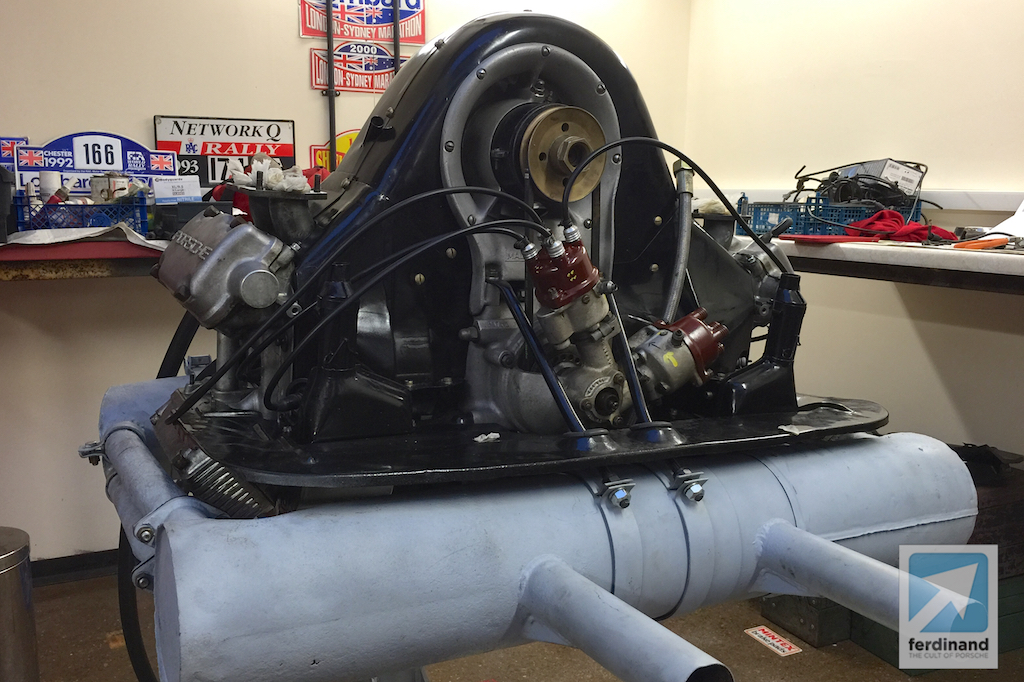
The Carrera 2 remains a rare bird, especially in right-hand drive. Fuhrmann’s four-cam engine reached its peak here in the Type 587 version: 1966cc of revvy flat four, delivering around 130 bhp.

The engine is shown here in a stand, which is where most servicing must be done with the four-cams. Wider than the normal engines, these four-cams come out when its time to do the plugs: hence why Francis called me down for a look. “You won’t see a thing when this is back in the car.”

I do like the Porsche 356. It still has such a great shape and Carreras were right on the pace of the early 911s: one reason there was so much dissent when the 356 was displaced by the new boy. Driving a ‘regular’ 356 is easy, relaxed, evocative. Light, direct steering and a welcoming cabin makes a very comfortable environment for mile after mile. How much it changes with a four-cam, I hope to report sometime soon.