
by John Glynn | Feb 22, 2016 | Classic Porsche Blog, Project Cars
As my small car collection lay mostly unused last year, I made “use it or lose it” my car motto for 2016. The little 1981 Porsche 924 Turbo has enjoyed a lot of attention so far this year (spent another full day on it yesterday), but this morning I finally pushed the 1976 911 Carrera 3.0 out of its corner and took a good look at it after a few years unused.
Porsche Paint Microblistering
I discovered some microblistering in the paint last year, caused by using a car cover (genuine Porsche Tequipment) in a relatively damp environment, so I expected to find a bit more on the other side closest to the wall. Turns out I underestimated the amount as that entire rear quarter panel is covered in tiny blisters – the car will definitely need a repaint. I am sort of OK with it as it will give Robert at Racing Restorations a chance to repair some other panel stuff I have never been happy with. It won’t happen this year, but I’ll have a budget for it in 2017.

The main aim at the minute is to fire the engine up and get it ready for an MOT sometime in April. Advice from Anthony at Tuthills is to pull the spark plugs out, crank the engine until the oil is up to pressure, then put the plugs back in and fire it up. I need a decent battery for that and my compact Odyssey PC680 battery is totally shot so I have a new one to fit. To fit the new unit, first I had to get the old one out.
Porsche 911 Battery in Smuggler’s Box (not RHD)
This little Odyssey lives in the smuggler’s box held secure in a tidy aluminium mount. I fitted this as a younger, more flexible person, so my 48 year-old self had a good curse at that idiot while trying to get this all out single-handedly. Whatever possessed me to stick it down here I do not know! Funny how it all changes in ten years. Anyway, half an hour later I had it out and in the boot of the Cayenne. I have a new Odyssey battery here so will stick it on the charger overnight and fit it later in the week.

A quick look at the battery showed my pretty aggressive boost charging of it last year to try and start the car had done the battery no favours: the centre is totally distorted. No big loss as it was not responding to a charger by then anyway, but it shows how little tolerance for misbehaviour these things have.

I do like the lightweight battery ethos in this lightweight 911, but am going to have to be more regimented about using a maintenance charger on it. Not leaving the car sitting around for years would probably also be a good idea. My nice bright damp-free new garage at home will help!

by John Glynn | Feb 8, 2016 | Classic Porsche Blog
I was sad to hear of the death of Bob Watson yesterday. As one of the UK’s best-known independent Porsche mechanics, Bob Watson Engineering was for many years based in Middle Aston, which is where I met him and went on to spend quite a bit of time with him.
Born in March 1950, Bob’s Porsche life began in March 1975, when he took a job with Maltin Car Concessionaires in Henley-on-Thames. Owned by Chris Maltin with partners Rod Turner and Charles Holdsworth-Hunt, the business held franchises for Porsche, Ferrari and Lamborghini. I can imagine the twenty-five-year-old Bob rolling up for work at Maltin surrounded by seventies exotica – it must have been fantastic.
Back then, Porsche did all of its training at the factory. Three or four times a year, Bob and his UK colleagues would be sent to Stuttgart for one week studying engines and doing rebuilds, the next week’s visit would cover transmissions, then a week on brakes and suspension and so on. The training continued up to 1982, so it was no surprise to find that Bob was very hot on standard Porsche models from ’75-’82 including the Carrera 3.0, 911 Turbo 3.0/3.3 and, of course, the 3-litre 911 SC. He built some amaing cars, including Steve’s 3.5-litre 930 (below). But I’m jumping ahead of things here.

In September 1984, Bob decided to call it a day with Maltin and headed off to work for John Greasley at Dage Sport in Aylesbury. Greasley’s now famous Blue Coral-sponsored Porsches were a big deal in motorsport and Bob was well into racing. That brought him up the country and also put him at the back end of 935s, as Greasley was running a pair of them: one left hand-drive genuine car and a right-hand drive replica so the real one wouldn’t get damaged.
Porsche racing was a big deal in the mid 1980s. Though the Porsche Club was smaller than it is nowadays, the club was a big force in racing and the Giroflex-sponsored series drew big crowds and big name drivers. Many of the UK’s leading air-cooled specialists made their names around this time: Bob enjoyed a great rivalry with Neil Bainbridge’s cars in the Porsche Club series and other famous races including the Oulton Four-Hour Endurance.
Racing continued to be very important when Bob struck out under his own name. Photos hanging in Bob’s offices showed racing from all over Britain and of course at Le Mans (Bob also raced until the mid 1990s). From his workshop in Bicester and later Middle Aston, Bob Watson Engineering became a big name in UK Porsche. A quick search for Bob online will show just how many 911s he laid hands on: all sellers were delighted when they found Bob Watson history in an air-cooled car.
Bob took to Motec Engine Management early on and used it very successfully on a number of Porsche builds and others: I once watched him tuning a V12 Jaguar E-Type which he had fitted with Motec. The fastest air-cooled Porsche I can remember being driven in was a naturally aspirated 2.8-litre Motec-equipped 911 ST, which Richard Tuthill took me for a run in sometime during 2010/2011. Even on rock hard dampers and tyres, this was absolutely the quickest car: you simply would not believe a 911 could move that fast uphill. Not until I rode in the 997 GT3 Cup R-GT rally car on a wet tarmac stage was I so impressed again, and that’s not rose tinted glasses. Bob also built the famous hillclimb 911 of Roy Lane: another incredible Porsche.
I can’t remember when I first went to Bob’s, but it was early in my Porsche life, as he was only half an hour from my house. Back then, I had a 911 SC Cabriolet and had started writing for various Porsche magazines. I knew Bob had a dyno as Tuthills used it quite regularly: Francis would be clicking fuel pumps up and down notch by notch in typical Francis fashion, while Bob would shout above the fans: “for f**ks sake Francis, give it half a turn”, trying to speed up Fran’s progress. No one has ever succeeded in that, but Bob always gave it a good go. I took my SC down there for Bob to have a look and we spent an hour or more chatting, even though he had plenty of other stuff to do.
There was always a bit of craic going on at Bob’s and I don’t remember one conversation with him where I didn’t learn something. He was a font of knowledge so I organised an ImpactBumpers.com group visit to Bob’s one year – the only Porsche specialist we have ever visited as a group if I remember correctly. We spent so much time talking whenever I saw him, it is only now I need a photo of Bob that I realise I don’t have any: I have used a pic of Alan’s S on Bob’s dyno pending better photos (email me a pic).
Many air-cooled 911 owners were delighted to have Bob fettle their cars on the dyno. Including me, as Bob sorted me out with a run just after I got bought my Carrera 3.0 Coupe in 2007 and did a first dyno run elsewhere which suggested it was lean at the top end. He spent an hour with me on the rollers and wouldn’t take a penny for his trouble. He gave me great advice on what to do next – “just drive the nuts off it” – which of course I followed religiously.
Bob’s dyno was the benchmark for PCGB racing and for years he served as Technical Consultant for the 930 Register. Alan Drayson at Canford Classics was a big fan of Bob’s work and would tune all of his new engine builds on the Bob Watson dyno, including the stunningly restored RHD 911S we did a feature on together. When a partnership at the Middle Aston unit eventually went sour, Bob upped sticks and went to work down south with Alan. After that, we lost touch.
In recent times, he had returned to Oxfordshire and was still booking work until he passed away last weekend. Yesterday, I heard he almost came to build engines at Tuthills last year, but they had just taken a new engine guy on at the time. It would have been good to see Bob over there every week.
People who knew Robert Bailey-Watson much better than I did will write great tributes to Bob in the Porsche press and I urge you to read them. Bob had his detractors (don’t we all), but I always found him excellent company and being around someone with so much Porsche knowledge, shared with unstinting generosity, was a genuine pleasure. He only worked on my cars twice, but he made them better both times. RIP Bob: you will be missed.
by John Glynn | Feb 3, 2016 | New Models, Porsche News
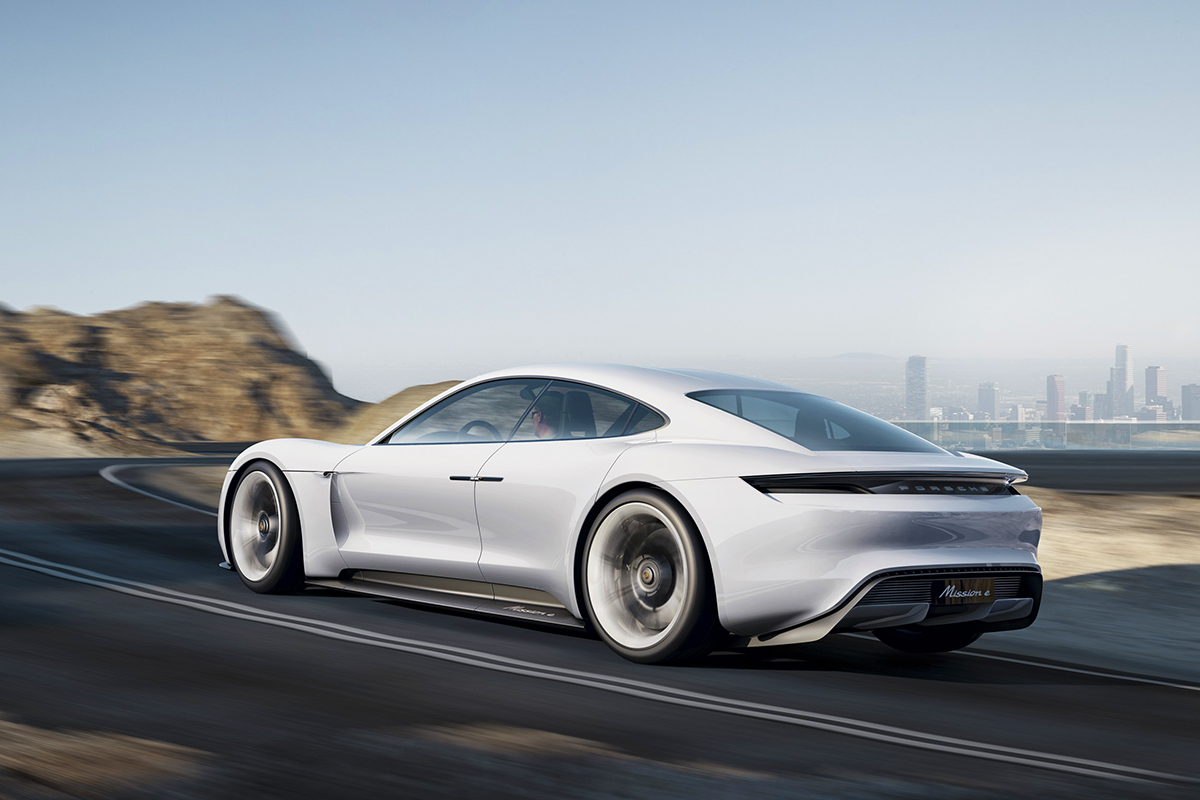
Porsche CEO, Dr Oliver Blume, has revealed that the company will spend one billion Euros* (just under $1.1 million at today’s exchange rates) putting the Mission E concept into production by the end of this decade. The all-electric car will be built at Zuffenhausen, which is receiving the lion’s share – €700 million – of total investment.
“We are not just experimenting around to see what comes out of it,” says Blume. “We’re investing heavily in our future because we are convinced of doing the right thing at the right time. The next few years will see a new paint shop and a separate assembly plant in Zuffenhausen. The existing engine plant will be expanded for the production of electric drives. In addition, we will be extending the existing body shop. All together, more than 1000 jobs will be created there.”
Low Oil Prices vs Mission E Electric Vehicles
Newspaper headlines predicting the end of electric vehicles thanks to low oil prices continue to sound ridiculous to most straight thinking people, and Blume is on the same page. “You don’t have to be a clairvoyant to predict that the oil price will go up again. The current trend is deceptive.
“We don’t want to and can’t reverse the developments [already made] – we have no choice. Our innovations are the crucial factor. They are what it all depends on. Market leadership does not come from subsidies but from superior technology. Once we have it, everything comes automatically.”
Is Porsche really targeting market leadership in electric vehicles? If yes, could it ever get there? Porsche has no plans to dilute its brand by bringing small or medium electric cars to market but, by continuing to stretch its hybrid and pure electric expertise in premium product development and fitting that technology to the ultimate cars of the future, Porsche will pick up opportunities to licence derivations of its electric powertrains elsewhere, in much the same way as the company licenced patented transmission synchros for decades. No doubt Porsche electric drivetrain technology will also inform cheaper hybrid and full-electric powertrains used by other brands within the Volkswagen parent company.
How Much is a Billion?
*UK readers informed mainly by 1960s road test articles note that one billion is now accepted to equate to one thousand million and that the ‘British Billion’ – a million million – is now classed as one trillion. Denis Healey officially adopted the thousand-million billion for UK Treasury reporting in the 1970s (apparently).

by John Glynn | Jan 31, 2016 | Classic Porsche Blog, Project Cars
My Porsche 924 Turbo restoration project returned home this weekend, more than a year after it was painted by Rob Campbell at Racing Restorations. I had been storing it out in Worcestershire but recently lost the space, so it’s come home to be finished with a view to selling it sometime this summer for cash to plough back into my garage build.
This LHD non-sunroof Turbo is a nice example of the very cool Porsche 924. Having lived most of its life in Sardinia, this one is lower than average mileage, entirely rust free and still remarkably original. Despite being stored for more than twelve months and not being on a battery charger in all of that time, it started easily when the time came to load it on the trailer. It runs pretty well once warm – cold running is not great so will be taking a look at that. Bound to be something simple.
I spent a few hours on the 924 today and made some good progress. A few exterior bits have gone missing since the car was stripped for paint (probably still at Rob’s), so I excavated some of my 924 spares boxes and dragged out some prize pieces, including a brand new boot seal I bought from Porscheshop a few months ago. I put that on and made a little shopping list, which turned out to be quite a long shopping list in the end: more than £500 worth of rubber, including door seals, rear window seals and numerous detail parts including a new Porsche badge.

Other bits which were missing from the 924 when I bought it include the aluminium jack, spare wheel compressor and tool kit. I did find an ally jack and an old Blaupunkt Toronto stereo in my stash, which I need to test. I’ve stripped out the doors so I can clean and regrease the handles and lock mechs and also the electric window motors and regulators, which are notorious for seizing up. I’ll dynamat the doors and fit new membranes at the same time. I found a full lock set to replace all the mismatched keys, but no miracle finds can sort this steering wheel, which desperately needs a retrim, if not just swapping for a Momo Prototipo.
The carpets are quite faded from UV exposure, so I bought a good LHD carpet set last year, but I might try dyeing these carpets first as other 924 boys have had good results with carpet dye. Elsewhere, there’s a set of 205/60 15 Bridgestone tyres to go on and I’ll take some engine bits off for powdercoating to lift the underbonnet presentation.
It’s a good solid car in nice condition, so most of what it needs is simple. The hardest part will be UK registration. It is still Italian registered and I don’t have the Italian registration document, so getting it UK legal will be a bit of a ballache involving waiting for a Porsche Certificate of Authenticity and also getting it through an MOT, which will force me to fit a passenger mirror.
I don’t want to do screw anything into the bodywork permanently, as I like the uninterrupted line down the passenger side, so I’ve been looking at temporary fit mirrors which could be detached once the test has been passed. The single side mirror is an oddball European car throwback, which I have always quite liked. You have to hang on to these details.

by John Glynn | Jan 23, 2016 | Project Cars, Porsche Cayenne
An unexpected Porsche headache this morning, as the Cayenne left me stranded at the LPG pump with a flat battery. It had started OK on quite a cold morning and I’d driven the fifteen miles or so to the station with dipped headlamps on due to fog. I left the sidelights on with the engine off while I filled up but, when I was finished, the Big Pig wouldn’t crank enough to start the engine. Five minutes with sidelights on had drained whatever voltage was left in the battery.
I always carry jump leads, so I borrowed the working car of a friendly passer-by and got a jump start: it fired up straight away. I drove around the corner to the local Euro Car Parts and bought a new Bosch S4 019 battery to replace the non-Bosch item I had fitted just over a year ago: £104.40 including VAT, which was not too bad for a big battery with four-year guarantee.
The old battery had been a bit of a worry since Christmas, when I had to jump start the car a couple of times after it had been standing for a few weeks. Although my 2004 Porsche Cayenne S has now done 154,000 miles and is still on its original water-cooled alternator, diagnostics showed no problem with the alternator and all the wiring looked OK, so it had to be a battery problem.
When I first bought the car, it had a great Bosch S5 Silver battery fitted. I had a few things play up a bit including the starter and forum wisdom suggested the battery was at fault. Euro Car Parts could supply a Lion battery with slightly more amp hours (100Ah/800 CCA) than a new Bosch S4 (95Ah/800 CCA) and a three-year guarantee, so I bought one and fitted it. Of course, it made little or no difference, but I left it in there. I’m sure I still have the old Bosch S5 battery somewhere, which would no doubt still work perfectly but anyway, the deed is done.
Today was a busy day for the Cayenne trailering 911s up and down the country. It behaved perfectly all day after I had changed the batteries over, so I am hoping this issue is now resolved. It feels better to have a Bosch part back on the car – Porsches never seem to work right with anything else. I’ll claim on the three-year guarantee for the dud one so it should all work out.
How to change/replace your Porsche Cayenne Battery
Tools:
- M10 multispline 3/8 socket & ratchet
- 10mm 3/8 socket
- 10mm spanner
Most Porsche Cayenne 955 (Gen 1) models have a single large battery under the left front seat: that is the passenger seat on a right-hand drive car. The seat base lifts up on a pair of rear-mounted hinges to allow access to the battery box. The multispline M10 bolts which hold the front of the seat frame down are under the two plastic covers in front of the seat: these just clip off to reveal the bolt heads.
Undo the bolts and tilt the seat up: hold it up out of the way with a strap to the grab handle if you’re worried. Now you can see the battery cover, which has four clips, one in each corner: undo those and lift the cover off. Your 10mm spanner will undo the terminals (remove earth first), and the 10mm socket will undo the front corner bracket, and the big side clamp holding the battery in place. If you’re worried about losing your radio settings etc, connect a battery charger to the terminals before you unhook them.
Once the two clamps are off and the terminals have been detached and secured out of the way, disconnect the small battery vent hose and get the old battery out of there. It is worth cleaning any dirt and dust out of the battery tray before sliding the new battery in.
A bit of petroleum jelly on the terminals before connection is an old-school habit, but not too important in these days of sealed batteries that do not give off corrosive vapours when charging. Then reconnect everything, put the lid down and bolt the seat back to the floor: use a bit of blue Loctite on the seat bolts. Have a cup of tea & a decent biscuit – you just saved yourself a few quid by not going to a dealer.
SHARE • EXPLORE • SUPPORT
Ferdinand blogs my freelance adventure with Porsche at the centre. To support the blog or engage with me in other ways, you can:


