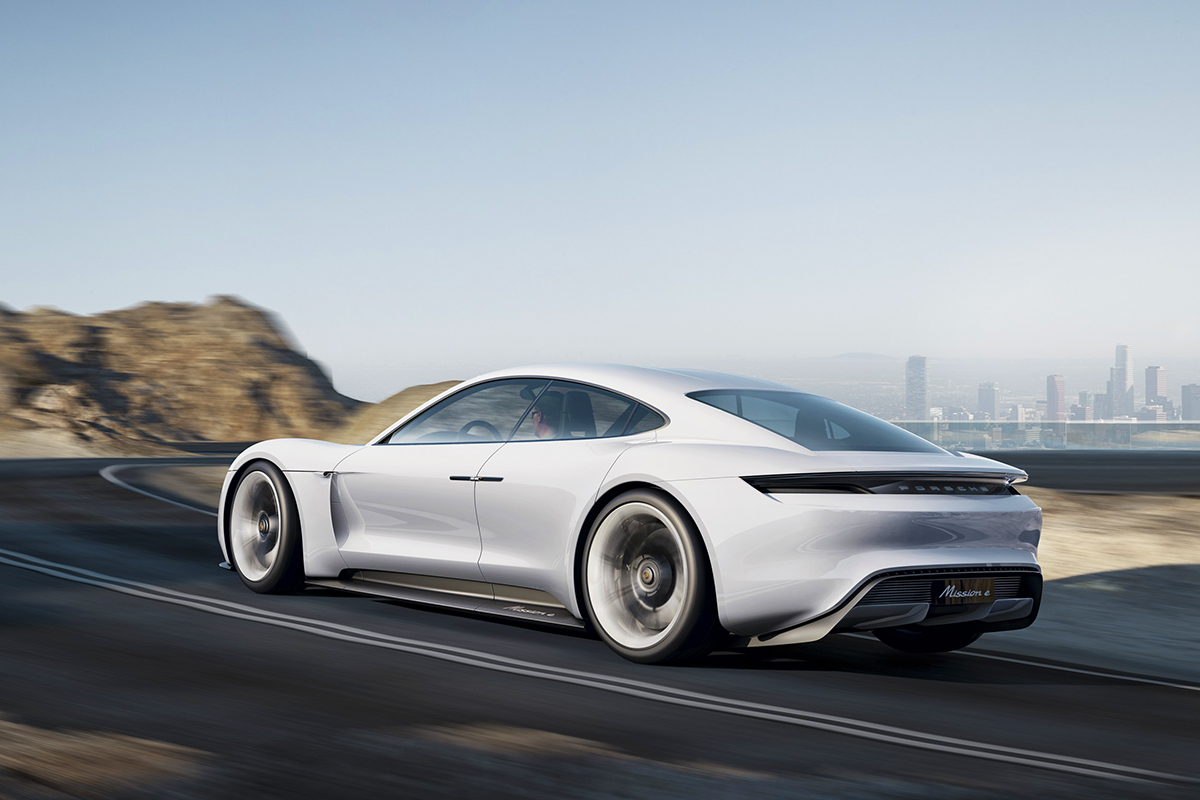
Porsche CEO, Dr Oliver Blume, has revealed that the company will spend one billion Euros* (just under $1.1 million at today’s exchange rates) putting the Mission E concept into production by the end of this decade. The all-electric car will be built at Zuffenhausen, which is receiving the lion’s share – €700 million – of total investment.
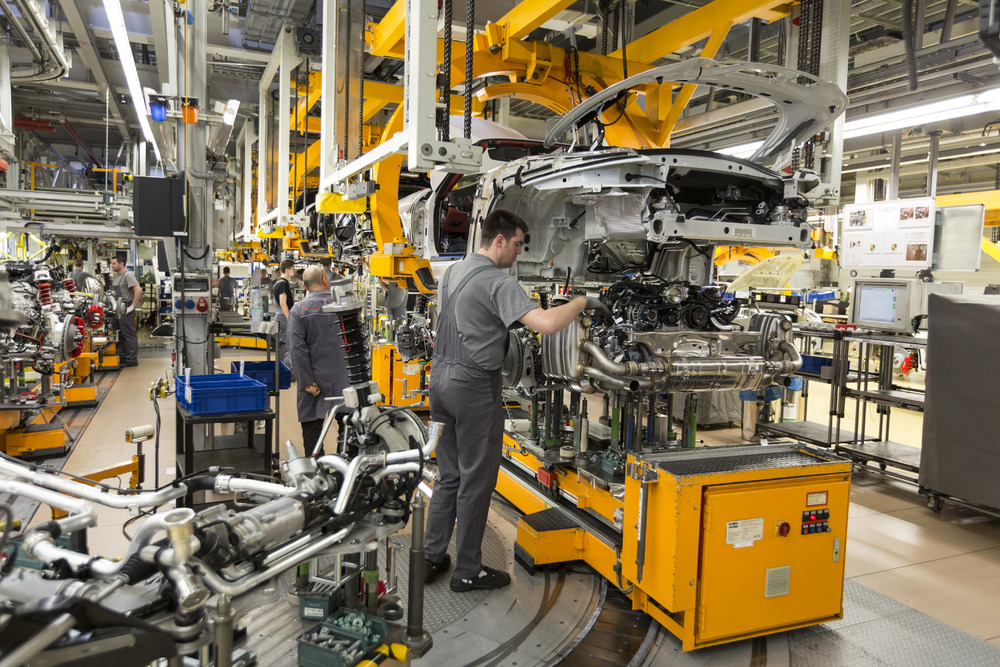
“We are not just experimenting around to see what comes out of it,” says Blume. “We’re investing heavily in our future because we are convinced of doing the right thing at the right time. The next few years will see a new paint shop and a separate assembly plant in Zuffenhausen. The existing engine plant will be expanded for the production of electric drives. In addition, we will be extending the existing body shop. All together, more than 1000 jobs will be created there.”
Low Oil Prices vs Mission E Electric Vehicles
Newspaper headlines predicting the end of electric vehicles thanks to low oil prices continue to sound ridiculous to most straight thinking people, and Blume is on the same page. “You don’t have to be a clairvoyant to predict that the oil price will go up again. The current trend is deceptive.
“We don’t want to and can’t reverse the developments [already made] – we have no choice. Our innovations are the crucial factor. They are what it all depends on. Market leadership does not come from subsidies but from superior technology. Once we have it, everything comes automatically.”
Is Porsche really targeting market leadership in electric vehicles? If yes, could it ever get there? Porsche has no plans to dilute its brand by bringing small or medium electric cars to market but, by continuing to stretch its hybrid and pure electric expertise in premium product development and fitting that technology to the ultimate cars of the future, Porsche will pick up opportunities to licence derivations of its electric powertrains elsewhere, in much the same way as the company licenced patented transmission synchros for decades. No doubt Porsche electric drivetrain technology will also inform cheaper hybrid and full-electric powertrains used by other brands within the Volkswagen parent company.
How Much is a Billion?
*UK readers informed mainly by 1960s road test articles note that one billion is now accepted to equate to one thousand million and that the ‘British Billion’ – a million million – is now classed as one trillion. Denis Healey officially adopted the thousand-million billion for UK Treasury reporting in the 1970s (apparently).
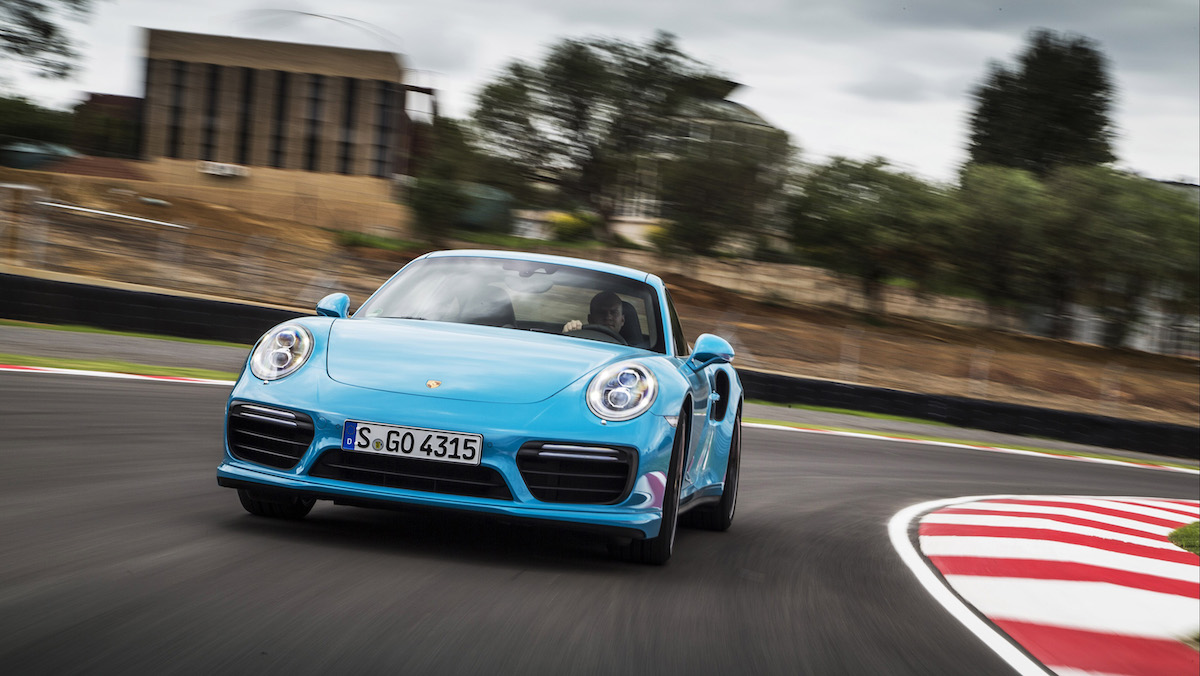
Porsche is currently hosting the press launch for its newest 911: the 991 Turbo S. The event is being held at Kyalami Circuit in Johannesburg, South Africa, but more of that later. The car will apparently outrun a 918 Spyder from 50-75 mph (count 1.8 seconds in the Turbo), but some reviews seem to suggest that the £150,000 991 Turbo S is just not special enough.
These days, we do not have to wait until the earliest print date for journalists’ first impressions of a new car: reviews are online by lunch in the era where web content is king. The verdict seems to be that the Turbo S is unbelievably fast but it’s not as special as similarly-priced alternatives. Unless you are a Porsche nut, in which case it’s the hottest Turbo yet and therefore must be owned.
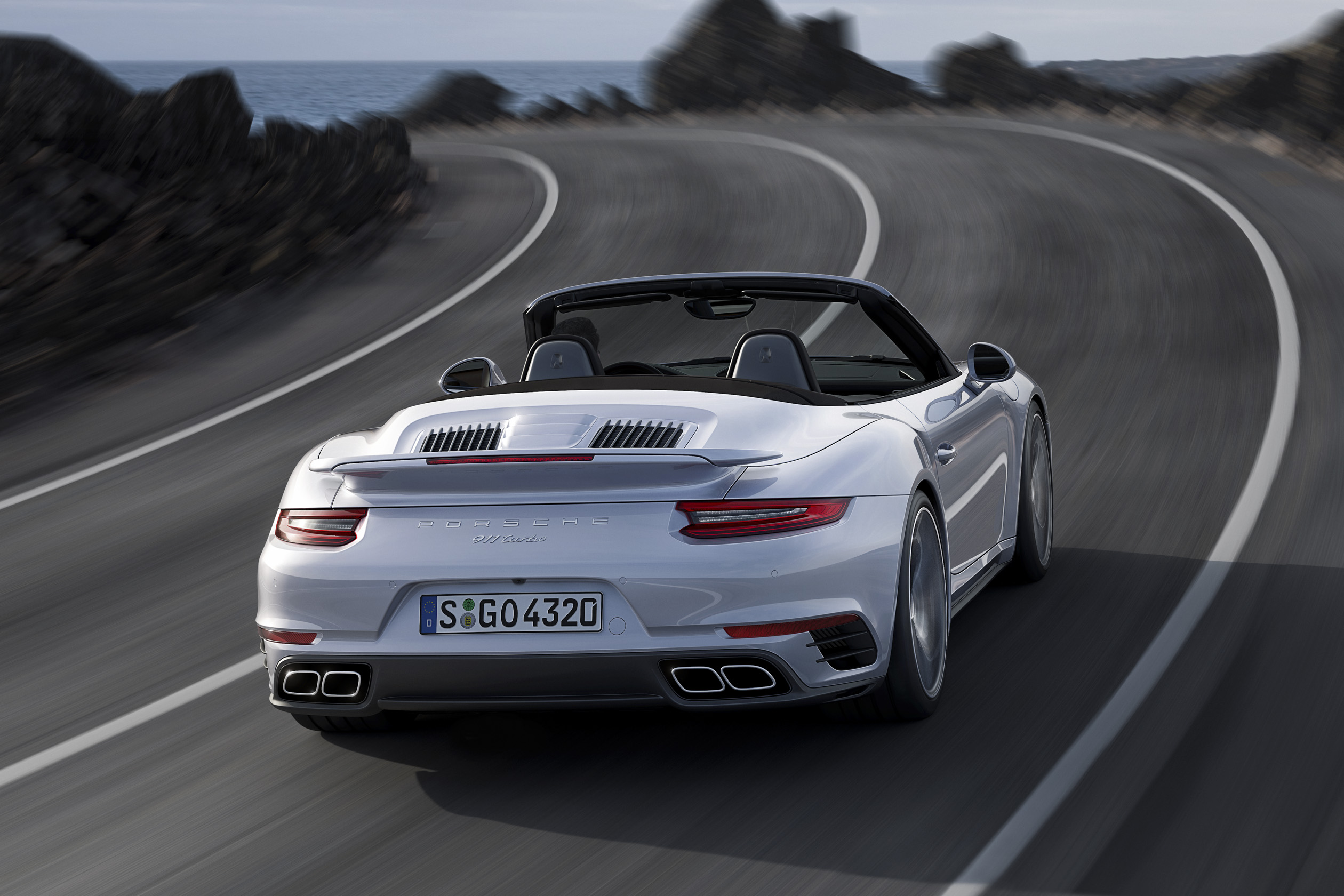
The Turbo S produces 572bhp at 6,750rpm. Peak torque of 553lb/ft runs from 2250 to 4k rpm. PDK is the only transmission on offer, which all the Turbo S owners I know will be quite satisfied with. Who needs a manual option confusing future values/residuals? That’s what the 991 GT2 will be for.
How much faster a GT2 manual might be is anyone’s guess. Official 0-60 time for the Porsche 991 Turbo S PDK is 2.9 seconds, but engineers claim that they can fling it to sixty in 2.6 seconds under optimum conditions. Top speed is 205 mph: this thing is unmercifully fast.
Porsche 991 Turbo S Magazine Reviews
Greg Kable’s Porsche 991 Turbo S review on Autocar is perhaps the most enthusiastic summary available for now, and reads like Greg had a day in the car while other journos made do with just a few laps. “[The 991 Turbo S] represents a significant step in terms of dynamic prowess and ability to entertain. While a lot about the facelifted 911 Turbo S remains the same, its intrinsic character has evolved, making it more memorable to drive than ever.”
Dan Prosser is rather more restrained in his review of the Porsche 991 Turbo S for Evo Magazine. “Given that the revisions are quite subtle, the 911 Turbo S’s overall proposition remains the same – for everyday usability, and for those buyers who require two small rear seats, it’s in a class of one. The similarly priced McLaren 570S has the more engaging chassis, while the Audi R8 V10+ has a massively more exciting drivetrain.”
Reviewing the Porsche 991 Turbo S for CompleteCar.ie, Kyle Fortune gives the car four out of five overall, noting: “If the engine’s lacking in any area it’s in the aural department. That remoteness is present in the steering too, which, while undeniably accurate, lacks the weighting and feel that’s present even in the four-wheel drive 911 Carreras.”
Porsche at Kyalami Circuit
Perhaps I missed something, as I haven’t been paying that much attention, but I think this is the first time Porsche has used Kyalami in anger since Porsche’s SA representatives bought Kyalami Circuit at auction a year or so ago. The pics I’ve seen suggest the place has been well and truly spruced up. It seemed obvious to me at the time that Germany might have had a hand in the purchase, as Kyalami is a perfect spot for car launches during the cold months of a European winter. Nice to see that prediction has come true: there’s a first time for everything.
Porsche has announced worldwide sales of 225,000 cars during 2015, beating the previous year’s all-time record by just under twenty percent. As with all Porsche sales releases, the opening gambit is that Porsche continues to “focus completely on building highly emotional sports cars” before confirming the Macan SUV as the biggest seller, with the Cayenne SUV in a close second place.
“The figures reflect the pulling power of our brand as well as the appeal of our products which we have launched on the market in the past few years,” says Dr. Oliver Blume, Porsche CEO, who then says that sales are not the primary measure of Porsche’s success. “What is much more important for us are customer enthusiasm, return on sales and secure jobs.”
Last year’s most enthusiastic customers were in China, where 58,000 car buyers committed to a new vehicle bearing the Porsche badge. China outperformed the USA by some 6,500 deals: the country was up 24% year-on-year, while America managed a 10% rise in the same period. Germany accounted for nearly 29,000 cars all on its own, part of a 24% rise in European sales.
Prolific Porsche Production
Think about 225,000 new Porsches hitting the roads in 2015. Add at least the same again in 2016 and the 190,000 cars Porsche delivered in 2014: a total of almost 650,000 cars sold in thirty-six months. Consider the brand’s future as part of the wider Volkswagen group strategy to rationalise its products and implement billions of Euros in platform sharing economies, driving higher unit margins as it regains market share and ask yourself just how long that historic badge can stay any way exclusive.
Porsche sold 32,000 911s in 2015: up 4% on 2014. Boxster/Cayman recorded a mere 1% increase. The 911 may go racing, but how long can the brand credibly claim that its primary business is sports car manufacture when five of every six cars on Porsche delivery trucks has three rear seat belts? When does the sports car connection lose relevance?
Do sports car buyers want Porsches?
Assuming sports cars still have a place in the world, has Porsche got what sports car buyers want? The cheapest Porsche sports car is a basic Boxster, with UK prices starting at £39,500 for a car without options. Porsche has reportedly abandoned plans to build a baby Boxster so there is no sign of a modern day 914. The decision has to be connected to brand strategy, as no doubt there is a market for a smaller Porsche roadster priced circa £30k and development would not cost a fortune. It is hard to believe that a compact roadster product line would have as negative an affect on long term 911 sales as 200,000 Audi-derived Porsche SUVs rolling off the lines every twelve months.
I enjoyed driving a fully loaded (Volkswagen Group) Seat Ibiza 1.2 TSI for two weeks in Spain last month. The driving position was perfect, controls all very slick and, try as I might, I could not get the sporty turbocharged hatchback to drink fuel at scary mpg. Put the same chassis & drivetrain in a roadster chassis with a sensible price tag and you have a capable MX5 competitor.
Whereas independent Porsche might have gone down the baby Boxster route, no one at Volkswagen is going to endorse a turbocharged 1.2-litre Porsche sports car. So buyers are left with the choice of spending £40k for the most basic Boxster versus MX5s starting at less than £20k. The Boxster has build quality in its favour, but the fun-to-drive Mazda is also well built and the latest model has just been lightened by more than 100 kilograms as part of a push for market dominance. A Seat Turbo roadster might take the fight to Mazda, but upmarket Porsche can’t attack the MX.
911: overpriced and overplastic
Over Christmas, I visited Porsche’s 991 online configurator and ended up with an orange 911 Carrera costing £85k with a reasonable but not excessive spec. Bearing previous 991 drives in mind and imagining the likelihood of ordering an £85k Carrera had I the means to do so, I couldn’t envision an enduring sense of occasion with a new VW-diluted 991 parked on the driveway.
Road testers rave about the latest 911, but how many of them will ever buy one brand new? And how much weight does press opinion truly carry in real-world buying decisions? Ownership costs have to make sense, as does brand positioning. Most new car buyers have no interest in WEC or motorsport activities, so much brand perception comes down to what people see on the roads. When mass public consciousness of Porsche’s place in the world can be summed up as a volume manufacturer of expensive SUVs, it is hard to see overwhelming positives for the sports car lines. I’m not saying they’re doomed, but there has to be a downside.
RIP David Bowie
David Bowie died this morning, so BBC 6 Music has been celebrating his remarkable impact all day. I once read an interview where Bowie spoke about meeting some kids who congratulated him on a passable cover version of Nirvana’s “Man who Sold the World”. “Fuck off you little tossers,” smiled Bowie, who wrote the song in 1970 but ended up reminding audiences of this when he performed it, after Nirvana’s cover became the more well known version amongst a new generation. Don’t mess with legends without doing your homework.
For the first time in its history, Porsche AG has delivered more than 200,000 cars in a single production year with still one full month remaining to the end of 2015.
A total of 209,894 cars were delivered to the end of November 2015: 24% up on the same period last year. Cayenne was November’s big winner: almost 40% on the same month last year with 6,500 models delivered. Cayenne has also beat Macan this year: a total of 68,000 cars delivered between January and November 2015.
China has been the biggest market so far in 2015, no doubt a surprise to those who have been talking that corner down. Chinese Porsche buyers took delivery of 54,302 cars through the first eleven months of 2015: up 34% on the same period last year.
Despite selling almost ten percent more cars than last year, the US continues to trail China’s success by some 6,500 cars: twelve percent of the Chinese total. Europe was up thirty percent for the year, with 70,500 cars sold and delivered.
I had it completely wrong yesterday: Porsche was not testing a new 991.2 RSR at the Nürburgring. Instead, it was gearing up to run the new-for-2016 Porsche 991 GT3R in a test under racing conditions at the Nürburgring in the Rowe DMV 250-Meilen-Rennen, with works drivers, Nick Tandy and Fred Makowiecki.
At the ninth round of this year’s VLN Nürburgring Long Distance Championship, the pair ran amongst the race leaders at a cold and foggy Nordschleife, eventually finishing the four-hour race in third place overall. The winner was the polesitter Black Falcon Mercedes SLS, which qualified P1 on an 8:01.443 and turned a fastest race lap of 8:02.786. In comparison, the fastest lap set by the new Porsche 911 991 GT3R was 8:10.828. It finished on the lead lap, 4 minutes behind the Mercedes.
Porsche 991 GT3R test ends with Nürburgring Podium
“We didn’t come here specifically to race, but I’m happy to be on the podium,” said Tandy. “The car was fun to drive.” “Balance was good and it was fun to drive at the Nürburgring,” echoed Fred. “A couple of areas need optimising, but that’s normal in testing and development.”
The new GT3R features an improved aerodynamic package compared to its predecessor, as well as improved driveability and further optimised safety. The engine used in the Nürburgring tests was the proven (current) power plant, but an all-new direct fuel injection engine generation is currently undergoing test bench runs in Weissach and further testing in the USA.
“The first test outing of our new 911 GT3 R was promising,” says Head of Porsche Motorsport Dr. Frank-Steffen Walliser. “Pure performance was not the only priority today. We are also looking at being able to offer our customers a reliable car that runs well in all conditions. The Nürburgring Nordschleife is excellently suited to put the chassis, body and systems under a stress test. And this works best under race conditions.”
This website uses cookies to improve your experience. We'll assume you're ok with this, but you can opt-out if you wish.AcceptRead More
Privacy & Cookies Policy
Privacy Overview
This website uses cookies to improve your experience while you navigate through the website. Out of these, the cookies that are categorized as necessary are stored on your browser as they are essential for the working of basic functionalities of the website. We also use third-party cookies that help us analyze and understand how you use this website. These cookies will be stored in your browser only with your consent. You also have the option to opt-out of these cookies. But opting out of some of these cookies may affect your browsing experience.
Necessary cookies are absolutely essential for the website to function properly. This category only includes cookies that ensures basic functionalities and security features of the website. These cookies do not store any personal information.
Any cookies that may not be particularly necessary for the website to function and is used specifically to collect user personal data via analytics, ads, other embedded contents are termed as non-necessary cookies. It is mandatory to procure user consent prior to running these cookies on your website.