The 2017 Porsche Supercup season kicked off in style during the Spanish Grand Prix weekend at the Circuit de Catalunya, Barcelona. Although experienced Supercup racer, Michael Ammermüller, took the win in both races, it was perhaps Norwegian Porsche Junior, Dennis Olsen, who set out the most exciting challenge for Supercup honours in the opening round of the championship.
Barcelona has a long downhill run from the grid to turn 1, so race starts here are always exciting. Olsen’s fellow Porsche junior, Matt Campbell, had seized pole position, but wrong-footed the start and almost stalled the engine when the lights went out. Ammermüller had no such issues and made a blistering getaway, with the track to himself on arrival in the braking zone.
Had the German time to study his mirrors, he would have enjoyed a chaotic scene, as cars took to the grass and well into the pitlane exit to avoid tripping over each other. None of the lawnmowers seemed to lose too much time, and many had literally made progress ‘through the field’ by the end of lap one. Lap two brought the safety car out when Berton got beached in the gravel. While the stricken car was removed, Ammermüller worked his 911 hard to keep heat in the tyres.
The aggressive manoeuvring paid off: Ammermüller got the jump on his rival at the restart. As the leader focused on stretching the advantage, a queue of cars formed behind Cammish, with Olsen at the front. The 21 year-old calmly held position for five or six laps but, once the race passed half-distance, he began to distract with his car in that irritating way that only a precocious youngster with a factory drive seems capable of.
Watching Dennis race was a joyous experience. A phenomenal kart driver, he started karting at six years old and has claimed titles including several Norwegian kart crowns, the prestigious German KF3 and KF1 titles and the World SuperKart Cup Final KF2 title. From 191 kart race starts, Dennis has claimed 90 wins. He has uncanny control, particularly over the front of his car, being able to place it with absolute precision. It was this skill that ultimately got him in front.
After harrying Cammish for lap after lap, darting around at the end of the straight and with a few cheeky nudges to boot, he stuck to the left and forced Cammish into braking super-late to defend. As Cammish locked up and ran slightly wide, Olsen bolted right, picked up the inside and shot into P2 on three wheels. It was pure karting brilliance. They held this order to the finish.
Round 2 was held on Sunday. I haven’t yet seen the race, but Ammermüller again finished first with Olsen in hot pursuit and much closer at the chequered flag. Campbell and Cammish came home third and fourth with Dylan Pereira in fifth (above: another young talent with kart pedigree). This puts Ammermüller ahead in the championship, but Olsen is going to have a very interesting season. I look forward to watching him racing at Monaco and trying some kart lines there too.
I’ve been eagerly anticipating Olsen’s first Supercup season since the thrilling reports of his debut Carrera Cup Germany season last year. The young Scandi has also started this year’s Deutschland season in style, winning both races at the recent Hockenheim double header. Watching Olsen race a Cup Car is reminiscent of Kevin Estre’s finest moments: no doubt that a successful sports car career lies ahead if Olsen sticks with good management.
Here’s a video of the full race without commentary. These things normally disappear within a few days, so it lasts as long as it lasts!
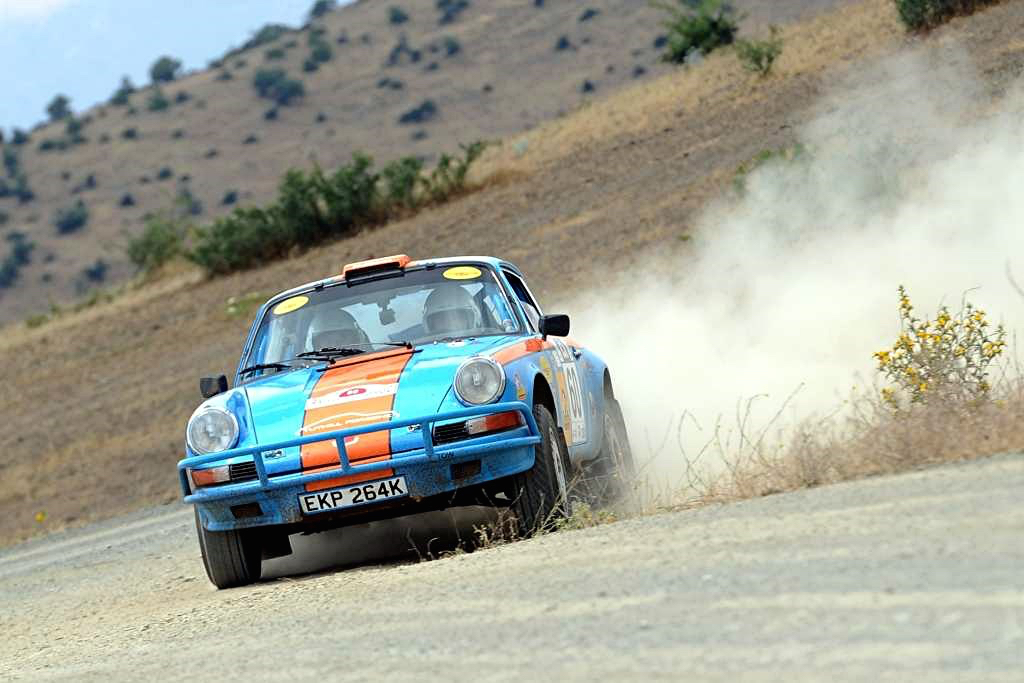
Three Tuthill Porsche 911 rally cars are taking part in the Baltic Classic Rally at the end of this month. All three are special 911s but, as I had this one to hand last week for a few pics and it was the cleanest it’s been for several years, I thought it would be cool to share a few details.
It used to be that when a 911 got too tired or scruffy for road use, it was broken for parts or sold to a motorsport firm and converted into some sort of race or rally car. These days, the story is different. Few people turn up to rallies in air-cooled Porsche 911s nowadays, as the cars are just so expensive. When someone does decide to compete in a Porsche 911, the cars have generally been built pretty carefully.
Tuthill Safari cars are a good example of this. Built to a tried-and-tested recipe, the first step with a bare metal shell is to fix any rust and add all of the strengthening carefully detailed in Tuthill’s in-house manual. This used to be a closely guarded secret, and some details are still kept under wraps, but the team is often happy to share information and help with other engineering, as it did with Jeff Gamroth’s Rothsport Racing 964s which recently took part in the Baja 1000 event.
Rally Car Shell Preparation
The bodyshell preparation is perhaps the most important part of the process. Having seen many cars built elsewhere eventually turning up at Tuthills to be sorted, the big problem is usually rust. So many 911 competition cars are not stripped properly or rustproofed to a very high level after restoration, so they have started (or continued) to rust before they are even finished being built. By the time they turn up for fettling, the rot has really taken hold and the major expense of rust repair is inevitable. This renders all other work done on top of the rusty shell as useless. So sorting the rust is the most important thing to start with.
The car seen here has been around Tuthills since I started going there in 2003. As with most Tuthill rally builds, it was originally imported from the west coast of America, so there was little or no rust to worry about. I’ve driven it a few times over the years and it has clocked up thousands of miles of rallying since being built, including wins on the Costa Brava and Isle of Man historic events. It has also taken part in both Morocco Historic and Safari Classic rallies, as well as a few runs on Below Zero Ice Driving.
Porsche legend, Björn Waldegård, drove this car on the first Colin McRae Memorial Rally and I think Colin’s dad (and former British rally champion), Jimmy, used it on the same event the following year. Now the car has passed to new owner and experienced competitor, David Danglard, a fresh book begins in its history. The first chapter of that is the Baltic Classic Rally, which starts on May 28th and runs all around Northern Europe, loosely following the Baltic Sea coastline.
FIA HTP Homologation Requirements
FIA rally homologations set out most of the specs for a competition rally car carrying an Historic Technical Passport (HTP): essential to rally on international events. If it wasn’t on the original homologation back in the day, then you can’t use it now. Some exceptions include fuel tanks and modern damper systems, which are often exempt from regulations or waivered on the grounds of reliability. But it all starts with the original FIA paperwork.
This car was built for FIA and later upgraded to run on Safari, but the process of creation is basically the same. With the shell mods and a full roll cage in place, the chassis was fitted with a mix of homologated parts and other equipment developed for rally use. Dampers are key to performance, and historic compliant EXE-TC dampers without remote reservoirs are used on most Tuthill Porsche 911s. For a proper Safari effort, the team brings damper technicians to the event to strip and rebuild dampers in accordance with service plans, but these high-end dampers can take a number of historic endurance events like the Baltic before needing rebuild.
Brake calipers may be free on some events, but FIA cars use standard Porsche brakes, which are good enough for historic endurance when running proper pads and discs. Tuthill’s dash-controlled twin-master cylinder pedal box is fitted to all 911 rally builds. Some events do not permit adjustable brake bias, so the system is disabled for those. Small details include a spare throttle cable run from engine to pedal, so if a throttle cable breaks on event, you simply clip in the new one front and rear.
Oil lines are usually run in the car for obvious reasons, wrapped in tight-fitting heat wrap. A central oil tank is fitted to the rear firewall, with a level check tube easily viewed and keeping things simple. The oil system on a proper 911 rally car is a joy to behold, as is the fuel setup with twin Messerschmitt fuel pumps up front on proper Safari cars: again double-headed for reliability. Some rally cars use twin tanks in case of poor fuel, but the Tuthill spec is usually one large – 100l or more – foam-filled fuel tank, sited high up between the front towers and a reworked floor in the front compartment, which then allows two spare wheels to be carried (de-rigeur on historic endurance).
Electrics are kept to a minimum, though many competitors ask for additional spurs to power cameras, GPS systems and so on. The entire wiring system is replaced with a modern competition loom, designed to run fire extinguisher systems, bonnet lamps, Halda rally timers and the like. Bull bars front and rear are there to help recovery and allow towing as much as prevent damage from wildlife or other contact and they are very handy things! They do not add a great deal of weight to the chassis and also allow the bumpers to be lightweight GRP.
Substantial body guards are fitted under the car, to help the 911 survive high-speed running on rough terrain and also survive impacts from hard landings. These are aluminium, but still weigh a fair bit. The good thing about the guards is that all the weight is carried low down. Even with Safari-spec ground clearance, the cars handle beautifully on road (with road tyres).
My last solo drive of a Tuthill Safari car was a return loop from HQ in Wardington to Derry in Northern Ireland using Gilberto Sandretto’s Safari 911 (above). The car was supremely comfortable to drive and that 3-litre engine did not miss a beat. I am sure the new owners of this storied 911 rally car will enjoy their debut event with it and hope to share some road trip photos upon their return.
Ferdinand blogs my freelance adventure with Porsche at the centre. To support the blog or engage with me in other ways, you can:
This Porsche 911 HLS Design Study was one of the more memorable encounters on our recent visit to Techno Classica Essen. These days, it seems any Fred-in-a-shed can stick big wheels, tartan seats and throttle bodies on an old Porsche and market it as reimagined, but, if one really wants to get ‘reimaginative’ with an old 911, then this quirky machine laid down the entry requirements, half a century ago.
Occupying pride of place on the Early 911S stand, amongst the meticulously curated 911 collectables brought to Essen every year by the Dutch specialists, the HLS Designstudie seemed rather ungainly compared to the car its designer destroyed to create it. That said, judging a fifty year-old bespoke GT with hindsight and a modern aesthetic is never going to go well. Car culture has an ingrained affection for better known prototypes of a similar vintage, many of which are nowadays accepted as the most beautiful cars ever made.
Even forgetting that Gandini’s 1965 Miura and early LP400 Countach or the 250 GT Lusso ever existed, this car’s looks are a challenge. While the styling curves of the great GTs flow serenely from one to the next, the awkward shapes of the HLS trip over one another like lumpy shopping. It is vaguely reminiscent of one of those Matchbox fantasy cars which I never wanted to receive as a kid and, in some ways, that’s just what it is.
Taking styling models created by the University of Aachen’s automotive design programme, coachbuilder Hans-Leo Senden (hence HLS) built full-size versions. The work explored the organic and commutable nature of sports cars and created something unique from what, at the time, was regarded as a rather plain-jane production machine. It is not sweet and sexy like a Lambo GT or a Jaguar E-Type, but we can probably all get with the motives behind its creation.
As a Porsche valuations person, I can’t look at any old Porsche without thinking of price, so what is the value of this? Well, it’s rare, built on 1965 Porsche 911 underpinnings and is a proper period piece. Only a handful of these things were ever created. There are better-looking ones on Google images, but what really matters for valuation purposes is whether it was commissioned by Stuttgart or not – and I do not know the answer. Either way it has value, but, if the wheels were set in motion by Stuttgart, then the desirability is greatly increased.
Assuming it was not a Porsche-commissioned creation (and perhaps it was not, as surely it would have gone back to Stuttgart by now), then I guess if you were serious, already had a good 911 collection and were keen to pick up one or two curve balls for interest, one might pay more for this HLS Studie than the price of a nice ’65 911, assuming there was some competition to own it, but that depends on lots of factors including what the rest of it looks like underneath and how much history it has. Or maybe I am greatly underestimating its desirability.
Perhaps what matters is that this spyder-style study on an early 911 still exists, to offer a window into how design students and coachbuilders approached their work fifty years ago. It would make an interesting talking point in an already substantial Porsche 911 collection, but, as a strictly small-scale collector and someone who drives their cars, I’d rather own a standard 911 of the era. Or an LP400.
The 2017 Morocco Historic Rally has been a true rallying roller coaster so far, with an epic battle for the lead overshadowed by the sad loss of a great competitor in his Porsche 911.
RIP Gérard Brianti
Gérard Brianti was a passionate rallyiste and described by many as one of life’s gentlemen. Well known in historic rallying circles, Gérard’s greatest success was victory at the Monte Carlo Historic rally in 2013, driving his Group 4 Alpine A110. A popular member of the Automobile Club of Monaco, he also held the vice-presidency of ASM, the football club of the Principality. Gérard was 64 years old and his premature departure leaves many good memories with the rallying community. We extend sincere condolences to Gérard’s family and friends. Photo courtesy of Jérôme Didier.
The loss of Gérard and concern for the injuries suffered by his co-driver, Freddy Delorme, led to the Bernard Munster Automotive team’s retirement from the rally, as a mark of respect for their team mates. The retirees included Gregoire de Mevius and co-drive Alain Guehennec, who had been enjoying a close battle in their Porsche 911 RS against Philippe Gache and Stéphane Prevot, in the Mazda RX7. When Gregoire’s car lost a wheel on one stage, Gache and Prevot seized their chance.
Morocco Historic Rally standings
At the end of SS23 and heading into the last day, Gache continues to lead, more than three minutes up on the Sunbeam Lotus of Barrile/Chiappe. Gache is one of the favourites on this year’s East African Safari Classic Rally in Kenya and Tanzania – which I should be travelling out for again – and the third-placed car is another confirmed Safari Classic Rally crew: Jorge Perez-Companc and Jose Volta in the Ford Escort RS 1800, prepared by Phil Mills at Viking Motorsport.
In fourth place, just two minutes behind Jorge, is the hard-charging Porsche 911 RS of Belgium’s Joost van Cauwenberge and Steven Vyncke. Joost’s car hails from the Tuthill Porsche stable and my good friend Francis is out with Joost in support. The 911 took overall victory on last year’s Rally of the Incas and is certainly challenging for a podium finish.
Accompanying the sadness of losing a competitor on an event, there is often a sense that the competitors fight on in memory of their comrade. No doubt all those who live and breathe rallying are fiercely determined to give passionate rally competitors a memorable send-off. With crews now doubly motivated and racing in honour of Gérard, it will be thrilling to follow the rally’s last day.
It’s great to see a mix of machinery at the front of the field and so many other interesting cars down the order, including the Citroen SM Bandama which is confirmed to rally in Kenya this year and a wonderful Lancia Stratos which may also be seen on the Safari Classic: one of the last proper marathon-stage historic events remaining.
RIP Steve Troman
I must also pay tribute to another popular Porsche rallyist and 911 collector, as Steve Troman sadly left us recently. Always ready to talk Porsche at the drop of a hat, Steve had a beautiful collection of cars and was a great help to me personally at one stage, when he shipped my 912E home from the west coast with some of his own cars a few years ago.
When I say Steve’s collection included some of the very best 911s ever made, I mean exactly that, without exaggeration. He was a connoisseur of modified 911s and had exceptional taste in the machines. He will be deeply missed by a great many people. RIP Steve.
Steve’s brothers have set up a Just Giving page here. Please take a look, as it is supporting a very important charity. Main photo is of Steve in action on Safari Classic 2013 – credit McKlein.
It seems hard to believe, but Porsche has just built its millionth 911. You read that right: one million Porsche 911 models have been built since the model’s introduction in 1963. Funny to think that Porsche very nearly killed the model off.
In a pleasant coincidence for all other paddies who follow Porsche history, the millionth 911 was a 991 Carrera S Coupe, finished in Irish Green. Stuttgart says that production model 1,000,000 had a number of Exclusive additions but doesn’t give any more details. I can pick out a few bits from the pics but we’ll all have a poke when we catch it on its world tour. Great to see that it’s nothing too flashy – some things at Porsche never change.
“Fifty-four years ago, I was able to take my first trips over the Grossglockner High Alpine Road with my father,” said Dr. Wolfgang Porsche. “The feeling of being in a 911 is just as enjoyable now as it was then. That’s because the 911 has ensured that the core values of our brand are as visionary today as they were in the first Porsche 356 from 1948.”
“Porsche has never strayed from the founding concept of the original 911,” says its CEO, Oliver Blume. “But we have continued to enhance the technology of the 911, refining and perfecting the sports car. That’s why it remains a state-of-the-art and technically innovative vehicle. We have also been able to expand the model line very successfully through derivates.”
It may not be Stuttgart’s biggest seller but no doubt it is the most strategically important. The much-adored sports car showers a glittering halo of heritage and established performance attributes across all Porsche models, including the trucks.
All two-door Porsche sports cars nowadays come off the same Zuffenhaus production line which once rolled out 911s only, but ask anyone to name a Porsche sports car and most will say 911. It is still the model closest to the hearts of enthusiasts, and now there have been a million of them.
Ironic to think that Stuttgart almost killed it off. We all like off-the-wall thinking but sometimes you just have to go with the voice of the majority. If saving the 911 is all Peter Schutz is ever remembered for – and no doubt it was Peter who saved it – that is a prodigious, magnificent legacy.
This website uses cookies to improve your experience. We'll assume you're ok with this, but you can opt-out if you wish.AcceptRead More
Privacy & Cookies Policy
Privacy Overview
This website uses cookies to improve your experience while you navigate through the website. Out of these, the cookies that are categorized as necessary are stored on your browser as they are essential for the working of basic functionalities of the website. We also use third-party cookies that help us analyze and understand how you use this website. These cookies will be stored in your browser only with your consent. You also have the option to opt-out of these cookies. But opting out of some of these cookies may affect your browsing experience.
Necessary cookies are absolutely essential for the website to function properly. This category only includes cookies that ensures basic functionalities and security features of the website. These cookies do not store any personal information.
Any cookies that may not be particularly necessary for the website to function and is used specifically to collect user personal data via analytics, ads, other embedded contents are termed as non-necessary cookies. It is mandatory to procure user consent prior to running these cookies on your website.