
by John Glynn | Jun 11, 2016 | Porsche News
We’re now eleven days from the Brexit Referendum, when Britain will vote on whether it stays in the EU, or leaves. Most of the people I’ve spoken to have still not decided which way to vote. “The question is simple, but both sides are confusing,” said one friend. “I don’t think I’ll ever know which way is right.”
EU Referendum: The Split
The latest Independent poll shows the Leave side ahead, with 55% set to vote to leave the EU. More under-35s want to stay but are less likely to vote, while 60% of over-65s want to leave and are most likely to vote. Whichever side wins, a huge swathe of the UK population is set for disappointment and negative fallout is inevitable.

Britain within the EU
Britain first applied to join the EU in 1963, but the application was blocked by France, which saw Britain as a nation in decline, due to its disintegrating empire and struggling economy. By the time of its eventual acceptance in 1973, inflation in Britain ran at 20% and trade unions had total command of UK production. By 1976, Britain had applied for a £2.3 billion IMF bailout (as much as £30 billion today). The UK’s national debt still runs at more than 70% of GDP.
Servicing the national debt obviously depends on national income. As the world’s fifth-largest economy by nominal GDP, the UK is a relatively high tax environment, with many stealth taxes bolstering high rates of income tax. It is the planet’s ninth-largest exporter but the fifth-largest importer. In April 2016, 47% of all UK imports came from the EU, but this number has been as high as 55% in the last 12 months. In April 2016, 48% of total UK exports went to the EU. This percentage is rarely less than 40%.
One car built every 16 seconds
Car manufacturing makes up a huge part of UK exports. A car is built every 16 seconds here in the UK, with 443,581 vehicles built in the first quarter of 2016. 329,653 of those cars were built for export.
Leave campaign leaders deny that the arrival of trade barriers between the UK and Europe would cause problems for UK manufacturers, arguing that Britain could replace its lost trade by increasing sales to the US, China and India. Incredible as this sounds, a majority of UK poll respondents say they will vote for this and more, including increased aggravation in trade and travel, a higher retail price for UK exports within the EU, and higher EU import prices for UK consumers. This includes cars produced in Europe.

Higher cost of German cars post-Brexit
Twenty percent of all German-made cars are sold in the UK every year (820,000 cars/€18 billion in 2014) and many EU parts supply chains begin in the UK. German car manufacturers would inevitably be impacted by a UK vote to leave the EU. Brexit’s effect on exchange rates and any additional import tariffs would make German cars more expensive, and also raise the running costs of existing cars, with a rise in parts prices. The UK is also the fourth-biggest market for German engineering, with sales of €6.8 billion in 2014.
“A British exit would be a step backwards for German industry,” Ralph Weichers, chief economist of the German Toolmakers Association (VDMA) told the Financial Times. “Great Britain outside the EU would become less attractive as an industrial location.”
“Keeping Britain in the EU is more significant than keeping Greece in the Euro,” said Matthias Wissmann, president of Germany’s automotive industry association (VDA). “Britain would no longer be part of the single market. And questions of regulation would have to be negotiated, as we do now with Switzerland, between the UK and the EU. This could lead to difficulties on both sides.”
The biggest difficulties here in the UK would doubtless be felt by car dealers, but the motor industry seems unable to countenance the possibility of Brexit. No plans have been discussed to replace EU Block Exemption, or how car dealers would cope with a fall in demand for now more expensive EU-produced cars. A recent survey claims that 77% of motor trade professionals believe a vote to remain would be better for the industry but, with the leave vote ahead in the polls by a nose, they may be in for a shock.

by John Glynn | Jun 2, 2016 | Porsche News, Race and Rally
Two weeks before this year’s Le Mans 24 Hours, the FIA has granted weight breaks to the Ford and Aston Martin GTE-Pro challengers, taking 20 kilograms off the minimum required weight of each chassis while also adding 10 extra kilos to the Ferrari 488 GTE.
Sportscar 365 confirmed the changes earlier today, also detailing a reduction in restrictor openings for the Aston (0.4mm x 2) and a slightly smaller restrictor for the Corvette, down to 29.1mm (x2) versus the 29.5mm restrictors which the car runs in IMSA. GTE-Am Ferraris get a 10-kilo weight break, with AM-class Astons benefitting from a slightly bigger restrictor opening.
No changes have been made to the Porsche RSRs as far as I know, despite the cars being more than two seconds off the lead pace at Spa. Fastest GTE-Pro tour was Sam Bird’s Ferrari on Lap 3 with a 2:18.485. Compare that to reigning champ, Richard Lietz, on Lap 3 with a 2:21.0, or the overall fastest RSR tour on Lap 46, when fellow champ, Michael Christensen, managed a 2:20.461, and it’s hard not to wonder how things will pan out in France over 24 hours, with the 911s so far off the front-running pace.

A lot can happen in 24 hours, especially if the weather in France right now doesn’t calm down, but with general consensus that the Ford GTs were sandbagging in Spa, where will their ultimate lap times top out? And how close can the RSRs get to that in the dry? A serious kicking could be on the cards here.
Regardless of how it looks at the minute, they don’t give out trophies for lap times and the Ford GTs have been a bit fragile. Four GTs are entered for Le Mans, as the blue oval tries to rekindle its glory days for the fiftieth anniversary of the GT40’s first win at La Sarthe, which was also the first Le Mans win for an American manufacturer. I’m really looking forward to this year’s Le Mans and won’t mind too much if we lose, as long as there is good racing for the duration. That’s pretty much guaranteed.

by John Glynn | May 9, 2016 | Classic Porsche Blog, Race and Rally
The latest Tuthill Porsche 1965 911 2-litre racer had a successful debut at the recent Donington Historic Festival, coming home second in class in the GT & Sports Car Cup race.
Classic Porsche reliability was a factor in the race result. Unable to match the ultimate pace of lighter class competitor machinery including more powerful TVR Granturas weighing 720 kilos versus the 1000-kilo 911s, drivers Ross McEwen and Colin Paton clocked up consistently quick lap times and stayed the course, while their more fragile rivals fell out of contention.
“We were clocking up 1.31s while the TVR that won our class was doing 1:25s – not even Lewis Hamilton could bridge that gap,” said Colin, who also races in the GT Cup season, sharing an ex-Dino Zamparelli 991 GT3 Cup car with McEwen. This is Paton’s second full season of racing: his rookie year in a 997 GT3 Cup resulted in a fourth place in the GTB Championship. Donington was a good finish for Paton’s first race in a classic 911.

“Pitting these pretty early 911s against powerful fibreglass-bodied cars – which are permitted to run a lower minimum weight – is always going to be a challenge,” said Richard Tuthill. “Racing to the classic Porsche strengths of speed, traction and reliability offers good drivers a fighting chance. Well done to Ross and Colin for seizing the opportunity and making the most of it.”
Tuthill-built 911s have raced and won on track for decades, in events including Tour Auto, Tour Britannia, FIA Masters Historic and Silverstone Classic. Silverstone is the next outing for the Tuthill 911s, with another new 2-litre joining the team at the International Trophy weekend on May 21-22 and more 2-litre builds on the way.

“We’re not just rally boys and this is not overnight success,” says Richard Tuthill of the 2-litre trend. Richard recently updated his ARDS en route to an FIA International Race Licence and is threatening a track assault later this year. “We’ve been building winning Porsche race cars for years and our team personnel includes touring car mechanics and GT engineers. Development of so many very quick 911s, including fast road, tarmac and marathon rally cars, has led to substantial expertise in quick air-cooled 911s. If your ambitions involve a 911 going quickly, we can contribute.”
My Tuthill Safari book, created as a memento of the team’s 2015 Safari Rally win for team members and clients has just gone to press. It came out very well – I wonder if we’ll ever do a 2-litre version. Also been talking to Francis about writing a book together: he’s a man with many stories to tell.

by John Glynn | May 9, 2016 | Porsche News, Race and Rally
Despite being outperformed by the rest of the GT field in a genuinely thrilling 2016 6 Hours of Spa last weekend, the 911 RSR found itself en route to a GTE-Am podium finish. The 911 was denied its well deserved result when an LMP2 car crashed into Patrick Long, minutes from the chequered flag.
The race had gone well for Pat, team leader Khaled Al Qubaisi and David Heinemeier Hansson. The team had worked its way up to second in the Abu Dhabi Proton GTE-AM RSR, with Long looking good for a podium finish. Thirteen minutes from the end of the six-hour race, an LMP2 prototype put a move on the Porsche, which ended in tears for the Proton Racing challenge.
Long holds back the best Irish swear words
“That was a rough end to an otherwise great week at Spa,” said Long, showing impressive f-word restraint. “In the final stint, I was able to overtake the AF Ferrari for P2 and we were set on just bringing it home, on a day when we didn’t have much for the winning Aston Martin. With three laps to go, an LMP2 car had a failure of brakes – or brain – and cleaned me out, snapping the right front suspension. It’s tough to accept after the weekend that my teammates David and Khaled had – they were nothing short of spectacular the entire race. But, onto the 24 Hours of Le Mans.”
“This is unfortunate really as the whole team had worked very hard for this result the entire weekend,” said Al Qubaisi. “However, we are taking away many positives from the Spa campaign and we will continue to push for the rest of the season.”
The team now looks forward to the 24 Hours of Le Mans on June 18-19. Al Qubaisi finished second in class in 2014 and Patrick Long finished second in last year’s edition. As is often the case when Belgium stays dry, the RSR’s pace was nothing special at Spa, so we’ll have to see how it goes at La Sarthe. The factory drivers are keeping a positive mindset.
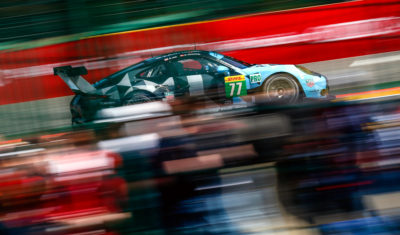
Porsche 911 RSR too slow in Spa
“The balance of our 911 RSR was better than in practice, but the warm weather didn’t play into our hands,” said reigning FIA WEC GT champion, Richard Lietz. “We did everything we could, but we still weren’t fast enough. Only as the temperature cooled towards the finish did our performance improve.” Michael Christensen echoed his sentiments, taking comfort in the quick pit stops from the works team at Spa. “In the run to Le Mans, every race kilometre and every pit stop is important. That’s the positive outcome of a race in which unfortunately we weren’t able to yield what we had planned.”
by John Glynn | Apr 22, 2016 | Classic Porsche Blog, Modified Porsche Hot Rods
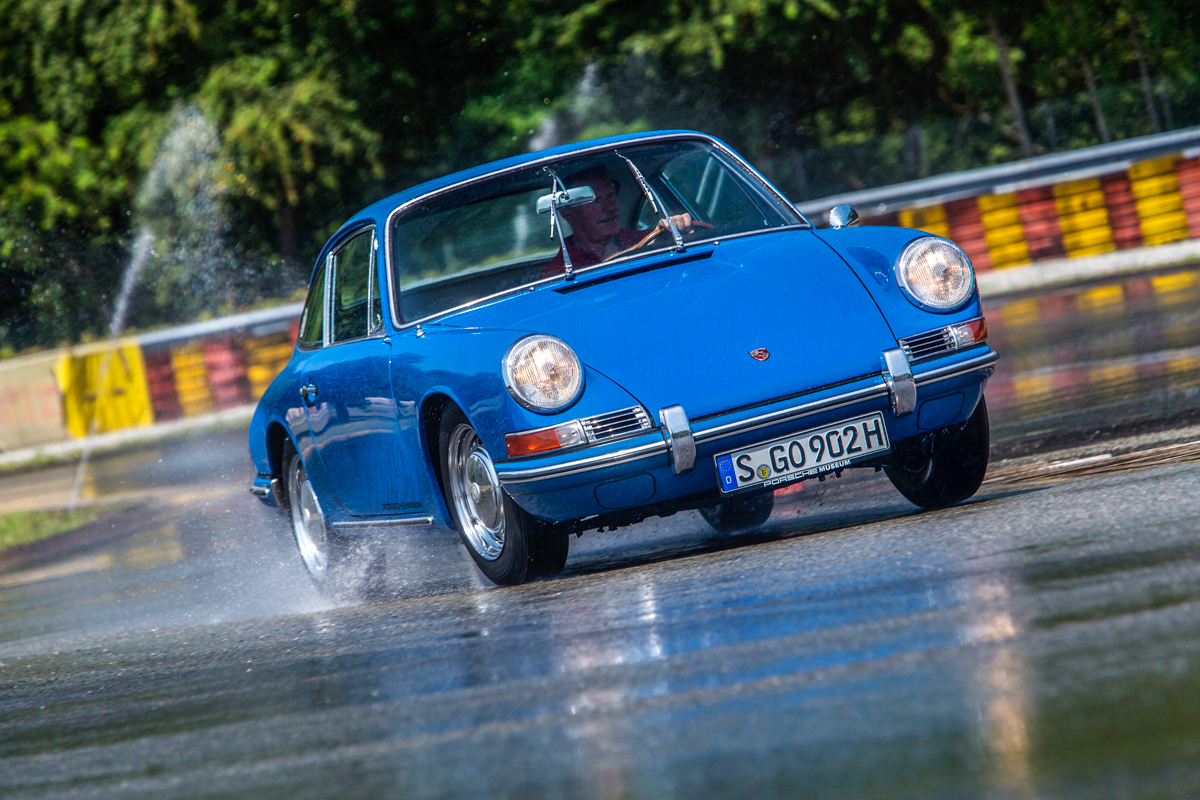
Porsche has just added a bunch of new N-rated tyres to its list of approved rubber for older Porsche sports cars. The fact that Stuttgart’s release considers anything pre-2005 as classic is something we’ll gloss over for now – not going there on a Friday afternoon.
Porsche N-rated Tyres on Classic 911s
The Porsche tyre N-rating system is a subject of much discussion amongst classic 911 owners: probably in the top three conversation starters along with “what oil should I use?” and “I once turned down a 964RS for £20 and a half-eaten steak and kidney pie.” Not fitting N-rated tyres to your old Porsche won’t make it fail the MOT or invalidate your insurance, but there may be some comfort in fitting tyres which Porsche has tested on your classic. It also leaves you with plenty of headspace to worry about the engine going bang or whatever people worry about these days.
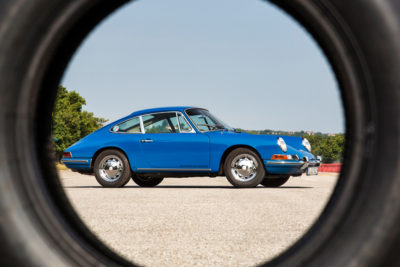
Pirelli, Continental, Michelin and Bridgestone all have rubber on the latest classic Porsche N-rated tyre list. As impact bumper 911s are closest to my heart, it’s nice to see that Continental Sport Contact tyres continue to be available in 205/55 and 245/45 ZR16 for 7- and 9-inch Fuchs wheels as fitted to my Carrera 3.0 (albeit the Sport Contacts on my car at present are not N rated). For those who follow a Porsche-approved lifestyle, 959 owners are stuck with Bridgestone RE71s (plenty noisy at 80dB), 964RS drivers have a better choice of Sport Contacts, Michelin Pilot Sport 2, Pirelli P Zero Rosso or Trofeo R compounds, while 924 Turbo drivers have the Sport Contact, Pilot Exalto 2 or P Zero Rosso to choose from.
Porsche Tyre Test Drivers
Porsche invited Walter Röhrl along to help with approvals, the former World Rally champion offering input based on a long history of driving classic Porsche models. Many of the current works drivers also have a classic 911 tucked away somewhere – would be interesting to see one of them drifting a pre-’73, abusing a set of N-rated tyres (Pirelli CN36 or P6000 if you must have the N). It is also interesting to see Walter leaning on a pair of P7Rs (sexiest tread pattern ever IMO) but those tyres are not on the Porsche approved list as far as I can see: P7 Cinturatos yes, but not P7Rs.

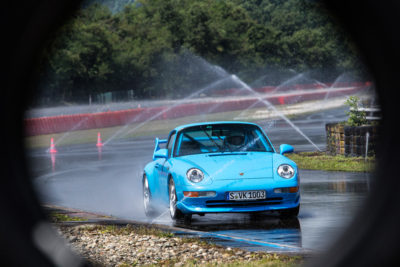
“The driving properties in the early years were not as full or balanced as they are today,” says Walter. “The new generation of tyres is more fitting than ever to the driving style of a challenging sports car.” Porsche tyre tester, Dieter Röscheisen, said of the newly-approved tyres: “The new tyre releases will make it possible for classic models to follow the curve into the modern era with exceptionally good and balanced driving properties.” (I imagine it is more likely that a PR person said this. My hope is that Dieter was overexcited after spending an afternoon shredding 993 RS rear tyres and couldn’t elucidate.)
I don’t have N-rated tyres fitted to any of my five old Porsches. It doesn’t bother me in the slightest, as my cars are eternal works-in-progress and only one of the Porsches is currently road legal (a classic 2004 SUV model). I have a set of part-worn 205/55 16 Bridgestones for the 924 Turbo, which will be next to go on the road. I like Sport Contacts on the 911, but tend to lean toward Michelins as my overall tyre brand of choice: they drive so well, right down to the wear bars. All that will go out the window if you can now get P7Rs to fit the 911, as they are soooo s-e-x-y.
Track day fans on my 911 forum at impactbumpers.com use a load of different non-N-rated tyres on long road trips and pretty intense driving conditions and no big problems reported there. Bridgestone S-02s have long been a good choice for spirited ’74-’89 911 driving if you can get a set to suit: you can still buy 205/55 and 225/50 16s in Porsche N3 rating from places like Camskill, but I don’t think 245s are easily available.


