by John Glynn | Feb 20, 2017 | Classic Porsche Blog, Project Cars
The Canary Islands are volcanic isles located off the north-west coast of Africa, just a half-hour flight from the Western Sahara Desert. I first visited the Canaries in 1993 and instantly fell in love with the islands and the people. I have since returned here many times, visiting each of the islands over the years, but Gran Canaria remains my favourite.
The locals say that Gran Canaria is like a mini-continent. Divided by a mountainous centre, the south gets most sunshine, so is where the resorts are. In the north is Las Palmas, Spain’s ninth biggest city and the islands’ governmental centre. 850,000 people live on this island, including many extranjeros (immigrants) from across Europe, Africa and Latin America. This Irish immigrant has spent the last seven days here and as always, it has been a pleasure.

Thanks to beautiful weather all year around, a huge working sea port and a very busy airport, Gran Canaria welcomes hundreds of thousands of visitors each year. The mix of global influences has earned GC a reputation for tolerance and an openness to many cultures. This has certainly been my experience. I have made some good friends in Gran Canaria and am interested in possibly owning a house here, hence my frequent visits in recent months. We will see how that goes.
A Lesson in Spanish Philosophy
Canarian history goes back thousands of years and each island is truly unique in character, but today the Canaries are a part of modern Spain. Here we speak español (small e) and follow the rhythms of Spanish life and culture. There is little point in rushing anywhere, as you will only catch up to the bloke in front. Make time for life and life will make time for you is how things tend to go.

Catching up to slower moving people reminds me of the famous Spanish philosopher, José Ortega y Gasset, who believed that a person was the combination of both life and circumstance. “Yo soy yo y mi circunstancia” as he put it. To Ortega y Gasset, circunstancia meant those things forced upon us. He saw life as a constant tug-of-war between the freedom we were born with and our dictated fate.
In the fight between freedom and fate, Ortega y Gasset’s concept is the start of all art. We accept that fate will befall us but inside that acceptance, we select a destiny. Some become part of what the philosopher’s 1929 essays call “The Mass”, while some select a different path.
“The mass crushes beneath it everything that is different, everything that is excellent, individual, qualified and select. Anybody who is not like everybody, who does not think like everybody, runs the risk of being eliminated.”

To escape this fate, Ortega Y Gasset believed that a person must make an active decision to live a life of effort. “For me, then, nobility is synonymous with a life of effort, ever set on excelling oneself, in passing beyond what one is to what one sets up as a duty and an obligation. In this way, the noble life stands opposed to the common or inert life, which reclines statically upon itself, condemned to perpetual immobility, unless an external force compels it to come out of itself.”
The concepts of Ortega y Gasset and others were at the heart of a lively bilingual conversation I enjoyed with my friends Rafael and Jorge over coffee last night. Rafael – a Doctor of Philosophy – is a former consultant to the Swedish government and has just completed another PhD, pondering the practical applications of preventative psychology. His lifelong friend, Jorge, is a Porsche restorer. Both are living “a noble life” that Ortega y Gasset would be proud of.

Pons Vintage Cars
Based just outside Santa Brigida, here in Gran Canaria, Jorge Pons takes the idea of Porsche restoration to the nth degree. While most of the Porsche restorers I have met and worked with add their own touches, that is not the way of Jorge. Pons Vintage Cars believes that, if it is not in the manual, it is not on the car.
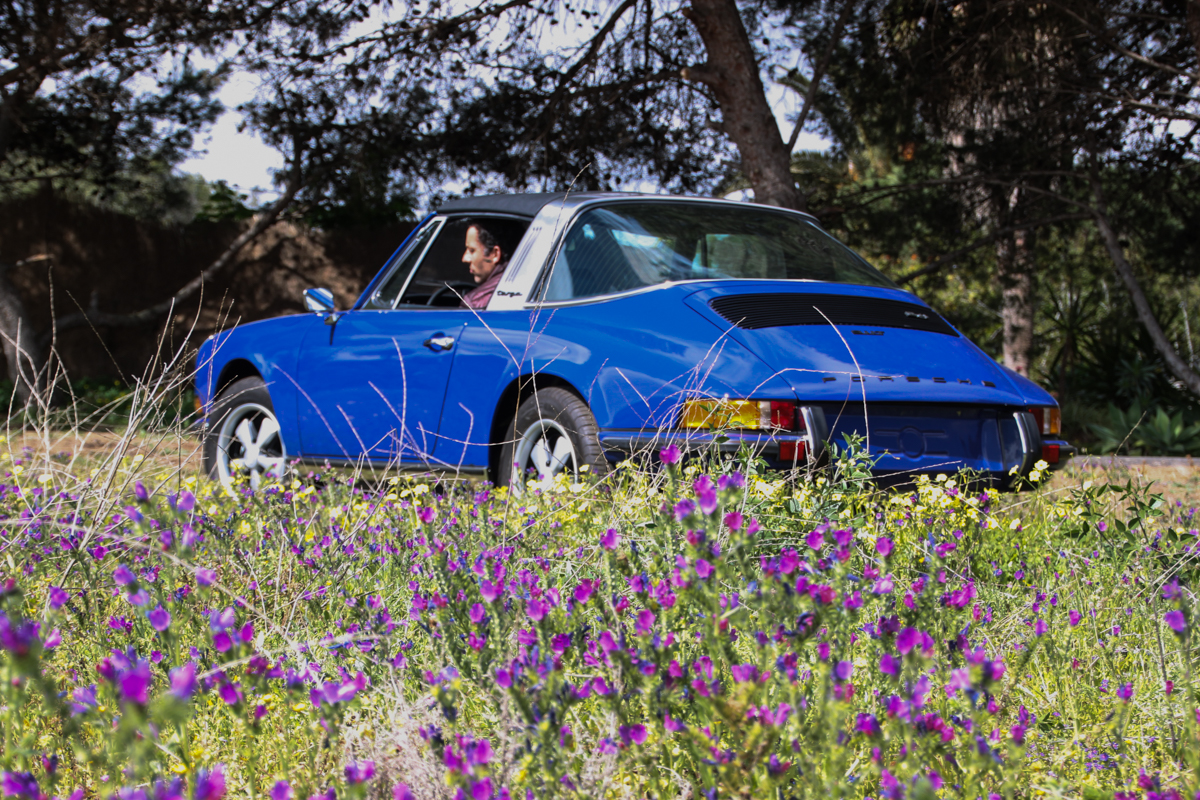
The Dalmatian Blue (Oxford Blue) 1973 Porsche 911 2.4T Targa seen here is a perfect example. And I mean it is a perfect example. Restored over ten months from start to finish, this superb 2.4 T Targa is immaculate inside and out. I had the pleasure of a short drive in this 911 around Jorge’s family estate and it was a delightful experience.

All of Jorge’s 911s are completed to an exacting standard. The ’73 Targa is the seventh car in as many years to come from his wonderfully pastoral workshop. Set amongst the mountains overlooking the wild blue Atlantic and surrounded by palm trees, a group of four much-loved donkeys (burros in Spain) follow progress in the glass-walled garage through wise and appreciative eyes. As a donkey- and a Porsche-lover, I think it is perfect.
Dalmatian Blue Porsche 911 T Targa
Dalmatian Blue is one of my favourite Porsche colours but it is not very common. I have only seen one other 911 in Dalmatian Blue and that was a hot rod built by my friend Gib Bosworth, eventually finished by another good friend. How many Dalmatian/Oxford Blue Targas were ever built in the final year of early 911 production (and how many matching-number examples remain) is anyone’s guess, but it can’t be that many. This could easily be the the best one available.

Anyone seeking a well restored example of classic Porsche engineering should contact Jorge Pons to discuss this car for sale. Gran Canaria is just a plane ride away and shipping is easy. Pons does not ask a fortune for his work – the projects are not about the money – but the prices are not negotiable. This one is up for €125,000, which seems reasonable, given that some dealers in Germany are asking more than €150k for similar cars that will not have taken ten painstaking months to restore. I m back in Essen in april and I have no doubt that cars this good will be into the €160k+ bracket.
Now finished the 911T Targa, Jorge has switched to a superb Irish Green 1970 Porsche 911 T Coupe. This car recently returned from the paint shop following an incredible bare-metal restoration, all recorded on camera. It is beautiful: the paintwork is a joy to behold. I leave Gran Canaria tomorrow, but am very excited to see what progress will have been made when I return to the island in May.

by John Glynn | Jun 26, 2016 | Market & Prices, Classic Porsche Blog
Britain has voted to leave the EU and the pound has taken the first of what is likely to be a series of nosedives, as the implications of the vote and the political fallout play through the stock markets.
Economic uncertainty is now a major talking point and consumer confidence has been hit, with a couple of Porsche dealers I spoke to on Friday reporting cancelled deals in the Brexit vote aftermath. Buying a £70k Porsche for weekends seems superfluous for some given the unknown future that British workers are facing, not to mention the enhanced investment oportunities that became available on the FTSE 100 after the vote, where shares in banks, airlines and UK housebuilders fell by up to 40%.
The strongest enquiries on Friday came from buyers with Euros to spend. Some dealers had stockpiled LHD Porsches ready to list, which may have been a canny play, most effective on rarer Porsche models with a high ticket price: GT3 RS 4.0s, Carrera GTs and the like. But cheaper classic Porsches also look slighty better value, with a £50k Porsche costing $68,520 or €61,919 on June 26 compared to $73,463 or €65,110 on June 22nd, the day before the UK referendum*.
(Update July 1: £50k has now slipped to $67,162/€60,496)
Porsche prices down 7% (for US buyers)
Falls of 7% in the dollar price or 5% in euros over four days may be just the start. At the time of the referendum, many dealers had still not corrected asking prices for softening classic car sentiment seen since the start of 2016, so that has yet to be implemented. Dealers now also face falling domestic demand from uncertain consumers, who will likely avoid big-ticket purchases until they know what the future of UK plc holds for them.
What could happen next? One scenario (and one that played out in the 2008 crash) is that, as the consequences of the referendum vote and EU exit begin to take hold and luxury car sales tail off, there will be casualties. Traders holding stock by means of a bank stocking loan or private investment will come under pressure should they be unable to make their repayment schedules. Repossessed stock would likely end up at auction, selling for knock-down prices, which will further undermine public confidence. This is not going to happen immediately, but the likelihood of recession grows with every day there is instability at the top of UK governance.
Second Referendum
Alternative scenarios currently doing the rounds include the possibility of a second referendum to head off the disintegration of the United Kingdom, as Scotland voted to stay in the EU and the winning margin for Leave was less than 2% on a turnout of less than 75%. A second referendum seems unlikely at the minute, but as the original referendum was not legally binding and an online petition called for a second vote captured 3 million signatures in less than three days, who knows what might happen next.
Another possibility is that it will all be fine, with the UK economy entering a period of prolonged expansion, jobs for all and revitalised public services. However likely one feels this may be, it’s not going to happen next week, so the short term outlook is less positive. Prices will feel some effect.
*source: fxtop.com

by John Glynn | Jun 20, 2016 | Market & Prices, Porsche News
I had an interesting conversation with a well connected dealer friend a few days ago regarding the UK market for RHD Porsche 991 GT3 RS, which suggested that the days of six-figure markups for the latest 911 RS were over and done.
A nice RS had just arrived in stock and was offered to a number of prospects at well below the average market price. Some of his would-be buyers replied with claims of cars being offered behind closed doors for much less than the price my friend offered. Evidence went backwards and forwards until a much lower price was eventually agreed as the RS seller was keen to move on. The seller still cleared the best part of £45k profit out of the deal after paying the dealer’s fixed-price commission.
Average Market Prices for Porsche 991 GT3 RS
Average selling prices for 991 GT3 RS are not easy to calculate without access to accurate transaction data, but the average asking price is pretty straightforward. The premier classified ads site currently has 22 991 GT3 RS models on offer in the UK with prices from £195,000 to £289,995 (22 is not exactly what one might call rare). Average asking price for these cars is a heady £246,000.
This data does not tell the whole story. Amongst these 22 911s are cars with far more than delivery mileage – over 3,000 miles in some cases – and one zero-mileage LHD example. Stripping these cars out and confining data to just RHD cars with fewer than 400 miles on the clock reduces our sample to just twelve cars. Average asking price for these cars jumps to £252,270.
Cost New versus Average Price for 991 GT3 RS
A brand new Porsche 991 GT3 RS bought with no options will set you back £130,296 cost new from Porsche Cars Great Britain, but no one buys a standard RS. A sensible options package of decent paint (£1800), leather trim to the 918 seats (£2k), LED lights (£2k), Front Axle Lift (£2k), PCCB ceramic brakes (£6k), Sport Chrono (£1k) and PCM with Sound Package Plus and phone prep (approx £3k) adds the best part of £20k, which takes the cost new to £149,755.
This £150k list price is for a brand new car with 10 miles or less on delivery, built to your spec and you are the first owner in the log book. The only snag is you cannot order one new: production has been allocated to an oversubscribed list. However, it does indicate what the manufacturer believes their car should be priced at, given the cost to build and their standard margin.
Taking this £150k list price against today’s average UK asking price of £252,270, we see a premium of more than £100k for a car that’s already had one or more owners and may come with up to 400 miles on the clock. If you think that sounds pretty extreme, there is more than one story of a slot on the 991 GT3 RS waiting list being sold for as much as £200k over list at the height of the fever.
Porsche 991 GT3 RS Price Premiums Shrinking
I’ve not driven a 991 GT3 or an RS – these cars simply do not interest me as a driver – but I have looked at plenty up close. The overall impression is of a car that can get away with a £150k price tag, but not a hundred thousand pounds more than that. Lack of supply when the cars were newly-announced sent prices soaring, but now that the RS is two year-old technology and the demand from collectors has likely been satisfied, the low supply premiums are shrinking.
With prices of £190-195k rumoured for cars sold under the radar, that puts the premium closer to £40k for a delivery mileage, one-owner 991 GT3 RS. No doubt some will insist these prices are not happening, but I do trust my source.
Porsche is not building any more 991 GT3 RSs as far as I know, so the chances of these cars – even 10k-mile examples – selling for less than list price in the near future is unlikely, but exactly where over-list premiums will settle is uncertain for now. Will they drop much below £40k? That is entirely possible: premiums usually keep coming down until there is a sudden injection of demand, or supply shrinks as the market soaks up everything available.
Common drivers behind increased demand is a screamingly low price (exchange rate changes for overseas RHD buyers) or a sudden influx of liquidity to the buyer pool, such as city bonuses, pension payouts, capital gains tax breaks or similar. It’s unlikely that a vote against Brexit in this Thursday’s referendum would cause RS prices circa £260k to suddenly look sensible if people are paying less than £200k elsewhere, but there would likely be a lift in demand for sensibly-priced desirable cars like the 991 GT3 RS if economic uncertainty was eased.
Given this prospect, sensible dealers might be considering a reprice right about now. £200k is still £50k profit on list for a well-specced example. Perhaps sellers are not paying attention to the rest of the market, or banking on a big hit to Sterling exchange rates on Thursday. That’s a pretty big gamble if there are only ten buyers out there and they all do deals tomorrow and Wednesday.

by John Glynn | Jun 11, 2016 | Porsche News
We’re now eleven days from the Brexit Referendum, when Britain will vote on whether it stays in the EU, or leaves. Most of the people I’ve spoken to have still not decided which way to vote. “The question is simple, but both sides are confusing,” said one friend. “I don’t think I’ll ever know which way is right.”
EU Referendum: The Split
The latest Independent poll shows the Leave side ahead, with 55% set to vote to leave the EU. More under-35s want to stay but are less likely to vote, while 60% of over-65s want to leave and are most likely to vote. Whichever side wins, a huge swathe of the UK population is set for disappointment and negative fallout is inevitable.

Britain within the EU
Britain first applied to join the EU in 1963, but the application was blocked by France, which saw Britain as a nation in decline, due to its disintegrating empire and struggling economy. By the time of its eventual acceptance in 1973, inflation in Britain ran at 20% and trade unions had total command of UK production. By 1976, Britain had applied for a £2.3 billion IMF bailout (as much as £30 billion today). The UK’s national debt still runs at more than 70% of GDP.
Servicing the national debt obviously depends on national income. As the world’s fifth-largest economy by nominal GDP, the UK is a relatively high tax environment, with many stealth taxes bolstering high rates of income tax. It is the planet’s ninth-largest exporter but the fifth-largest importer. In April 2016, 47% of all UK imports came from the EU, but this number has been as high as 55% in the last 12 months. In April 2016, 48% of total UK exports went to the EU. This percentage is rarely less than 40%.
One car built every 16 seconds
Car manufacturing makes up a huge part of UK exports. A car is built every 16 seconds here in the UK, with 443,581 vehicles built in the first quarter of 2016. 329,653 of those cars were built for export.
Leave campaign leaders deny that the arrival of trade barriers between the UK and Europe would cause problems for UK manufacturers, arguing that Britain could replace its lost trade by increasing sales to the US, China and India. Incredible as this sounds, a majority of UK poll respondents say they will vote for this and more, including increased aggravation in trade and travel, a higher retail price for UK exports within the EU, and higher EU import prices for UK consumers. This includes cars produced in Europe.

Higher cost of German cars post-Brexit
Twenty percent of all German-made cars are sold in the UK every year (820,000 cars/€18 billion in 2014) and many EU parts supply chains begin in the UK. German car manufacturers would inevitably be impacted by a UK vote to leave the EU. Brexit’s effect on exchange rates and any additional import tariffs would make German cars more expensive, and also raise the running costs of existing cars, with a rise in parts prices. The UK is also the fourth-biggest market for German engineering, with sales of €6.8 billion in 2014.
“A British exit would be a step backwards for German industry,” Ralph Weichers, chief economist of the German Toolmakers Association (VDMA) told the Financial Times. “Great Britain outside the EU would become less attractive as an industrial location.”
“Keeping Britain in the EU is more significant than keeping Greece in the Euro,” said Matthias Wissmann, president of Germany’s automotive industry association (VDA). “Britain would no longer be part of the single market. And questions of regulation would have to be negotiated, as we do now with Switzerland, between the UK and the EU. This could lead to difficulties on both sides.”
The biggest difficulties here in the UK would doubtless be felt by car dealers, but the motor industry seems unable to countenance the possibility of Brexit. No plans have been discussed to replace EU Block Exemption, or how car dealers would cope with a fall in demand for now more expensive EU-produced cars. A recent survey claims that 77% of motor trade professionals believe a vote to remain would be better for the industry but, with the leave vote ahead in the polls by a nose, they may be in for a shock.

by John Glynn | Apr 25, 2016 | New Models, Porsche News
Porsche has launched the new 718 Cayman with four-cylinder turbocharged engines, redesigned dashboards and LED lights setting it apart from the previous model. Basic price for the 2-litre 300 hp Cayman is £39,878, with the basic 2.5-litre, 350 hp Cayman costing from £48,834: a difference of £8956.
Porsche Cayman now cheaper than Boxster
The new list prices position Cayman below its soft-top Boxster sibling, which starts at £41,739.00 for the 2-litre manual. Add £1922 for PDK, taking the pre-options price to £43,661. Boxster S starts at £50695: £8956 more than the 2-litre car: same as the 718 Cayman.

There are subtle differences under the skin, with firmer springs and anti-roll bars and tweaked damper settings. Steering is ten per cent ‘more direct’ and rear wheels are a half inch wider, general increased lateral grip. The Porsche Torque Vectoring (PTV) electronically-controlled rear limited slip differential is an option. Brakes have been upgraded, now with 330mm front discs and 299mm rears. 2-litre Cayman uses the previous Cayman S calipers, while the 718 Cayman S gets 911 Carrera calipers, with 6mm thicker discs.
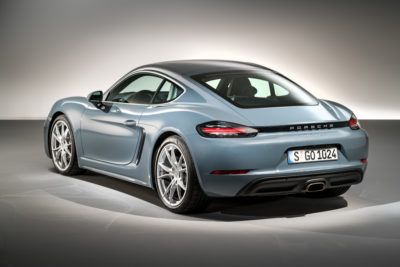
Outgoing Cayman was quite a pretty car and the new one looks pretty similar to me. Front end is maybe a bit sharper, with bigger intakes and new LED running lights. 918-style LED headlamps with four-point daytime running lights are an option. The rear now has a gloss black badge panel with four brake lights, which Porsche says “appear to float freely”.
The Cayman will need more than floaty brake lights to capture buyers imagination. Porsche sports cars (i.e. sports cars and not sports SUVs) now account for something like 30% of sales and the 911 takes the lion’s share of that. Caymans are hard work in the used market and struggle to find buyers quickly, even when keenly priced, which keeps trade demand and residual values challenging.
Company car users have been known to opt for Caymans and no doubt will continue to do so, but it’s hard not to wonder about the strength of support amongst private buyers for Cayman, given the cost of a reasonably-equipped example and the number of more versatile premium alternatives now available.
Having a relevant, desirable sports car other than the evergreen 911 is important to preserve brand perception/positioning for the SUVs, so the four-cylinder engines and price drop to below the soft top probably make sense. They make much more sense than diluting the 718’s place in history by pimping those numbers on the back of a Cayman, regardless of how floaty the brake lights are.