
by John Glynn | Jun 3, 2013 | Classic Porsche Blog, Modified Porsche Hot Rods, Road Trips
Good times for Ferdinand yesterday with long-time creative partner, Jamie Lipman. It was an early start for us, and for Chris from Bedfordshire, who brought his newly-purchased R Gruppe Porsche 911 to London for a photoshoot around the capital.
Glynn/Lipman photo sessions are always big fun. This one started with a 6am meet at The Dorchester, then a stop in St. James’, alongside some fascinating blue plaques. The shoot rolled on through Westminster and into the City of London, ending at the Tower before noon.
Owner Chris had a great backstory that I was previously unaware of, and the icing on the cake was an impromptu encounter with Wally Fields, eponymous Big-Band leader and Gershwin aficionado. When a Zionist Jew and lapsed Irish Catholic discuss the irrelevancy of time as a concept on a Mayfair pavement at 8am on a Sunday, you know it’s going to be a good day.
If you’re in the UK, have you booked for our Race Of Kings yet? Four hours of fun with Porsche guys on Saturday June 15th, from 4PM to 8PM. Cost is a tenner including great food and good racing on the KW RaceRoom simulators. We’ve only got 30 places available so get in and book.

by John Glynn | May 7, 2013 | Classic Porsche Blog, Project Cars
Just had a few pics through from the UK Fuchs distributor showing various classic 911 models owned by satisfied customers running the 18-inch Fuchs wheels.
This first one is from Brad in North America, running the RSR style on a 964. Fuchs make the wheels with offsets to suit the different 964 set up – looks lots better than the clunky Braid wheels often seen on other cars. DP showed a similar setup at Essen on their latest 964-based creation, albeit their wheels ran red centres.
This is Ian’s Carrera Cabriolet, running 18s with black centres. The car is fitted with a 3.6-litre engine so has the muscle to work those bigger wheels & tyres. Tyres are a big advantage to bigger wheels – more choice of rubber with bigger rims.
You’ve seen this before but I couldn’t resist another peek at the white 993 Coupe running 18″ Fuchs. This car is cool in white.
SHARE • EXPLORE • SUPPORT
Ferdinand blogs my freelance adventure with Porsche at the centre. To support the blog or engage with me in other ways, you can:

by John Glynn | May 2, 2013 | Classic Porsche Blog, Race and Rally
Today was a good day, spent hanging out at Tuthills watching the finishing touches going on a brand new Safari car.
This 911 is destined for Kenya in November, but the Swedish owner will run the car at in the 2013 Morocco Historic from May 13-18 as an African ice breaker.
Tuthills have three cars in this year’s Moroccan event: all three will go on to race the Safari. They have all just been prepped for North Africa at the Wardington workshops, and this is the first to depart. Driver Phil trailered this one to Calais today, where the owner will take over moving it to Morocco.
We often think of 911s as soft little flowers: those slender side pillars and sculpted door handles imbuing a sense of finesse. Tuthill Safari cars retain those classic 911 motifs, but are the hardest Porsches I know.
Eight hundred hours or more goes into every Safari shell to ensure it’s stiff and strong. The suspension is bespoke – none of your revalved Bilsteins here. Engines are built from powerful, reliable components, most run MFI and are tuned to over 300 horsepower. Transmissions are custom built, with specially calculated ratios to suit the modified gearing and tall wheel/tyre combinations.
Inside is a workspace. Nothing surplus: all is function. Under the front is the oil cooler pipework, a custom fuel tank and a pair of full-size spare wheels, each ready to be changed in under a minute if you know what you’re doing.
Now costing £160,000 plus VAT a piece to build, Safari cars are easily my favourite 911s. I never get tired of looking at, listening to or riding in them. The ultimate do-anything Porsche!

by John Glynn | Apr 15, 2013 | Classic Porsche Blog, Market & Prices, Modified Porsche Hot Rods
Note: this car has now sold via the Ferdinand Magazine Blog and lives in New Zealand.
Fellow European R Gruppe member, Christian, has just sent details of his 911 RS recreation, which he has put up for sale. I followed this car in build for a couple of years and am surprised he is letting it go.
It made slightly more sense when Christian told me how a top secret barn find with a 360 chassis number was behind the decision, although part of me thinks I’d prefer to own this one.
This car is just so right. “This is the only Carrera 2.7L RS replica which was invited to the official 40th anniversary Porsche Carrera RS World Meeting in Stuttgart in September 2012”, says Christian. “It appears in the official participant book as number 36. The car is in overall perfect shape, always very well maintained and handles perfectly. It has a nice driving position as the driver’s seat, the special seat railings and the hub extension were built for a person around 175-190cm (5’7″-6’2″).”

Based on a late 1972 911T (’73 MY), this 911 is what Christian calls a “contemporary 2,7L RS M471 lightweight build”.
The colour is Grand Prix White over Viper Green. Four layers of paint protect a detailed restoration by Hans Patutschnick in 2010, with full photo documentation. Except for DP Motorsport bumpers & ducktail, the body is all steel and was fully wax protected.
Suspension is classic 911 19/26mm torsion bars with Bilstein Nurburgring suspension and raised front spindles. Adjustable 18mm bars front and rear, 7 and 8×15 wheels in proper anodised-with-bright-rim finish and Avon CR6ZZ tyres.

Inside is a DP Lollipop seat, with RS co-drivers seat: love the houndstooth. VDO gauges restored by North Hollywood, original 1973 Momo Prototipo, 85l plastic tank, magnesium transmission with correct gearset and a Quaife LSD. Full transmission cooling and Webasto cabin heating.
The engine is a true work of art, built by Oliver Bienert of Boxer-Motoren, Manching, Germany in 2011. It’s a 2.8-litre MFI, making 281 hp at around 7,200k RPM. The 7R case was modified with shuffle pins, oil bypass and boat tailing, before the bottom end was built around a knife edged 70.4mm crankshaft, with 964 oil pump, Carrillo rods and 92mm Mahle barrels and pistons.
The engine list really is too much, including custom Bosch throttles, MFI pump and twin plug distributor. An RSR flywheel and lightweight clutch finish it off.

Fuelled up with 30 litres and ready to go, the RS rebuild weighs 980 kilograms. It’s done 5,000 miles with no track use since completion. Everything is detailed in the German registration papers, it carries a H (historic) registration plate and is fully TUV approved.
Having just seen what traders were asking at Techno Classica for ordinary early cars, this seems well priced at €94,000. Though he is based near Frankfurt, I hear Christian has had contact from France and the US on this car, so get your skates on if you want to discuss it.

by John Glynn | Apr 9, 2013 | Classic Porsche Blog, Porsche News, Project Cars
Had some nice feedback on my latest 924 Turbo maintenance piece: thanks for that. I finally heard back from Porsche GB on getting a build date for the car, so I sent off my £65 for a Letter of Origin. Should be enough to register it here once it’s MOTed.
While writing the cheque for Porsche Cars GB, it occurred to me that Italy must have a HPI system for its cars, so I googled that and found the Automobile Club d’Italia (ACI) website. It’s the only source of info for Italian cars, and looked great. If you speak Italian and have a Codice Fiscale (Social Security number), you can find out anything you want about a car for a modest fee.
Much as I love Italia, I have neither the language nor the residency to go all the way with ACI, but Google Translate helped me find a section of the site to check tax status on a car registered in Italy. My 1980 924 Turbo carries the reg prefix RA, which is Emilia-Ravenna district, but the tax site showed it as last registered in Sardinia. The ragu thickens.

Amongst the nondescript paper shrapnel pulled from the car, I did find a stack of business cards from a bodyshop in Cagliari, capital of Sardinia. I emailed them a few months back but heard nothing in return. It’s obvious that they painted it, many moons ago.
The paint is now shot to pieces, but at some stage it probably looked OK. This led me to searching 924 Turbos in Cagliari and finding more Italian 924s with these Fisher-Price indicators on the front wings. I’m probably taking them off mine when we paint it: wonder who at Porsche Italy thought they were the right way to go.
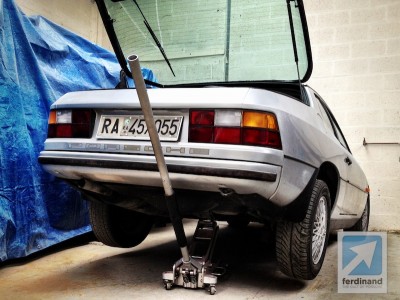
Anyway, Sardinia Car Tax Online says this car was registered 1/1/1980, so I am guessing there was no official production date put forward when it was registered there. I could try to register it using the paperwork I gleaned from the ACI site, but I’ll wait to see what £65 buys me from Porsche: I’ll be cross if they also say 1/1/1980.
At least I’m now sure that rust-free chassis is because it lived in the sun for ages. I know it’s nothing special to most people, but I really like this car.

by John Glynn | Apr 8, 2013 | Classic Porsche Blog, Project Cars
Just watched a terrific Storyville on BBC4. Entitled “From the Sea to the Land: Beyond Britain’s Coast on Film”, the programme gathered up 100 years of archive footage, to tell the story of 20th Century Britain’s relationship with the sea that surrounds it. With a thought-provoking soundtrack playing in accompaniment, it was spellbinding television.
The most impressive part for me was a shipyard section filmed in the 1960s, with amazing cinematography showing the scale of some of the vessels being built, when the UK still made the world’s greatest machinery. Deeply impressive on a multitude of levels.

The age of great British fabrication was briefly revisited on Saturday, when I finally managed to strap best mate Rob Campbell at Racing Restorations to his lathe for long enough to make a bush for my 924 Turbo’s steering rack. The 924 car failed its UK MOT on steering play, ascribed to a track rod but wound up being the bush in the end of the steering rack: those bumpy Italian back roads roads taking their toll.

I was happy to go and track down the part, but Robert insisted he could easily make it. Sorting this is the penultimate job before registration: all I need now is a set of tyres fitted, a retest on the MOT and official confirmation of date of construction, and it’s off to the DVLA with some paperwork.
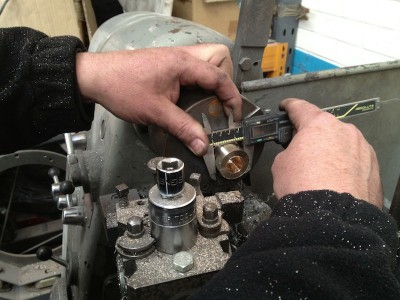
In true OTT John & Rob style, the plastic bush I pulled out out of the Volkswagen steering rack – worth about 50p on a good day – was replaced with something that took rather more expense to manufacture. Robert turned it out of solid brass, giving me an hour’s entertainment and something good to blog about.

If you’ve ever seen brass being machined, you know it goes everywhere in splinters. But all metal is amazing to watch in transformation. Careful measuring throughout Operation Overkill meant the rack all went back together with no big dramas. I’ll get it back in the car sometime next week.


