I first experienced Concorde, the world’s only supersonic passenger plane, while it was training in Ireland. While lunch was in the oven on a Sunday morning, my dad used to take us kids out for a drive. We would usually head for the end of the runway at Shannon Airport, watching Concorde pilots training over the Atlantic west coast and waiting for the 747 EI-104 to come in from New York.
We owned several music shops at the time and also sold TVs, hi-fi and radios. An air-band radio was always in the car, and several friends’ fathers worked at Ballygreen: a big air traffic control centre for the north west of Europe. Hearing familiar voices talking to Concorde pilots as the aircraft flew take off and landing circuits for hours was always entertaining.
In 1978, we flew to Jersey on a family holiday, which involved a flight from Shannon to Heathrow on a BAC-111, then on to Jersey on a Vickers Viscount. The high point of the Viscount flight was when the pilot invited us all to look out the window and watch Concorde take off: the first time I had seen the plane use its afterburners in anger. My dad bought me a copy of the now very collectable Concorde book by F. G. Clarke at the Heathrow shop on the way home: it’s still in the loft at my parents’ house.
In 1989, I left a mechanical apprenticeship in Ireland and returned to London, where I had spent three months working in 1986. I started playing music with bandmates already here and got a job working with a gang of West African car cleaners: they were fun times. My sister and I were drawn back to the airport on weekends, often getting a pizza and parking on the top floor of MSCP 2 in the centre of Heathrow, just to watch planes taking off and landing. I decided that working at the airport might be interesting and came back to the Heathrow job centre on a day off to see what was about. I found a job working with British Airways at Terminal 4 as a valet parker for Concorde passengers.
The job was predictable, with a lot of activity around Concorde’s flight times and quiet periods otherwise. I got to know many interesting customers, who often had time to chat about flying on Concorde. I started clocking up some overtime in the car parks at T4 and was offered a job as a Duty Manager there, running the short and long term car parks for a company owned by an energetic north Londoner. He eventually sold his company to National Car Parks and I was part of the furniture. They gave me an opportunity to move across Heathrow to the long term car parks on the eastern side, by the Concorde maintenance hangars.
Concorde was maintained to a rigorous schedule and the aircraft was frequently moved across the road from the apron to the hangars, so we saw it a lot. The engines were run up into huge concrete diverters, which directed the air upwards over our offices: that was always interesting in the wee small hours of the morning. Eventually I moved again, this time to the central area long terms, alongside runway 27R. My office looked out on the runway, so again Concorde was a big part of life, setting off just about every alarm in our parks when it took off at 10:30AM.
I stayed in long term for a bit and then NCP tendered for the short term car parks in the centre. I ended up running this contract for several years as General Manager and became the first GM to make one million pounds profit for my employers. We built a great team of people, debuted groundbreaking technology and handled some huge operational challenges, but the constant was Concorde: a mad blast of noise at 10:30 every morning for the eight years I spent working at Heathrow.
Having several thousand car parking spaces at my disposal led to buying a lot of cars while I worked at the airport, and it was an easy place to sell cars from also. Heathrow has a huge working population that likes to buy and sell all sorts of items in its spare time, so I built up my trade contacts over three or four years before leaving the airport in 1997 and running my own thing for a while. Sliding into motor trade purchasing in 1998 led down many other trade avenues, eventually exposing me to a rich education in trade valuations: something I am still involved with almost twenty years later.
Concorde stopped flying several years after I left Heathrow, but it remains a big part of my youth. The entire experience of air travel has lost its mystique since the late 1970s and the access to viewing nowadays is a real issue for aviation enthusiasts, but I remember my days around this great aircraft fondly. It was nice to see Porsche sending photographer Justin Leighton down to Concorde with the 917-001, creating some interesting juxtapositions between these two iconic mechanical achievements.
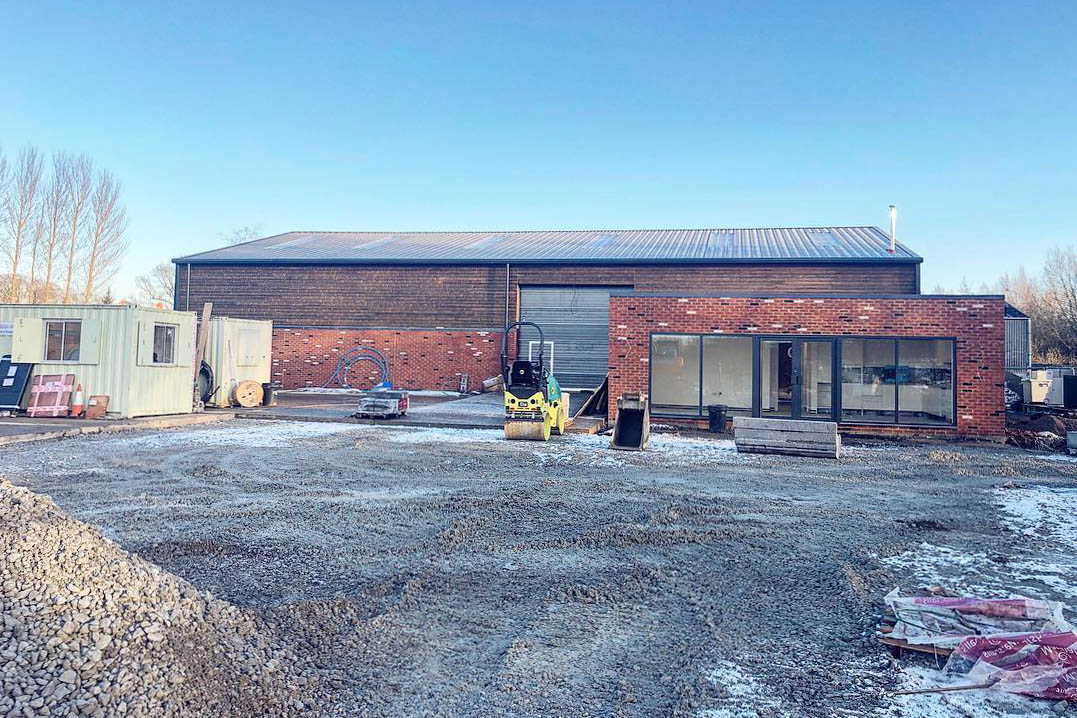
I visited well-known Porsche collector, Frank Cassidy, last week and enjoyed a guided tour of his new Boxengasse development. Set in a beautifully landscaped 100-acre property in the heart of rural Oxfordshire, the Porsche-only business park is a bit of a game changer.
Independent Porsche specialist Autofarm is about to move in as Frank’s first tenant. Their new buildings combine old-school brickwork, smooth polished concrete and modern LED lighting and insulation and offer more than enough space to lay out a free-flowing Porsche workshop. The transformational workspace is one of the main drivers behind the relocation and is something that the company’s current premises on the other side of the M40 cannot facilitate.
Hats off to Autofarm bosses, Mikey Wastie and Steve Wood, for embracing the challenge to relocate the comfort and charm of their loft-like current reception space, which I really love, and take such a familiar customer experience to the next level in an all-new environment. I’m excited to see how Autofarm develops in the new location.
Oilcooled Porsche Festival
Helping that settling-in process along is an Autofarm/Boxengasse open day sometime in spring, followed several weeks later by ‘Oilcooled’: a two-day festival over a mid-August weekend aimed at air-cooled enthusiasts.
Oilcooled begins with a Saturday track day at Silverstone, then a cruise back to Boxengasse near Bicester, where an open-air cinema will show a Porsche-themed cult classic that is rarely seen on the big screen. Oxford Fine Dining is supplying the catering and Onassis Events is bringing in cars and enthusiasts in from all over Europe for a big open day on the Sunday.
These two days of Porsche-centric activities have been split up into separate components, so one can drop in and out as preferred. I can envisage arriving for the Saturday evening cinema in some sort of Porsche convoy, enjoying a warm August evening in a beautiful landscaped estate, surrounded by friends old and new in what will hopefully become a regular fixture on the air-cooled calendar that doesn’t require a round trip of several hundred miles to attend. Tickets are now on sale on the Boxengasse website.
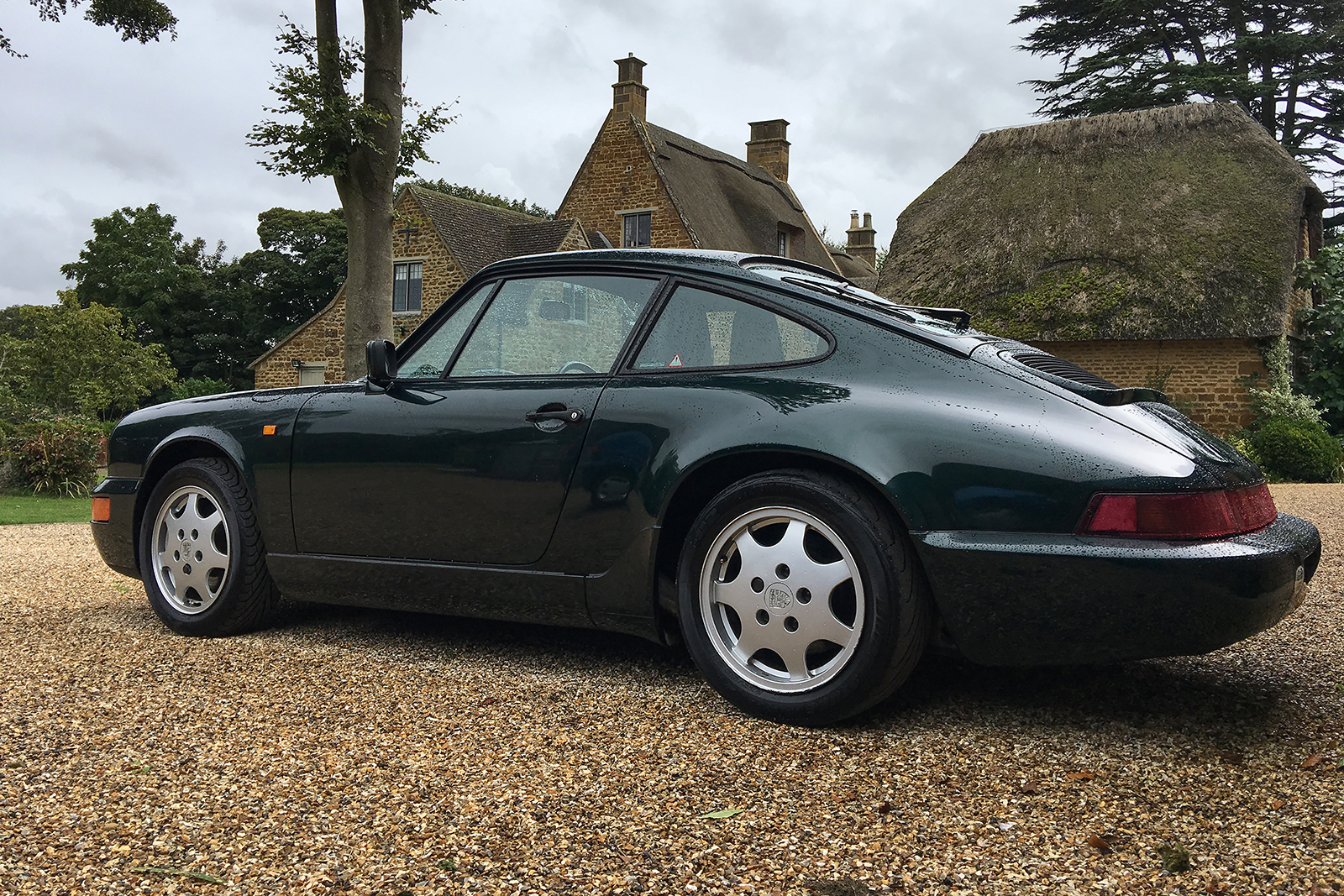
January 2019 has been a busy month for Porsche insurance valuations and market discussions activity. Porsche 964 prices have popped up in conversation several times. As serious buyers seem to be gathering data and preparing to compete for what pops up for sale during 2019 and insurance valuations for standard Carrera 2 models in good order now touching £60k, this year could be an interesting one for 964 prices.
Porsche 964 Production Numbers
Manufactured from 1989 to 1994, the Porsche 964 had a comparatively short production life versus its predecessors. The model years spanned a global recession, so sales were relatively low. The German publication, Deutsche Autos seit 1990 (Eberhard Kittler) gives global Porsche 964 production totals for volume models as follows:
Model
Total
964 C2 Coupe
18219
964 C2 Cabriolet
11013
964 C2 Targa
3534
964 C2 Cabrio Turbo-Look
1532
964 C2 Speedster
936
964 C4 Coupe
13353
964 C4 Cabriolet
4802
964 C4 Targa
1329
964 C4 Jubilee Coupe
911
964 Turbo 3.3
3660
964 Turbo 3.6
1437
964 Carrera RS Coupe (3.6)
2282
A document put together in the early 2000s by the Porsche Club Turbo Register of the time is said to show that just 130 RHD 3.3 Turbos and only 42 RHD 3.6 Turbos were sold in the UK. I have not checked this data but it would not surprise me, given the scale of the recession at the time and the astronomical cost new of the Turbo models.
However, with both 964 Turbo and 930 prices retreating from the highs of 2015/16 and no sign that values have settled as yet, buyers are wary of these models. Instead, most potential buyers I speak with are considering standard C2 and C4 Coupes. Good examples of both are in short supply.
Pistonheads currently has 96 ads listed under the heading of 964 for sale. Removing the non-964s and silly POA ads gets us down to 64. If we look solely at narrow body cars being sold in the UK with an advertised asking price, then here is a summary of what is available as at January 30, 2019:
Porsche 964 C2/C4 Cabriolet (manual plus Tiptronic)
13
Porsche 964 C2/C4 Targa (manual plus Tiptronic)
4
Porsche 964 C2/C4 Coupe Manual
8
Porsche 964 C2/C4 Coupe Tiptronic
3
Distilling the stock available on what is probably the biggest advertising portal for these cars in the UK to solely non-RS narrow body 964 models, we end up with a total of 28 cars, less than half of which are Coupe models. Just 8 of the 28 cars are Coupes with a manual transmission and several of those cars are either modified or optimistically priced, such as the 66k-mile C2 Coupe for sale by an OPC at £80k. This reduces the choice even further.
The low supply creates a problem for buyers. Low supply pushes prices up, but the general market trend is still downward, as the investors who were fuelling the spiralling prices cool their spending or spread their asset portfolios across other brands or hobbies and the classic Porsche market unwinds due to lower demand.
Potential buyers are therefore faced with a gamble on what the future holds for 964s. Will low supply and persistent demand keep things as they are, or, faced with an entry cost already higher than other air-cooled options, will buyers eventually move on to different 911 model lines including well-priced 997s, causing the micro-market to capitulate and bring 964 prices down with a bump? Hence the conversations this month with potential buyers and a number of potential sellers.
If a 964 Coupe is your must-have 911, then you are not alone: many others share your desire. While the supply of air-cooled cars in January tends to be lower than later in the year, there is a marked preponderance of soft tops and Tiptronic Coupes amongst the available stock. This is probably a true reflection of what is available in the UK and may not shift to any great extent as the season gets started.
As the low supply supports Coupe prices (within reason) – particularly for the holy grail of a low mileage 964 C2 manual Coupe – buyers will have to decide whether the 964 is ultimately worth the current premium over a well preserved 3.2 Carrera Coupe or a nicely priced 993.
No doubt the 964 makes a fun car to drive when modified in the usual ways, but the £55-60k start price on a decent 964 Coupe is a fair chunk of cash for most of us. I can’t say that I would opt for an average 964 at this price point given the available alternatives if investment was a priority, but it will be interesting to see how 964 market trends play out through 2019.
Ferdinand blogs my freelance adventure with Porsche at the centre. To support the blog or engage with me in other ways, you can:
Getting back into the blog flow for 2019 was not helped by the failure of my much-loved Macbook Pro last week. If you know someone who can pull email folders from an encrypted SSD with a damaged operating system, drop me a line. Apple’s Support team say it can’t be done but a local data recovery place managed to get 300GB of data off the drive this morning. Sadly no email folders as yet, but some clever person must exist who can do this.
Anyway, while I was off-blog waiting for a new Macbook Pro to arrive, we had some notable Porsche sales with lots of interesting data: more of this later. One sale in Phoenix, Arizona set a new world record for the 2010 Porsche 997 Sport Classic, when RM Sotheby’s relieved a lucky buyer of half a million pounds ($654,000) for the privilege of owning a 150-mile example.
Half a million pounds for a Sport Classic will leave a lot of people scratching their heads. Yes it is rare, and this was low mileage, and prices at the first Porsche sales of the year are often a little bit barmy, but that sort of money buys a lot of Porsche alternatives that can be driven. Odds are this purchase was to bolster an already substantial collection.
What is a Sport Classic?
First shown at the 2009 Frankfurt Motor Show, the Porsche 911 Sport Classic was one of several limited edition models built on the Gen 2 997 platform (Speedster being another). An upgraded 3.8-litre engine with Power Kit equipped the car with over 400 horsepower to offer to the road gods through a six-speed manual transmission. The 250-unit Sport Classic edition also featured Porsche Ceramic Composite Brakes and PASM as standard.
Several styling features set the Sport Classic apart. These included a Double-Dome roof, a ducktail engine cover and that evergreen Sport Classic Grey paint. The wheels were replica Fuchs (cast in a factory in Italy if memory serves). The Fuchs people told me that they were a bit ticked off that genuine forged Fuchs alloy wheels were not part of the recipe for maximum Sport Classic authenticity and that it was all down to price.
I was not that enthralled by the Sport Classic when it first came out and didn’t chase a test drive. The closest I ever got to driving one was in a feature on a replica that myself and Alisdair Cusick were commissioned to write for a 911 magazine sometime in 2010. Built by a Porsche place in Essex, the conversion was based on a well used Gen 1 997 C2, so not the widebody shell that the real one was built around. Thus the Sport Classic wheels (bought from Porsche) did not quite fit the arches properly and the bubble roof was a bit of a challenge. It had the right look side-on from a hundred feet away, but each step closer made it slightly less convincing, until you were standing next to it and looking through the window at tired leather and a Tiptronic shifter.
However wide of the mark that replica was, at least the owner drove it for a few thousand miles, which is more than the owner of the nigh-on brand new Sport Classic sold by RM Sotheby’s did. With just 150 miles on the clock, the car had been stored in California all of its life, so was offered in pristine condition. It sold for $654,000 including premium: a figure which made at least three people very happy. If you were thinking you might fancy a Sport Classic some time, you are probably not one of the three.
The star attraction of the GP Ice Race for air-cooled Porsche enthusiasts will almost certainly be Otto Mathé’s Fetzenflieger single-seat race car with its spiked tyres and succession of Porsche racing engines.
If there was a top ten list of people who embodied the “cult of Porsche” concept, Mathé would be close to the top. His name has popped up on this blog more than once and I never get tired of dipping into Mathé’s history and imagining what life must have been like for this true-blue Porsche enthusiast.
Period photos of Mathé (and his story as a whole) calls the late John Surtees CBE to mind. Surtees was the only man to ever win world championships on both two and four wheels and Mathé’s early life involved racing motorcycles. An accident in 1934 caused the loss of his right arm and motorbikes were out from then on. Rather than being chased away from motorsport, Mathe turned his considerable engineering ability to other forms of racing.
Mathé owned a filling station and was fascinated by lubricant development. As World War 2 drew to a close, Mathé developed an additive that improved the performance of racing engine oils. At a time when Porsche recommended oil changes every 3,000 kms, Mathé is said to have ran his engines for 100,000 kms without changes. Mathé passed his lubricant business on before his death in 1995 and Mathé Universal Lubricant products are still available to buy today.
1952: Fetzenfleiger is born
Switching from two wheels to four after his accident, Mathé’s car racing career went from strength to strength until, in 1952, he unveiled the car which would cement his place in history. Built to Formula Two regulations of the time, the car raced on asphalt circuits, sand and ice, and it was the latter where Mathé truly established his legend. In 1952, Mathé’s special won twenty out of twenty races and he claimed the Austrian championship.
Otto Mathé’s special features handmade bodywork on a tubular frame chassis. Constructed from Porsche, VW and Kubelwagen parts with a super-low centre of gravity, the car weighed less than 400 kilograms. Sources differ on the original power unit: some say 1100cc, others 1500cc, but they agree the engine was Porsche. Mathé mounted the engine in front of the rear axle, fitting a left hand gearshift to overcome his disability, changing gears in corners by moving his body and holding the wheel with his torso.
Fans soon christened the car “Fetzenflieger”. This is hard to translate into English directly, with various attempts relating to Scrap Flyer or Spark Flyer. The nickname comes from the spectacle of the car’s textile side engine covers, which would burn from the flames spitting out of the exhausts, sending sparks and embers flying. It must have been an incredible sight.
Quickly coming to terms with his creation and taking it to win after win, Mathé later upped the ante by fitting a 550 engine with Spyder wheels and brakes in 1955. Some historians believe that this car was subsequently run at Silverstone in 1956 fitted with a JAP engine. Whether or not this is true, it certainly got about, running as an “intertyp” in both Formula and Sport Car events with various parts added or deleted as appropriate.
The Otto Mathé collection at Hamburg Automuseum PROTOTYP
That Mathé managed to race after losing an arm is one thing. That he managed to race and win is another, but to outperform everyone – literally single-handedly – is something truly inspirational. The “Ice King” and his racer went on to win four of the “Prof. H. c. Ferdinand Porsche Memorial Race” events, in 1955, 1956, 1957 and 1959. The car was towed by a spectacular collection of Porsches, many of which were also raced. Mathé’s collection can now be seen in permanent exhibition at the Automuseum PROTOTYP in Hamburg.
The collection includes the MA-01 “Fetzenflieger”, the Cisitalia D46 race car, with which Hans Stuck won the first official German circuit race at the Hockenheimring in 1947, the Delfosse DVD electric racing car, Mathé’s VW T1 “Bulli” as well as the Porsche Type 64 (No. 2) “Berlin-Rome-Wagen”, rebuilt by the Automuseum PROTOTYP on original parts, his DKW Monoposto and his JAP F3 car. Anyone looking for a road trip destination this year would do well to add Hamburg to their list!
photos courtesy of Automuseum PROTOTYP and Porsche AG via GP Ice Race
This website uses cookies to improve your experience. We'll assume you're ok with this, but you can opt-out if you wish.AcceptRead More
Privacy & Cookies Policy
Privacy Overview
This website uses cookies to improve your experience while you navigate through the website. Out of these, the cookies that are categorized as necessary are stored on your browser as they are essential for the working of basic functionalities of the website. We also use third-party cookies that help us analyze and understand how you use this website. These cookies will be stored in your browser only with your consent. You also have the option to opt-out of these cookies. But opting out of some of these cookies may affect your browsing experience.
Necessary cookies are absolutely essential for the website to function properly. This category only includes cookies that ensures basic functionalities and security features of the website. These cookies do not store any personal information.
Any cookies that may not be particularly necessary for the website to function and is used specifically to collect user personal data via analytics, ads, other embedded contents are termed as non-necessary cookies. It is mandatory to procure user consent prior to running these cookies on your website.