For the last two months, the hub of historic Porsche has been exhibiting the works of Stuttgart painter and commercial graphic designer Hanns Lohrer (1912 – 1995). During the 1950s and ’60s, Lohrer played a pivotal role in the branding and visual appearance of Porsche, by showing not simply what was expected (the cars) but also the style and liftstyle which one might reasonable expect if the decision was made to purchase a Porsche sports car.
Hanns Lohrer Porsche Artist
The motorsport victory posters created by Lohrer at the end of every year to capture Porsche’s sporting successes make up one channel celebrated in this Lohrer Porsche exhibition. The Porsche Museum also shows sales brochure artwork by Lohrer. Visitors can view the red cover page of the 1958 356A catalogue, showing a woman’s hand wearing an elegant glove and handling the gear shift of a Porsche with gentle effortlessness.
Lohrer repeatedly utilised a poodle motif throughout his work for Stuttgart. Away from the prissy show dogs, real poodles are working dogs used in hunting: a pastime which which was close to Ferry Porsche’s heart. Poodles are famed for tough coats and endless stamina, which would no doubt have appealed to Ferry.
One poster shows a refined young lady with a poodle on its lead at the lower right, adding to the relevance of “powerful elegance guided with ease”. Another poster from 1960 uses a standard poodle, proclaiming “I too, prefer Porsche”. The exhibition pieces are supplemented by 30 original sketches and pictures showing Lohrer’s full range.
Hanns Lohrer led a graphic revolution at Porsche, and continues to inspire modern-day creatives. His Porsche work mixed an engaging brand message with accessible, fine art style. We should not underestimate the huge contribution this iconic imagery brought to Stuttgart’s marketing success: kudos to the Porsche museum for this great exhibition.
Following the departure of Flying Lizards motorsport, Porsche has announced the end of development on the Porsche 997 GT3 RSR race car , so engineers can concentrate on the 991 RSR, expected in 2014. The Porsche release runs thus:
With a new race car based on the new, seventh-generation Porsche 911 (type 991) street car on the horizon, Porsche Motorsport has announced it will wind down development for the Porsche 911 GT3 RSR (type 997) – a very successful venture which began in the American Le Mans Series (ALMS) in 2005.
Hartmut Kristen, Head of Porsche Motorsport: “Just like our recent Porsche RS Spyder program, we must appreciate the success of our race cars during their product cycle, but move on to new models when it is time to do so. The venerable Porsche 911 GT3 RSR has provided our Porsche customer teams with numerous wins and championships, and will remain competitive in 2013. Porsche will support the customer teams which continue to race that car, but the time has come and we now must focus our research and engineering development efforts on its successor, which makes its North American debut in 2014.”
In North America, the development partner helping to design, engineer and implement improvements in the current 911 RSR race car has been Flying Lizard Motorsports in the GT class of the ALMS. This partnership now is discontinued.
Jens Walther, president of Porsche Motorsport North America, was quick to point out that customer teams still wishing to run the current 911 race car will be able to continue to do so in the American Le Mans Series with full trackside engineering and parts support. PMNA shop service will also continue in 2013.
“We will be at the track with our usual support for 2013, and some of our current customer teams have already committed to run the 911 GT3 RSR (type 997) next year. Each of the current teams will be announcing their plans as we get closer to the ALMS Winter Test in February,” he said.
A few juicy discussion points there. The 991 RSR will debut in North America in 2014, so will it race in Europe next year? If Lizards are out on development, who will be in? Now there’s an LMP car coming, might we see a team like Penske running 918s and 911s across America through 2014? Might Porsche choose to do it themselves?
Ferdinand blogs my freelance adventure with Porsche at the centre. To support the blog or engage with me in other ways, you can:
When it comes to a Porsche 911 SC versus 3.2 Carrera comparison, apart from minor differences in ventilation, slightly different seats and the change to the G50 transmission, the difference is 95% engine. If you are buying, take time to try a few and decide which engine’s character you like the most. Then find the best example of your choice and keep it for life.
Rather than this year/this model/this trim/this gearbox, a good example of what YOU like is what you should be looking for. Don’t let others make the decision as to which is best suited to you. Ignore half-baked magazine articles making statements such as “the G50 cars are the best”: run a mile from an ‘expert’ who tells you this.
These cars are all minimum 23 years old now, so “this is the one to have”-type comments should be disregarded. Buy firstly on your gut feelings towards the ‘native instincts’ of the model, secondly by ensuring it is in good condition and then by ensuring it is priced accordingly.
Porsche 911 SC versus 3.2 Carrera comparison
Here is an SC/Carrera comparison article I wrote for Total 911 magazine a few years ago. The magazine billed it as a “which is best” type thing, but that is not the piece I wrote, as I don’t think the question is answerable beyond a personal level. That said, my piece didn’t hold back on bigging up the SC’s contribution to the survival of the 911, which underlined where my heart lay then and still does today.
This was a 3,000 word feature, 500 words more than the snappier 2500 word-length employed by 911 & Porsche World magazine, so apologies for going on a bit. Think of it as the journalistic equivalent of a 3k-word 3.2 engine versus a 2500-word 3.0: ultimately not 500 words more rewarding (in my opinion).
Porsche 911 SC/3.2 Carrera Comparison – by John Glynn
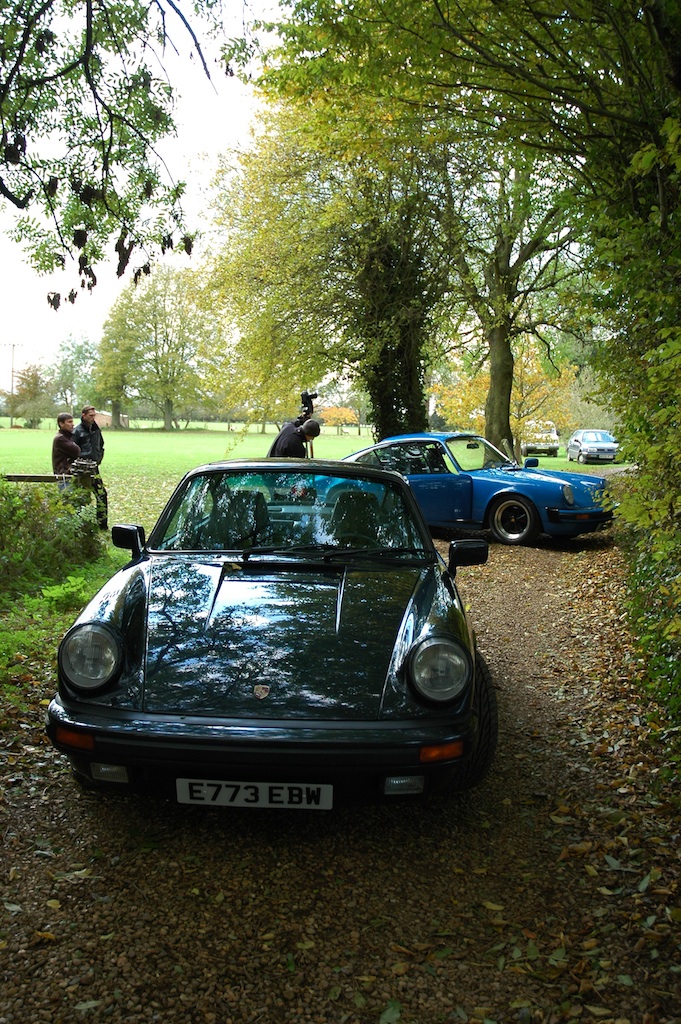
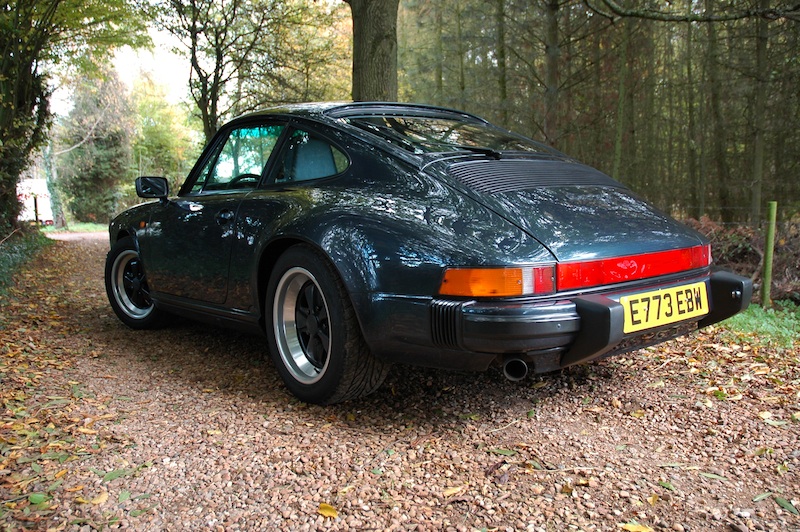
“You told me that your SC being stolen was the chance of your life”. I remind Raphael Caille of a previous conversation, as photographer Cusick gives Raphael’s unmarked Carrera the Total 911 photoshoot treatment. “Yes” he agrees, “but I love Franck’s SC, it’s like new!”
Behind the Marine Blue 3.2 sits Franck Marie’s superb SC Coupe, the car’s blazing Arrow Blue paint contrasting wildly with the autumnal carpet, and the shimmering dark metallic of its younger sibling. Apart from their fabulous colours, the cars are almost identical. Ferry Porsche believed continuity ensured lasting appeal, and nowhere is his philosophy more evident than at the point where SC and Carrera meet.
Standing here with these two French friends and their spotless 911s, fellow Frenchman Alphonse Karr’s famous epigram comes to mind: “Plus c’est la meme chose, plus ça change”, which translates as: “the more it changes, the more it’s the same thing”. Karr could easily have been talking about these two cars when he came up with that one.
Introduced for the 1978 model year, the arrival of the 911SC was met with moans from some enthusiasts who did not appreciate the loss of ten percent of engine power; now a purported 180bhp, as opposed to the 200bhp of the previous Carrera 3.0. A slight increase in torque, thanks to revised valve timing, did little to improve the car’s reception among diehards. The lower-power three litre 930/03 engine, the air pump now fitted to all 911s to comply with tougher European emission regulations, and the softer pedal feel of the new servo-assisted brakes, left 911 fans feeling that the development curve had just been arrested under false pretences.
Aficionados pointed their fingers at the pro-928 management, claiming the potent flat six had been cut off in its prime to give the front-engined flagship the performance advantage, at least on paper. Others gave the changes a warmer reception, welcoming the return of the classic eleven-blade engine fan for example. Less performance-driven customers, new to 911s and looking for a practical four-seater sports coupe, appreciated the certainty of the assisted brakes from cold, and the improved equipment packages available.
Broadening the 911’s appeal was never part of Porsche’s plan. The board, then led by Prof Dr Peter Fuhrmann, had decided for reasons of time and cost to retire the 911, and replace it with the 928, but strong sales figures for the SC were a spanner in the works. Demand for Butzi’s progeny remained healthy, and by 1980, the threat of retirement had evaporated. Ferry’s autobiography, Cars are my Life, explains the situation in plain terms. “The management had no relationship with the 911: it was not their car” says Dr. Porsche. “Only later did it emerge that the 928 was not the right car to succeed the 911”.
We can maybe imagine the boardroom scenes that led to Furhmann’s early departure at the end of 1980, but once new boy Peter Schutz had the helm, the change in tack was immediate. Engineers were let off the leash to catch up on long-overdue 911 developments.
The 180 bhp engine was widely reported as more powerful than claimed. For 1980, the SC received a minor increase in compression, the cooling fan was changed to the bigger Turbo version, the distributor regained a vacuum advance and new timing covers were fitted. Engine power rose to 188 bhp. Fingers were pulled out again in ’81, when valve timing was restored to that of the Carrera 3.0, and fuel and ignition systems were tweaked to liberate a further 16 bhp. With 204 bhp on tap, the SC finally had more power than its predecessor.
1983 was a record year for narrow-bodied 911 production, with over 12,500 cars manufactured, an increase of almost 60 percent in two years. Stuttgart enjoyed exceptional success with the SC, and the launch of the 3.2 Carrera in 1984 put the 911 in the right place at the right time. Newsweek named 1984 the Year of the Yuppie, and the reintroduction of the Carrera name was just what the market wanted. Porsche’s brand values, together with the 911’s timeless design and unbeatable practicality, made the whale-tailed Carrera an 80’s archetype, and workers couldn’t make them quick enough.
The cars pictured here are superb examples. Since buying his 1980 SC from the original owner in 1998, Franck has added 100K kms to the previous 60K, but one is hard-pressed to find evidence of even half this total. Raph’s well-travelled 1988 Coupe has seen slightly more tarmac at 184K kms, the car having lived in Germany, Italy and the boys’ native France before coming to the UK in 2002. It serves as the owner’s daily driver for part of the year, easily dispatching the 70-mile return journey from his Hertfordshire home to Silverstone, where the 911-owning pair work for a successful race team.
“The budget was limited for my first 911, so the SC I had to start with was well used”, confesses Monsieur Caille. “When it was subsequently stolen, the insurance settlement meant I had a bit more money to spend. I was lucky enough to find a good example of what I started out looking for: a 3.2”. Raph’s feedback on Carrera versus SC stewardship is in line with what most who have owned both will say: there is very little in it.
“My Carrera is in better condition than my SC was”, declares Raphael, “so I appreciate it more. The things I like are the same for both cars. The steering feel is amazing; they are lots of fun even at low speed. I love the reliability and practicality. I’ve done 60,000 kms in 4 years of using the Carrera as a weekend and holiday car, and have never had a problem. I simply check the oil and tyres and go. I get 28 mpg without taking it too easy and the space is very good. When I come back from France I can easily get 100 bottles of wine in the car”. The torsion bar suspension gives both SC and Carrera the same underbonnet capacity and flat cabin floor. Anti-roll bars and rear torsion bars grew slightly bigger from 1986, a factory tweak to improve the way the cars handled their increasing weight.
Tim Scott, of Frinton-on-Sea in Essex is another ex-SC owner now running a Carrera. Tim’s current car is an ’84 Carrera Coupe, bought for a song with some work to do, and currently undergoing a refit as a lightweight road and track machine. “They don’t feel any different to me”, says Scott, who bought the Coupe having sold a spotless 930, which he believed was too nice to modify. “The strengths and weaknesses of both cars lie in exactly the same places, so they’re very similar to own and work on. Even when you start taking them apart, everything is very familiar”.
Subtle changes chronicle the 911’s progression from the 1978 SC to the eventual pensioning-off of the Carrera in 1989. Bugbears are few; most who have owned both models cite the heating, ventilation and air conditioning as major gripes. 1986 brought improvements in this area, with bigger side and centre dash vents. That year also saw the introduction of slightly lower seat rails, which some claim offer a better connection between car and driver. The 3.5mm wider brake discs of the Carrera give slightly better thermal capacity on track days, but using modern-day pad compositions in well-maintained SC or Carrera braking systems means there isn’t much in it as far as outright one-time brake performance goes.
There were very few changes to the bodywork in 1984. The lines were smoothed as designers finally integrated the SC’s protrusive (optional) front foglights into the bodywork (the rears were similarly absorbed in 1987), shifting the radio aerial from wing top to windscreen the following year. The (optional) Carrera tail was introduced. The almost imperceptible alterations continued inside; front seat belt buckles moved off the floor to the seats, the dash gained a temperature sensor, brake warning light and 930 heater controls, sunvisors were slightly modified and so on.
The biggest changes from SC to Carrera were all within reach of the rear badge. The engine was essentially a ‘stroked’ SC motor, the use of SC barrels and valves and a 930 crank adding 170cc to engine capacity. Redesigned forged pistons, enlarged inlet and exhaust ports, slightly bigger exhaust tubing and the adoption of a Digital Motor Electronics engine management system gave the new 911 an additional 27hp to play with, albeit at the expense of 20kg on engine weight. So was the new engine an improvement?
SC engines are unstressed, and therefore pretty much bulletproof. It is not unusual to see an untouched SC motor with 200K miles under its belt still producing stock power or more, but 3.2 engines can be a different kettle of fish. At a recent impact bumper 911 dyno day, a stock 204 bhp SC was making its regular flywheel-extrapolated 207 bhp, while stock 231 bhp Carreras were seeing around 224 bhp, down on standard power but not entirely unexpected. Carreras can certainly go on to cover high miles, but many 911 specialists now regard 90-130K miles as top end rebuild time on a 3.2, even when the engine has been properly maintained. Worn valve guides and cylinders on 3.2s can be an issue, particularly when the car has been used for lots of short hops. Both factors can lead to a loss of power.
All engines can suffer from cracked or pulled head studs, and sensible owners replace the original lower-row Dilavar studs with steel before issues arise. The hydraulic timing chain tensioners introduced on the 3.2 are an acknowledged improvement over earlier spring-loaded units. The later 3.0s benefit from wider idler arms and bronze bushes, which are said to address most chain tensioning problems, but for total peace of mind, the later Carrera tensioners are easily fitted to the earlier motor. If only getting appreciably more power from these engines was as elementary.
Bob Watson is a UK 911 specialist, with a substantial back catalogue of 3.0 and 3.2 rebuilds and upgrades to draw on. “The ideal recipe for each of these engines is very different” says the unassuming Watson. “Starting with a healthy motor and following the ingredients precisely is the only way to do it”.
Early SC engines can have their valve timing set to the later specs, which is a good start. All SC engines respond well to the popular SSI upgrade, where the round-the-houses factory exhaust is deleted in favour of the lighter, more direct pre ‘73-style system. When combined with a sensible cam upgrade, SSIs can take a 204 bhp engine to 225 bhp or thereabouts. To go much higher on an SC involves swapping out the K-Jetronic fuel injection in favour of carbs or an EFI system, and either option will also require new pistons, as the SC’s domed design is optimised to the factory CIS setup.
The Carrera’s Motronic system may only have a fairly basic ECU, but it’s one ECU more than the SC, and opens up the potential to remap the engine management programme. Remapping the 3.2 is relatively straightforward and the results can be impressive. On the same dyno as previously mentioned, a remapped but otherwise stock ’84 Carrera with 140K kms made 254 bhp; 23 bhp over stock. Fattening the midrange torque curve with a remap has a marked impact on the way a Carrera goes, and for less than half the cost of SSIs on an SC. According to Bob Watson, going higher than this on a 3.2 can also be complicated, usually involving a displacement increase via new pistons and barrels. Some 3.2 owners shy away from SSIs, but Bob believes they work very effectively, as long as they are Carrera and not SC units, which do fit but have smaller pipework.
Real world performance is not all about who has more bhp, and even when modified to give slightly higher output, performance remains broadly similar between the two cars. Contemporary road tests show the stock 3.2 was faster than the SC to 60 mph by no more than a tenth of a second, the low end grunt of the 3.0 easily matching what a stock Carrera has to offer. The extra few cc’s and the bigger exhaust gives the 3.2 an advantage at the top end, though by the time it can show its strength, the battle has passed into licence–losing speeds.
Weight is an area where the early cars have an advantage that is sometimes overlooked. The early impact bumper cars were only moderately heavier than their predecessors, and much of the middle-age spread on subsequent models came as a result of the hot galvanising process introduced in the mid-70s, and the higher levels of specification added to later cars. Whilst the weights look more or less identical in black and white, ex-works weights are without options, and every option added is a little more on the car’s waistline and off performance.
For instance, a Carrera tail weighs 19 kilograms without the rear wiper assembly. Add a wiper, front fogs and a front chin spoiler with fixings and you are past 25 kilos. Add air conditioning and the associated tubing and wiring and you are fast approaching 100 kilos. With electric sunroofs, electric heated mirrors, electric seats and a heavier engine and gearbox all on the menu for the last of the 3.2s, it’s no wonder that high-spec narrow-bodied Carreras were eventually topping the scales at almost 1300 kilos with a full tank of fuel.
Lightening is very popular among impact bumper owners looking to improve performance. Junking the unimpressive factory air conditioning, simplifying the interior and losing some sound deadening, replacing the heavy battery with a lighter example, deleting the stock 6 speaker stereo and amplifier system, deleting the spare wheel and jack in favour of an AA card and a can of tyre sealant, replacing the heavy-when-full washer reservoir with a lighter version and losing the tail for a fibreglass ducktail, can take 150 kilos or more off the weight of a car. This is comparable to losing two decent-sized adult passengers, so is an effective way of sharpening the car’s dynamics, as well as being more or less free of charge. The bits removed can all be kept for resale, meaning there is very little effect on the car’s value.
No comparison would be complete without mentioning the time-honoured transmission debate: the 915 of the SC and pre ‘87 Carrera versus the later G50. Nowadays, this is likely to be of lesser importance in the majority of ownership situations. The most heralded feature of the G50 is its hydraulic clutch, which only makes a real difference in heavy traffic. Unless one is regularly taking an impact-bumper 911 out in the rush hour, then the ‘G50 is great’ argument is less relevant. This is not to say that the bigger G50 is not the better gearbox, but when both types are assessed in good order, the change from one ‘box to the next is not the quantum leap forward claimed by many. Prospective 911 purchases should always be judged primarily on condition, and a good 915 car is preferable to an average G50 example.
The very minor changes to this model line over the course of its life should not be seen as underdevelopment, perhaps we should instead imagine that the German translation of ‘if it ain’t broke, don’t fix it’ was hanging on the design office wall. Those entrusted with making sense of the 911 during the eleven-year lifespan of the SC and Carrera did an excellent job, but then they were working with fundamentally good material.
Had the SC been a bad car, it would have sunk without trace and done Furhmann a favour. However, with marked disregard for the management plan, the SC simply refused to stop selling. Drivers loved the car for its peerless build quality, supreme reliability, that noise and the tumultuous rush of performance, while still managing high-twenties fuel economy. The heroic SC made 911 fans out of awestruck schoolboys and car-buying adults alike, and its core strengths were carried over into the Carrera, with very little left behind.
Today, the 3.2 Carrera is seen as a motoring milestone, and the very last examples are held in high regard as a ‘best of breed’, though the truth is that there are very few real-world differences in the 911s produced between 1978 and 1989. We are unlikely to ever to hear the end of the debate between SC and Carrera owners on which is the better car, or the more authentic representation of the 911 ideal, but does it actually matter?
A 911 is much more than mere transportation. These cars are famous for striking a uniquely personal chord with their owners, and SCs and Carreras embody this concept beautifully. They may look, feel and stop and go more or less the same, but they affect their owners in completely different ways. Franck Marie loves his SC, his friend Raphael adores his 3.2 Carrera, and both are absolutely right; their immaculate cars are equally important strands of the 911 bloodline.
The best advice for those wishing to own one of these cars is simple. Start by ignoring the G50 brainwashing brigade, and the other myriad opinions from all sides on what is better and why. Drive a few good examples of both SC and Carrera, discover the one that suits you best and go with it. Take your time and find a good one: it is guaranteed never to disappoint.
SHARE • EXPLORE • SUPPORT
Ferdinand blogs my freelance adventure with Porsche at the centre. To support the blog or engage with me in other ways, you can:
Volkswagen has just released some bullish economic figures, against a dominant downward trend in Germany’s economy.
Net profit at Volkswagen AG rose 58 percent in Q3 thanks to a boost in accounting from its Porsche takeover. The complex merger of both brands led to a share options revaluation, and a change in how Porsche ownership is accounted for by Volkswagen.
Despite a fall in VW operating earnings outside of this merger, Volkswagen held to a full-year earnings forecast matching last year’s performance. Group net profit was shown as €11.38 billion ($14.8 billion) in Q3, up from €7.14 billion in the same period last year. Global sales rose 27 percent to €48.84 billion.
Quartz reports how the German business climate ‘continues to deteriorate’, according to the latest IFO survey of 7,000 executives. The report claims “confidence among these leaders of trade and industry dropped for the sixth time in a row, and has hit the lowest point in more than two and a half years”.
The drop in sentiment is worse than expected, but seems in tune with available data. Despite OK results for Skoda and Porsche, Volkswagen’s overall earnings curve is down, with a 1.6% drop in nine-month operating income.
The firm still insists it will sell more cars through 2012, and take the same amount of profit home. Good luck with that, as the Eurozone remains pretty sluggish. Autocar earlier reported how Ford will close its Genk factory, shedding 4,300 jobs. Estimates put Ford’s European plant outputs at a suicidal 52% of max capacity.
Small cars continue to be the big sellers in Europe. What would Ferry do? You could make a good guess.
Porsche announces the 2013 Porsche Cayenne Turbo S: 550 horsepower in 2,250 kg/5,000 lbs, give or take some man maths. Germany says it’s “the top athlete in SUV clothing: all of the basic Cayenne properties such as versatile offroad capabilities, high ride comfort and superior towing power have been preserved.” 0-60 is now 4.5 seconds and the top speed is 283 kmh/175 mph.
A 3 year-old, £25,000 used Porsche Cayenne diesel does “all of the basic Cayenne properties” Porsche mentions more than well enough, and proves that you don’t need 550 hp in a keep-it-for-years Porsche utility. Keen as it looks, what does a Cayenne Turbo S add to the best execution of a Stuttgart SUV?
It comes with active suspension management, dynamic chassis control, torque vectoring and standard Sports Chrono. It’s got glossy exterior trims, specially designed 21-inch rims, and bi-colour leather inside. It costs €150,000 in standard form, but does no practical SUV job better than the oil-burning benchmark. It’s shinier, but horses don’t care about that when they’re standing in a box, bolted to the back.
Ferry Porsche’s favourite cars always encapsulated a sweet-spot of engineering, performance and common sense: bling was not Ferry’s thing. China is currently awash with people who buy stuff because it’s the dearest, but will China buy enough of this to make it worth bothering with? What about Europe? The prestige market here is struggling, and Porsche has already cut production in response. Its hard not to feel that more power means more irrelevance out west, as luxury Europe contracts and California fuel prices hit an all-time high.
Cayenne Diesel has many of the qualities held in high regard by Porsche’s founders, but the Cayenne Turbo S is not Porsche as many know and love it. Stuttgart better hope that China stays rich: let’s hope it has plans for smaller, lighter modes of transport to support the founder’s vision.
This website uses cookies to improve your experience. We'll assume you're ok with this, but you can opt-out if you wish.AcceptRead More
Privacy & Cookies Policy
Privacy Overview
This website uses cookies to improve your experience while you navigate through the website. Out of these, the cookies that are categorized as necessary are stored on your browser as they are essential for the working of basic functionalities of the website. We also use third-party cookies that help us analyze and understand how you use this website. These cookies will be stored in your browser only with your consent. You also have the option to opt-out of these cookies. But opting out of some of these cookies may affect your browsing experience.
Necessary cookies are absolutely essential for the website to function properly. This category only includes cookies that ensures basic functionalities and security features of the website. These cookies do not store any personal information.
Any cookies that may not be particularly necessary for the website to function and is used specifically to collect user personal data via analytics, ads, other embedded contents are termed as non-necessary cookies. It is mandatory to procure user consent prior to running these cookies on your website.


 Hanns Lohrer Porsche Artist