I had an email today from my friend Heather, wife and business partner of motorsport artist and designer, Nicolas Hunziker, reminding me that the duo are celebrating ten years in business this month. The mail was well timed, as I am also celebrating a work anniversary today: my seventh year as a full-time freelance, working in and around the classic Porsche hobby.
I still remember parking my company car in the office car park for the last time, returning my work laptop and security pass and catching the train from Weybridge back to Banbury – I think I even kept the ticket stub. Mrs G picked me up in our old Landcruiser and we drove home through the leafy lanes, on a beautifully bright, sunny day. Still got the house, the Landcruiser, the Mrs and the sunshine (today, at least), but I no longer work for a company owned by a hedge fund and run by a revolving door of MDs, each of whom loved to send us on wild-goose research missions to find the secrets of future profit growth, but did nothing in response when we brought home the data.
It’s now seven years since I was a wage slave and I don’t miss a bit of it. What a joy it is to wake up in the morning, walk downstairs, put the kettle on and instantly be at work. I am truly grateful for what the last seven years have taught me and oh, to have learned it all so much earlier! I look forward to reaching my tenth anniversary and considering my own answers to the questions I just asked Nicolas. Here’s what my artist friend says after a decade of working for himself.
JG: How long did it take until you felt the new venture was going to work?
NH: I was fortunate as I was able to quit my job in advertising (I was writing and directing TV commercials) and take up painting full time, one year into my painting career. In the early days, I would deliver a painting without knowing when or where the next sale would materialise. The mortgage was late more than once, but Heather never discouraged me from pursuing my passion. She always stood by me and put her entrepreneurial spirit to work. And if it hadn’t been for the support of a few early patrons – support which continues to this day – I might not be where I am now.
JG: Can you share a high point from the last ten years?
NH: I can think of several. Obviously getting the official nod from Porsche and McLaren, Gulf, Le Mans etc. to gild my paintings with their logos was huge. A couple of corporate commissions that stand out came from the Porsche Museum and PCNA. But one thing that has surprised me more than anything else is all the doors that my art has opened for me: My own racing activities, meeting people who I have long admired and now I’m lucky to call many of them friends.
JG: Has being in business changed your attitude to/experience of the classic Porsche world?
NH: Yes and no. On the one hand, I’ve had a peek behind the curtain through our apparel company where we were a Porsche OE apparel supplier. On the customer side, it’s been very rewarding to see how our creations have been accepted by the Porsche scene. We started our apparel line in 2011 but we still get a kick out of seeing someone wear one of our shirts walking around Goodwood, Le Mans Classic, Monterey or the local Cars & Coffee event.
JG: Have you learned any surprise lessons about people through your work?
NH: I don’t know if there were surprises, but I’ve learned the following:
1. Develop your own style.
2. Passion is the best inspiration.
3. Art opens doors.
5. Defy convention.
4. Art has value.
I love Nic’s approach to creativity: he is always thinking ahead. Hunziker Corp has some interesting projects in progress, all being documented online. Check out the Hunziker Art Car project (a 996 GT3 built through parts donations in exchange for artwork) and, of course, the famous Hunziker Driving Shoes, as worn by half the car guys in America, going by Heather’s Facebook shares.
Thinking about the questions I asked Nic to answer, my own answers would probably be that I knew it would work before I got started, as I had been data researching and writing full-time for ten years, working as a part-time Porsche freelancer since 2005 and already had an independent Porsche client base. There have been a few upsets in my seven years of freelance (mainly debtors going bust and causing a few headaches – not all financial), but I now recognise these as excellent learning experiences. The most recent upset was easier than the first, having learned how to spot, react and mitigate the effects of such occurrences and acting on my instincts early.
A better business radar is one good thing that has come straight from freelance, but it has not arrived at the expense of being harder with money. I started my freelance career working with people who charged for every single thing they did and I followed their example in the early days. I don’t do that so much nowadays: my attitude to earning has mellowed substantially. Going easier with this aspect has brought in many fun experiences and also taught me to say ‘no thanks’ more, and earlier. Time is the most valuable commodity for any creative, so better to draw a line under things as soon as warning flags are raised and move in a better direction.
Have I met inspirational people? Most definitely: valuable lessons have been learned from good friends all over the world. Have I inspired other people? One or two would say yes. Do I still feel the same passion? Yes, I maintain a deep love for the cars and people of this excellent hobby, but no doubt the movement is different today compared to seven years ago. A new generation has taken the world of classic Porsche in many different directions and we oldies accept that this is how all things go eventually. Some of the hot new trends are nothing new at all, but no point losing sleep over it. Things that don’t excite us so much are the best things ever for other folks, and that is OK.
As layers pile on top of layers, the core just gets buried slightly deeper, so we must dig harder to find it. The passion, support and encouragement I get from my hardcore Porsche friends (i.e. most of the people I work with) deliver all the energy one needs to press on. These people have shaped my last seven years and continue to exert a huge influence. I guarantee that if you are thinking of starting something new, it is your similarly passionate friends who will help get you through it. That said, all final decisions on what to do next are yours alone to make.
Freelance Advice (if you need it)
For anyone considering leaving their job and trying something new and different, I urge you to go for it, especially if you have a unique skill that is sought after. Do your research well and include contingency plans for all realistic worst case scenarios (not zombie attacks or nuclear holocausts) before walking away from the wage packet. With due diligence done and dusted, stop worrying and think and talk positive.
Walk away from anyone negative. They will kill what you are about to embark on. Avoid all negativity: negative people have nothing to offer the entrepreneur. They are not realists, they are buzzkill and you have already done your homework. Put your headphones on and walk away. Do not let buzzkillers inside your energy fence (I just made that up: please use it unwisely).
Add a few marketing skills to package the products/skills you intend to sell and then work your butt off doing something you love. It is so easy to work doing something that just flows in and around you. It is also incredible fun, most of the time. When it’s not fun, know you are learning something important. Also, never forget that the lesson may be to quit and do something different: I have changed tack many times in the last seven years.
Verify the market you are aiming to work in, nail the skills required (night school, online, private tuition or whatever) and as soon as you are ready to start, go for it. Worst case scenario: you get another job when the money runs out. Best case: there is no limit. You are the limit. I know so many of you have wonderful talents: let them shine brightly, follow the light and see where it leads!
Credits
ps: I have a few people to thank for their unflinching support over the last seven years (even over the last twelve years) but none of them would want to be mentioned in public: that’s just not how we do things. I am sure they know who they are – I talk to most of them daily! One or two people not so often nowadays, but the feeling is still the same. Thank you.
Mrs G and I recently attended the social event of the historic Porsche motorsport off-season in Yorkshire, where a good weekend was had by all. While up north, we called in to catch up with Mark and James at EB Motorsport in Barnsley, as I heard there was lots going on.
While James has recently been helping with another little addition to the family, Mark’s been holding the fort at EB Engineering by day and spending the evenings knee-deep in Porsche projects. Both have also been working closely with a bunch of new staff including a full-time painter, new fabricator/welder and a machine operator for the three Haas CNC machines now working flat out in Barnsley. But I digress – back to Porsche.
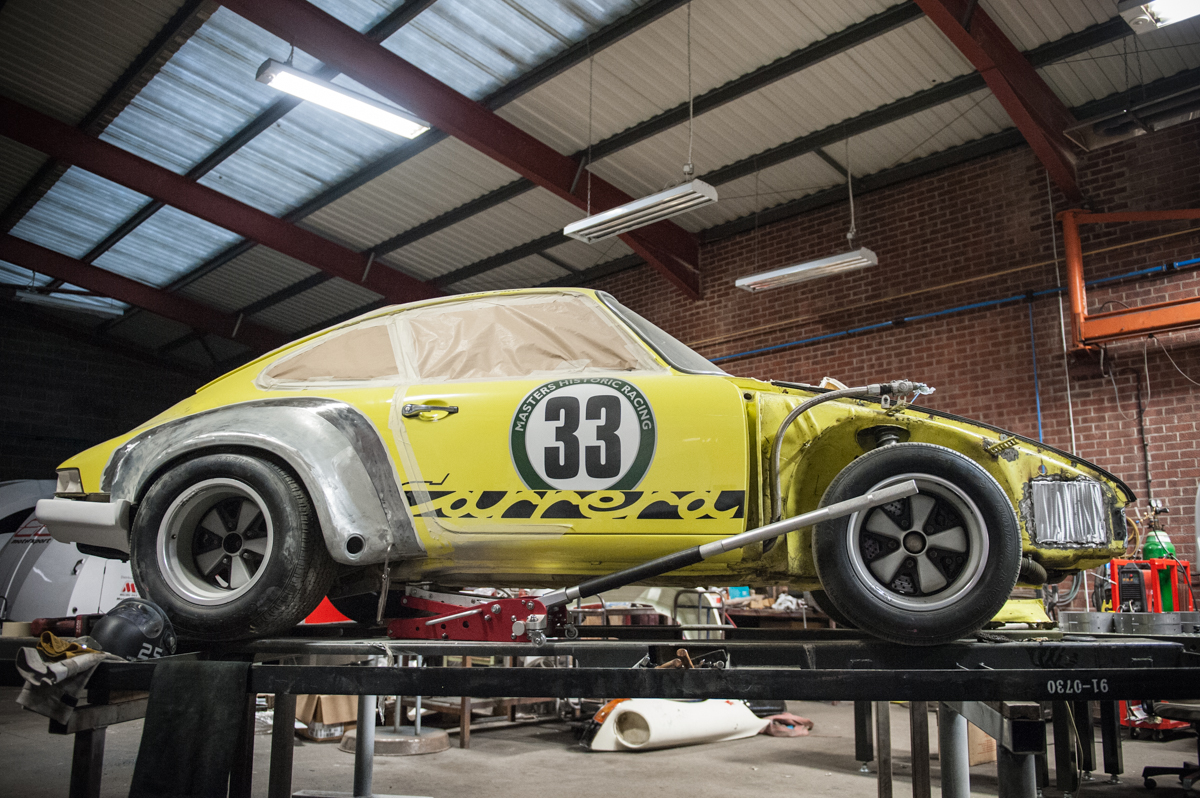
Current EB classic Porsche projects include the 911R build (which I got some good pics of), repairing the ’65 SWB car ahead of this year’s race season (Brands Masters and 6 Hours of Spa are definite), working on the 2.1 RSR Turbo build and fitting the latest EB Motorsport parts to the Light Yellow RSR race car: these superb pressed steel rear arch flares.
Porsche 911 Steel Arch Flares
Well made steel arch flares that fit properly and look right are almost impossible to find, but the new EB flares are a superb piece of work. Requiring no hand finishing around the arch lip or torsion bar hole, they merge to meet the contours of the classic race car in a seamless curve of delight. The tyre-to-arch gap in EB’s fitting is nothing short of perfect; these steel arch flares really are magnificent creations by all concerned.
I love my 911s as narrow-body models, but steel panels of this quality make my wallet itch. The only issue is that, to do them proper justice, you need 300bhp under the decklid and 11-inch rear Fuchs to match. Such champagne tastes are not yet matched by an available budget to go wild in metal. Maybe one day.
Email EB Motorsport to discuss any of their peerless performance parts for Porsche. The brothers are excellent guys: two of my favourite people.
SHARE • EXPLORE • SUPPORT
Ferdinand blogs my freelance adventure with Porsche at the centre. To support the blog or engage with me in other ways, you can:
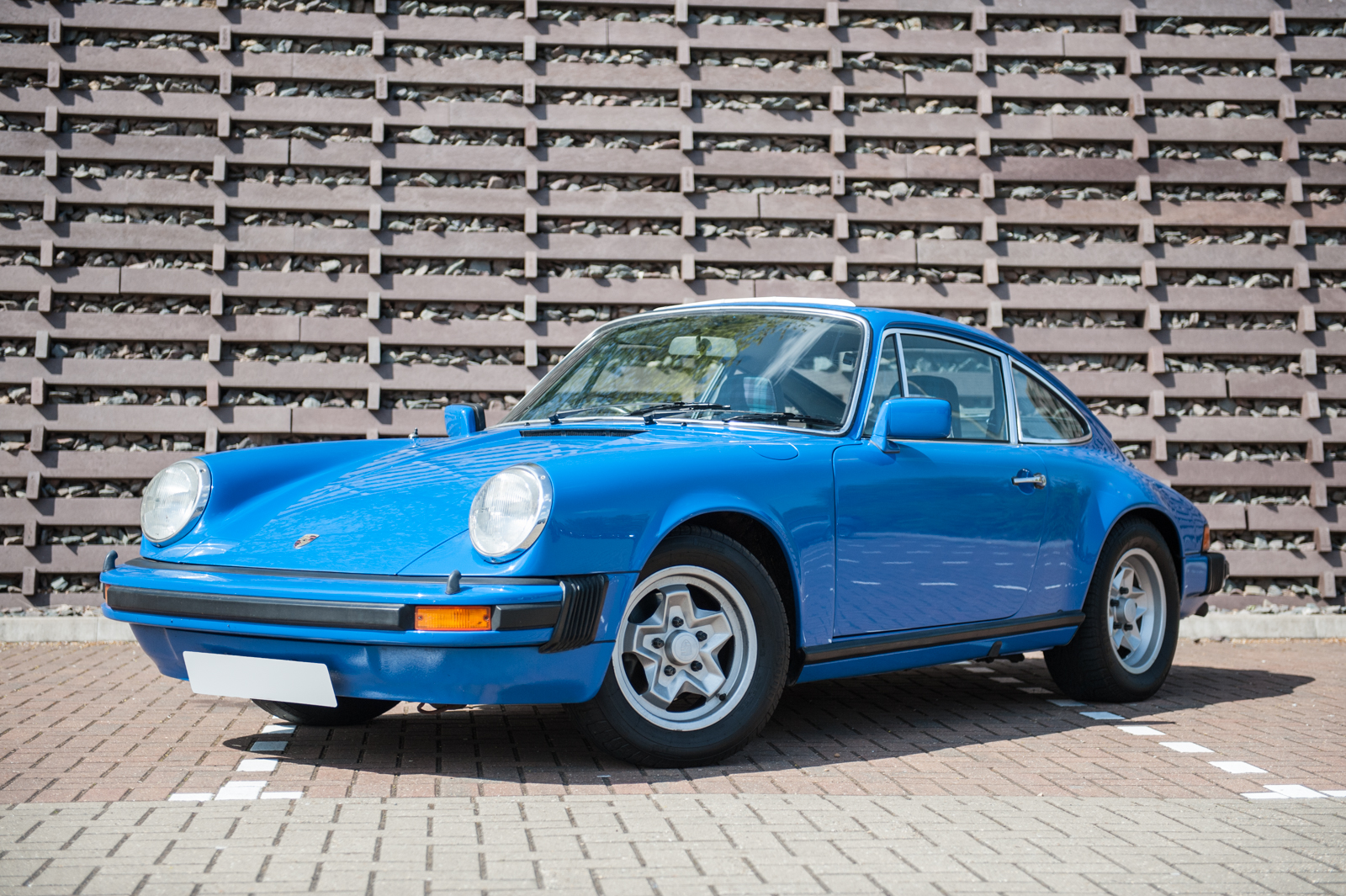
So I’ve done a couple of blogs on the new 991 GT3 up to now. That car is an interesting piece of news for 911 fans, but you know I’m not big into new stuff. Air-cooled is my thing, specifically 3-litre 911s and, more specifically, LHD 3-litres where possible. But, when my friend Simon invited me to come get his sweet RHD 1979 Porsche 911 SC for a day and help him move it up country, what kind of snob would say no to that? I was booking a train ticket faster than you can say “pedal offset”.
The destination was Tower Porsche: south of the river off Tower Bridge Road. I’d not been south of the river for a couple of months and I do miss my old stomping ground after a while, so I caught an early train, got to London at 7 and walked along the Thames for an hour or so, stopping to get some breakfast en route. All those people heading for work in the City and me heading for a day in a 911 SC – what a joy it is to be alive.
My quarry was parked just inside the workshop doors. I had a good chat with John the boss, sharing experiences from our recent trip to Techno Classica Essen, but eventually made a move to let him get on with things as they’re not short of work down in that there London. The SC sprang into life first turn of the key and we headed off into the morning traffic.
LHD vs RHD: Classic Porsche
My first 911 was LHD by choice and I have never looked back. The brake and clutch pedals in the RHD cars are offset well to the left of the column, and that 915 shift is a bit of a pain on the 1-2 plane when sitting on the wrong-hand side of the car. If you’ve never driven a LHD SC/impact bumper and only ever driven righties, you won’t give the RHD setup a second thought, but all my SCs and my current C3 have steered from the left. To me it is how they should be, and it is no great hardship to use here in England. That said, one soon adjusts to new surroundings and attention is drawn toward other issues.
One of the most common complaints with pre-G50 impact bumper cars is the weight of the clutch when in traffic. Later 3.2 Carrera G50s bring the hydraulic clutch and it’s obviously a nice thing to have, but when it has to be paired with a 3.2 engine, I think I’ll stick with the weight and the shorter stroke 3-litre, thanks. No problem with 3.2 Carreras, the 3-litre is just my personal preference.
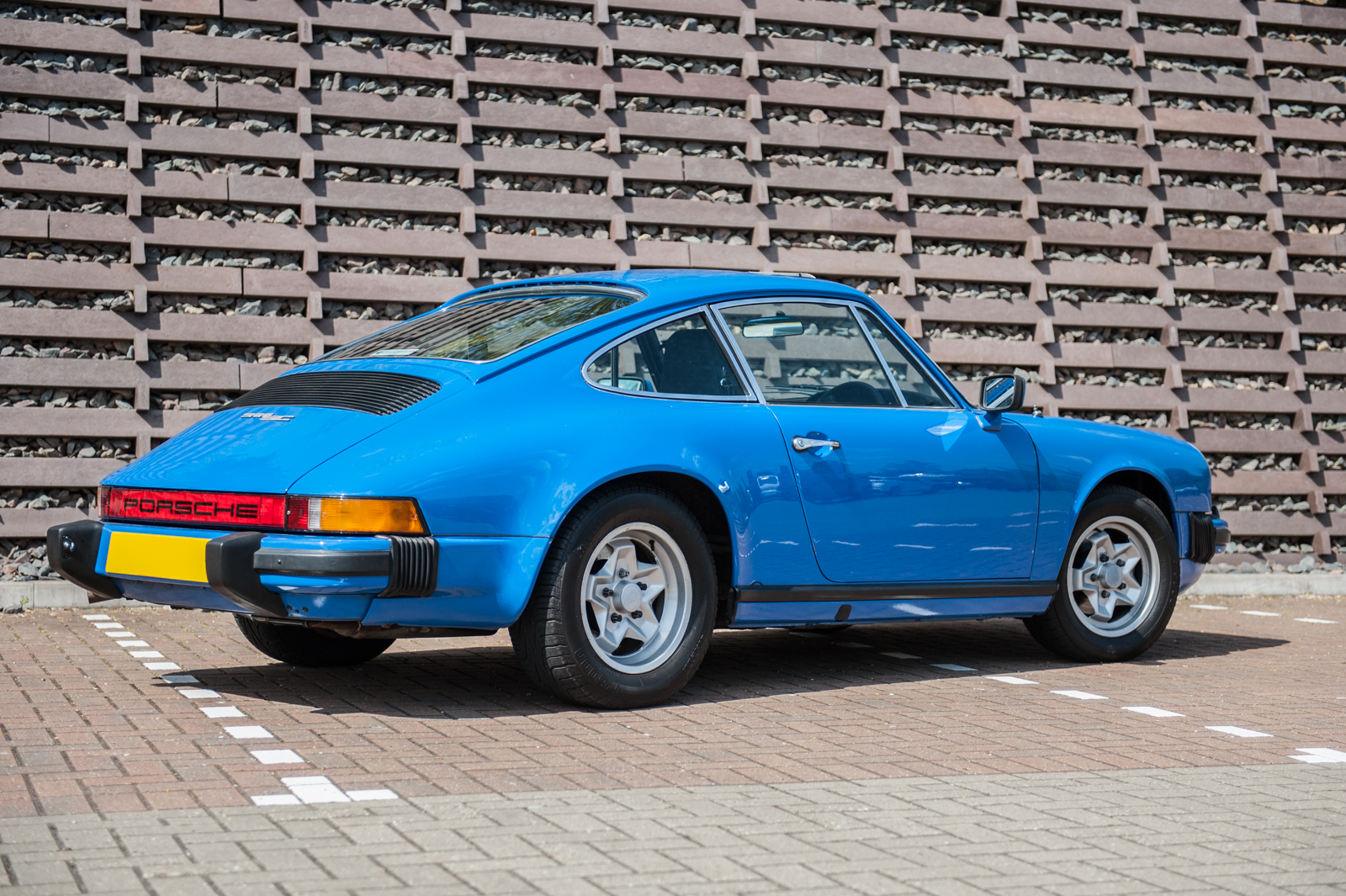
Simon’s SC has comfort seats trimmed in cool Black Watch Tartan and that makes the cabin a nice place to be. Sunroof open and windows down a touch, the SC’s reduced ventilation compared to post-’86 3.2s is less of an issue – on a dry day, at least – and the Arrow Blue paint turns heads almost better than Orange. This is a very pretty car with no shortage of period details, including the chrome brightwork, cookie cutter forged wheels and periscope headlight washers.
Classic Porsche 911 SC Daily Driver
Lots of us once used our SCs as daily drivers, and the niggles had to be worked around, including those weedy wipers and eccentric heating controls. Not much else grates on the nerves: these are great cars to use every day. The lack of power steering was never an issue and remains a delight. I don’t use the radio in any of my cars (apart from the Cayenne since I stuck in a DAB radio), so the noise in the cabin has always suited me fine. The floor-mounted pedals are proper, the super-plasticky column levers for wipers and indicators/turn signals maybe less so, but they feel right nevertheless.
“We used to think that 3.0 and 3.2s were quick,” laughed John as I prepared to set off. “Now you go on track in one of these alongside GT3s and they just disappear into the distance.” Not much point mentioning a little group of IB hot rods that regularly push the GT3 boys along and I suppose the hot rods are kind of cheating anyway. But as outright lap times are not my priority, SC speed suits me just fine.
These light little cars with their superb traction and torque pull away beautifully, whatever the speed. Third gear in a 915 ‘box is such a flexible ratio: perfect for town or on the highway. This SC had the familiar issue of a sticky fuel tank sender due to lack of use for a while and could have done with the front end tracking sorting, but, all in all, it was a joy to drive. I averaged 25 mpg through London, around the M25 and up to the A5 and beyond. Everything in the car worked, without exception.
Towards the end of my day with the SC, I was parked outside my youngest daughter’s school, waiting for her to emerge. A chap in his 50s walked past, turned around, walked onto the road along my side and gave me a big thumbs-up, saying “love it mate, rock on.” Having spent a few hours in the driver’s seat, I was happy to share his enthusiasm. Perhaps SC fans are all in their fifties these days, but it doesn’t bother me much: youth is wasted on the young, as they say. I’m content to be older now, with kids all growing up, a few good friends to relax with and a few quid to spend on old stuff like this. The SC has also settled nicely into seniority, so we made a good pair on the day.
Old 1970s 911 SCs may not be the newest, fastest or prettiest Porsches (albeit they have long been the prettiest to my eyes) but, as solid all-rounders, nothing comes close. I have a big soft spot for the LHD 964RS, but would otherwise take an SC every time, if a certain stripped-out C3 was not available. This SC is now off to a new home: I hope they enjoy it as much as I did.
The Gen 2 991 GT3 PDK has just had its first public hot laps around the Nürburgring and set a time 12 seconds quicker than the outgoing model. 7 mins 12.7 seconds is between 2 and 3 percent quicker than the old car, so will such a modest increase hurt sales of Gen 2s?
Autocar magazine released its first drive of the Gen 2 991 GT3 Manual earlier this week and Greg Kable was quick to point out that the Gen 2 PDK is substantially quicker on track. “But as spectacularly good as the manual version of the new Porsche 911 GT3 is – and it really is stunningly effective – I wouldn’t recommend it to anyone who intends to do an intensive amount of track day running…In ultimate performance terms, the PDK model is king.” This being the case, how much slower than a Gen 1 GT3 PDK would one be around the Nürburgring in a Gen 2 Manual? And would a slower Gen 2 Manual matter?
Manual transmission matters for the emotional response to total control, or so the experts say. But how many cars would one sell with the headline: “the Gen 2 GT3 Manual is ten seconds slower than the old car around the Nürburgring, but you told us you wanted three pedals for those 1500 miles a year, so here you go”?
Manufacturers need to upgrade, renew and keep pace with the competition and find the USPs that set their latest creations apart from the old ones but, at some stage, the actual users of a thing (rather than speculators/investors/collectors or whatever the latest word is) run out of real reasons to ‘upgrade’. A two year-old iPhone 6S Plus does basically the same job as the latest one, a four year-old Macbook Pro does pretty much the same job as a new one and a 17 year-old Volkswagen Polo ticks the same ‘get from A-B’ box as a new one, so why bother with new things at all?
Of course, stuff wears out when it gets used a lot and replacements are then a necessity, but few people are wearing out Gen 1 GT3s. If the upgrade path is all about egos aching for shiny, then Porsche is mining a rich psychological seam. Stuttgart delivered just shy of 60,000 cars in Q1 2017 (another record, one imagines). To make and deliver all of these cars, the company now employs 28,249 people. Profit margins have also risen and are now running at 17.6 percent on a total revenue of €5.5 billion.
No prizes for guessing that 911 GT3s are not top of the sales charts, but they must be pretty close to the top in the league table of press coverage year-on-year. The column inches guarantee all Gen 2 GT3s will be sold, so maybe it makes little difference how quick the car is. Then again, it has to be quicker or the press won’t play ball.
If I didn’t already have a Gen 1 991 GT3 and someone offered me a Gen II build slot, I would buy the manual regardless of whether it was ten or even twenty seconds slower. But, if I already owned a Gen 1 GT3 and had to find a chunk of change to get in a manual that was slower on track? That is a different scenario.
A Porsche Cayenne S has just entered the Guinness Book of Records for completing the heaviest aircraft pull recorded by a production car. The Cayenne S crossed The English Channel to France and on to Charles de Gaulle airport in Paris, where it pulled an Airbus 380 weighing 285 metric tonnes (630,000 pounds).
I’m not sure what the significance of Air France is in this – maybe the idea came from Porsche Cars GB technician and slammed 964 owner, Rich Payne, who drove the Cayenne, and a French friend of his working on Air France Airbus 380s. Anyway, the Cayenne is said to have been completely standard for the pull, apparently eschewing the usual addition of a tonne of steel ballast as per previous Volkswagen Touareg/Boeing 747 pulls to ensure good traction.
How hard can it be to get 295 tonnes of Airbus moving? I am no physics expert (as may be proved by the following paragraph), but the important factor is probably the friction co-efficient of the A380’s tyres. A NASA study in 2003 calculated a friction co-efficient for modern aircraft tyres of 0.015. Pumping the tyres up to a very high pressure would minimise this figure – perhaps taking it down to 0.01. Times 285 tonnes by 0.01 and you get 2.58 tonnes of weight pull to get this thing moving.
This is a little more than my ageing 955 Cayenne S towing the Tuthill Porsche 997 R-GT rally car on a trailer, which it has managed quite happily done for thousands of miles, so should be pretty straightforward for a modern Cayenne. The towcar challenge comes in controlling and stopping the weight hanging on behind, which of course the Cayenne does not have to do, especially with an airport apron out front for the A380 to roll off into.
Even taking the higher NASA figure of 0.15 gives us a a pulling weight of 4.2 tonnes, which a Cayenne should be able to handle no problem. Some of the big American domestic pickups can get 7 tonnes of trailer weight moving – been there, done that – so the issue would be finding an aircraft weighing 460 tonnes to smash this new record out of the water. Towing the Space Shuttle would be pretty cool, but that was only 74 tonnes: you’d need to link a few together to challenge one of the bigger US pickups, and get NASA to agree to it.
Still it’s well done and the photos are cool. A day messing around in France towing aircraft behind a Cayenne is a nice day at work. I’d like to see what a Macan could pull, weight wise.
This website uses cookies to improve your experience. We'll assume you're ok with this, but you can opt-out if you wish.AcceptRead More
Privacy & Cookies Policy
Privacy Overview
This website uses cookies to improve your experience while you navigate through the website. Out of these, the cookies that are categorized as necessary are stored on your browser as they are essential for the working of basic functionalities of the website. We also use third-party cookies that help us analyze and understand how you use this website. These cookies will be stored in your browser only with your consent. You also have the option to opt-out of these cookies. But opting out of some of these cookies may affect your browsing experience.
Necessary cookies are absolutely essential for the website to function properly. This category only includes cookies that ensures basic functionalities and security features of the website. These cookies do not store any personal information.
Any cookies that may not be particularly necessary for the website to function and is used specifically to collect user personal data via analytics, ads, other embedded contents are termed as non-necessary cookies. It is mandatory to procure user consent prior to running these cookies on your website.