Earlier this week, I was hired to complete a pre-purchase valuation for a Porsche Boxster S (987 S). Research turned up some interesting data. The car in question was a very high spec car finished in nice colours, but with higher than average mileage.
A look at the other cars on the market showed that, while the asking price was at the very top of the scale for cars being sold privately, the mileage was in the top 30% of all cars available. The seller had added a sizeable premium for spec items that the average Boxster buyer simply would not value as highly. My advice to the prospective buyer was to keep his powder dry and watch for bargains turning up towards the back end of the year.
Porsche Market Trends 2019
Anyone selling their car at the minute must remember that the car market has been hard work through 2019. Current new car registration figures show a very small lift in September over last year, but the month is down over 27% versus the peak in 2016. The market is not at full speed, reflecting the wider economic picture. The prevailing lack of consumer confidence has a knock-on effect on the used car market.
Sports cars are non-essential purchases and their prices are more subject to external market forces than most other sectors. While 4x4s can get a bit of a lift in winter regardless of the economic picture, and vans get a bit of a lift around Christmas when deliveries are at their peak, sports cars peak when the weather is good and are a fairly low priority for most people through the rest of the year. Not everyone, just most people.
Sell your used Porsche Boxster
My client on this valuation had just sold his previous Boxster: a 2007 2.7 987 with 105k miles. “I sold my 2.7 for £7500: full asking price. I made it stand out, though: painted the bumper, put new tyres on, cleaned it properly. It was a 245hp manual model with a few nice extras, OPC and specialist history. I had it for 5 years and put 30k on it. Paid £10k when I bought it. Possibly the best value sports car ever!”
While all this sounds great, the devil is in the detail. The sale was not easy, as the buyer was the only person who actually came to view the car. The seller had loads of timewasters and dreamers, offering £4-5k or to pay the car off monthly.
A quick look on Autotrader for 2007 Porsche Boxsters with circa 100k miles shows 32 cars with prices running from £7,500 to £17,000. The highest price is an outlier with 11k miles, with the next lowest at just under £15k. The spread of private sales runs from £7.5k for a 99k-mile Tip to just under £12k for a 42k-mile manual.
Retail asking prices for 2007 Porsche Boxster 987 2.7 manuals with 40-44k miles hover around the £11,850 mark, so assuming condition is more or less identical, how likely is a savvy buyer to pay the same price for a private car as a dealer is asking for a car with finance available and a warranty included? When condition is identical, the chances are slim.
The Porsche and BMW classifieds are full of private sellers asking strong money for average cars with the assertion that “if it doesn’t sell, I will keep it over winter and sell it next year” or words to that effect. In this market, with book drops every month and very little likelihood of a bounce over winter, people need to take their first profit.
Many private sellers are going to have to try harder if they want their cars to sell. If they are really not bothered about selling, take their ‘meh’ cars off the market. Low supply of good examples is the best way to help the price of their car over time. If you do want to sell, get with the programme!
(Values correct at October 2019)
To learn more about my work or commission an insurance, pre-sale or pre-purchase valuation, you can:
Regular readers of my former column in GT Porsche magazine will know about the psychological struggle with my Honda CR-V. How can it be that, after more than thirty years of buying and selling cars and with several beautifully engineered German classics in the fleet, my daily driver is a grey Honda CR-V? Wrong as that feels, thoughts of selling it feel even worse.
My first experience of Honda ownership was a silver Ballade that I took as a trade-in back in the mid-1990s. While it had all the appeal of beige nylon trousers, my daily driver at the time was a Renault 21 Turbo with an engine that had been balanced and blueprinted by a friend who built McLaren F1 engines for a living. It was a great car to drive, but, if one started the car and attempted to move it before the oil was fully up to temperature, the cold oil pressure was so extreme that it would bend the filter body and eject the engine oil out through the remote filter housing.
This would invariably occur when I was leaving for work. I would then be an idiot car salesman in a Jermyn Street suit, replacing a bent oil filter on the side of the road with the soles of my smart shoes immersed in used Mobil 1.
The arrival of the boxy but reliable Honda Ballade was a revelation. After ten years of running Renaults – mainly because they were a bit quirky and I had served my apprenticeship with the Régie – the Honda’s ability to deliver a life entirely free from mechanical breakdown was so transformative that I could not bear to part with it. When I left London, the 21 Turbo was sold to help raise my house deposit and the Honda came with me to Northants. Only when someone offered a crazy amount to buy the Ballade did I eventually part with it, but it left a big impact. I have maintained a bland but bulletproof Japanese backup car ever since.
The CRV is the latest of those machines. Bought as a one-owner car with front end damage, I repaired the bodywork and converted it to run on LPG. I change the oil more often than I wash it, but it has never failed an MOT. Even when it does need some attention, the parts are affordable and it is fairly easy to work on.
Recently the reliable Honda has started to cut out when cold. I’ve checked the obvious things and there are no fault codes yet, but it may be oil that is slightly too thick for the VTC solenoid, or maybe the timing chain has stretched, causing the timing to drop out when the engine wants a lot of advance during warmup. While changing the timing chain is not impossible, adding it to other things on the Honda’s current to-do list means I have a few quid to spend, as well as several weekends in the garage.
Deciding whether to spend the money and sort the Honda, or stick it on eBay and sell it in in favour of a newer CR-V involves an internal dialogue. If the car was newer and I was anything like most people, it might be time for a trade in. Manufacturers are currently offering thousands of pounds for cars like this in part exchange against a brand new car, but I as would never spend my own money on a new car, that is a complete non-starter for me.
A friend is selling a very smart 2010 CR-V diesel that might make a nice upgrade, but a Honda mechanic tells me to steer clear of diesels as the engines are prone to detonation and the steering gives trouble. Buying a later petrol would need another grand spent on an LPG conversion and the engines are low on torque vs the diesel. My friend’s 2010 car is up for £6k, but I’ve found a couple of later 2012 models with better spec and in fairly good colours up for closer to £5k. Styling/spec/presentability is not a concern: the decision is all about cost.
Let’s say that buying a later diesel with 100k miles is going to cost £5k plus £300 road tax up front. I’d budget £100 for a small service on purchase and £700 for a clutch and flywheel early next year. I would expect the car to cost roughly the same to run over two years as my current CR-V and for the value to lose maybe £2.5k over that time, as I take it to 150k miles and the later models get cheaper to buy.
Keeping my current known-quantity 150k-mile CR-V and preparing it to a level comparable to the other car is perhaps going to cost me five days in the garage (call it £1500 in time that I could spend doing client work) and maybe £600 in parts and paint. I end up with a car that will probably need nothing more done for three years, but would likely be ready to scrap at that stage. Value now is maybe £1500 cleaned up and sold in an eBay auction. The maths therefore look like this:
Keep old CR-V
Buy new CR-V
Value now
1500
5000
Upfront costs
2100
1100
Total
3600
6100
Value 2022
0
2500
3-year cost
3600
3600
So: it will cost me £1500 to keep the old CR-V, as I could get that now if I sold it. Adding £1500 in time plus £600 in bits is another £2100. So to keep that car and prep it for three more years is £3600.
Buying a newer CR-V at £5k and spending, say, £1100 in time and parts in the next few months on sorting the reasons why the current owner is selling means £6100 up front. If we assume that the newer one will have a likely value of £2500 in three years, we see that it has cost £3600 over that time.
With running costs of both likely to be fairly identical and the cost over three years apparently exactly the same, all of this suggests that I should probably sell the old one and take the benefits of a newer car with better spec and lower miles, as it will cost me nothing extra to drive that for the next three years.
However, as David McRaney’s book “You Are Not So Smart” points out, this analysis does not account for the fact that humans make flawed decisions based on biased logic, sunk costs, the ‘Availability Heuristic’ and more. Part of me wants keeping what I already own to make more sense than changing it, to preserve my sense of wellbeing at having bought wisely in the past.
Man Maths arrives
Before I start the analysis, I already know I will probably persist with the old car as although it might have a bit of work to do, it has been reliable to date, it has good memories and I have invested some money in it (sunk costs) with the LPG conversion, towbar fitment, set of spare winter tyres and Apple Carplay head unit. So, when the numbers come out looking identical, I move them around to suit my earlier presumptions. This process of moving numbers around to confirm a presupposed narrative is often referred to as “Man Maths”.
Removing the cost of my time, as I try to convince myself that five days is unlikely and it will probably take one lunch break to sort this CRV, it now costs £2100 to keep the car vs £3600 for the new car. I also convince myself that I dodged a bullet with the later car’s alleged reputation for exploded diesel engines and the running costs of dearer diesel versus the LPG the older car burns, plus I get to keep £5k in the bank. A change to the status quo stands no chance against all of these tools.
When Loss Aversion meets Porsche 996/997 bore scoring
Decisions made around Porsche 996/997 engine bore scoring issues can also show man maths at work. Several of the Porsche 996 and 997s I value for insurance have had their engines rebuilt due to bore scoring and some of these cars now stand their owners close to £30k, while the cars are worth maybe two-thirds of that.
I admire people who choose to repair their cars, but part of me feels the pain of the money they have lost by sticking with them. Owners may react by saying that the failure rate of these engines is very low and only unlucky people get caught by the problem, but I don’t know anyone that spends a lot of time around the water-cooled cars who feels the risk is low enough to take the plunge into 996 or 997 ownership.
The 996 C4S is one of my favourite 911s and I’ve considered a purchase several times, but the risk is too great for me. It would hurt to spend £18k on a 996 and then have another £8-10k to spend on an engine rebuild somewhere down the road. This is a classic example of how humans allow the perception of risk to deny the potential rewards.
In his book “The Creative Negotiator”, Steven Kozicki points out that many (if not most) of us are ruled by loss aversion, where avoiding a loss is more preferable than making a gain. When loss averse people consider the purchase of a Porsche 996 or early 997, the risk of potential engine failure and the subsequent financial loss outweighs all other aspects: we gloss over the joy we might get from driving a beautiful, affordable 911.
It’s a magnified version of what is seen on the Honda: I lean towards maintaining the old one (i.e. risking £1500) than putting £5k into buying a newer one, even though they are likely to cost the same to run over three years and I will end up with a lower-mileage, higher-spec daily driver that needs no work at all. When one considers what those benefits might be worth in pound notes, the decision not to risk does not entirely add up.
Loss Aversion in Litigation
Most of the court cases I work on involve a perceived financial loss. All of them go through mediation to try and find a settlement, and those sessions are always very interesting. Even when there is a strong case that will likely result in a strong judgement in their favour, people will often settle well below the potential court award if continuing is felt to involve even a modest loss.
The video below illustrates our innate tendencies for loss aversion. Even when the expected value of a risk (a bet in this case) is a return of £500 with the odds against success of a mere 1 in 2,300, most people will refuse to take the risk.
Those who have been on the fence regarding the purchase of a Porsche 996 or 997 should watch out for man maths and the power of our hardwired aversion to loss. We’re only here once and it’s important for our mental wellbeing to take a risk now and then. As Goethe said: “boldness has genius, power and magic in it”. I may go and see that new CR-V after all.
SHARE • EXPLORE • SUPPORT
Ferdinand blogs my freelance adventure with Porsche at the centre. To support the blog or engage with me in other ways, you can:
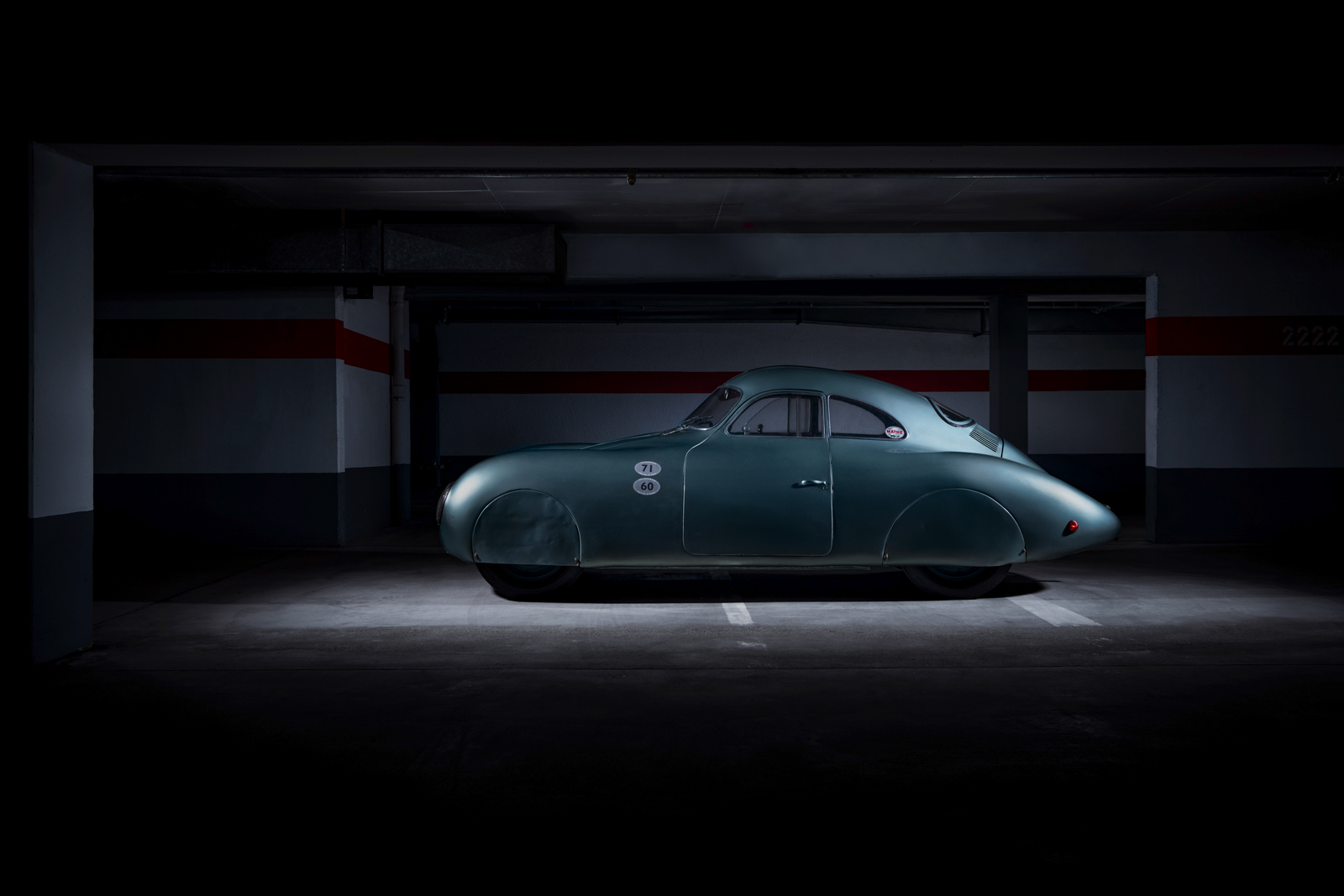
Fallout from the failed sale of the so-called “First Ever Porsche” – the 1939 Volkswagen Type 64 – at RM Sotheby’s in Monterey continues to unfold across the Internet. If you missed it, the car crossed the block fairly late in the sale and bidding in the packed tent began at an eye-watering price. A series of errors then followed.
Auctioneer Maarten ten Holder is said to have opened by saying that Sotheby’s had a bid at $30 million. The screens were duly set to this. As Maarten called out the bids, the numbers on the screens (facing away from the auctioneer) went up in $10 million increments until the podium displays read $70 million, at which time the auctioneer said the bids were in fact at $17 million and the numbers should be corrected, blaming his Dutch accent for the confusion.
From videos of the sale, it seems clear to me that Maarten is going up in increments of $500,000 from a start point of $13 million, and not ten million from a start of $30 million. However, the main fallout has come from claims of shill or chandelier bidding, where the auctioneer is calling increasing numbers with no bids actually received. Auction watchers are pointing the finger at dishonourable conduct.
Bid Running at Auction
I am not presuming any guilt here, and I’m not affected one way or the other, so there is no issue at my end. But anyone who thinks that ghost bidding is unusual conduct at auction needs a reality check. The best auctioneers all make their reputations through generating a fever and driving bidders to ever-greater heights: the practice is known as running the bids. Having bought hundreds of cars at auction in my career as a retail car buyer, I have had the bids run on me more times than I care to imagine. It is part of the auction experience.
I don’t remember one auction from the hundreds I’ve attended over more than thirty years in the motor trade where something that clearly was not worth the space it was taking up went for a higher price than expected. I have written several magazine columns about this crazy phenomena.
It usually happens when a private buyer comes along who has never been to auction before and the bids are run up to private sale money for a car sold as seen without prior approval. While it makes no sense to buy a car at auction without any sort of test drive, and pay the same price as one would from a bona fide private seller with a test drive before purchase, the practice is just as commonplace today as it ever was. Car auctions are not the best place to learn how to bid.
One type of auction where bid running was less common back in the pre-Internet days was disposal sales, where the auctioneers were getting a fixed price, regardless of whether items sold or not. This included Police and Lost Property sales held all over London and trade disposals, such as the old sales hall at Dingwalls in Croydon; probably now demolished to make way for a retail distribution centre. I bought a stack of cheap cars at London disposal sales in the late 1980s and early 1990s and they came at exactly the right price.
Contrast this to a job lot of cars I bought at a well-attended Colchester sale around the same time. This was a job lot of ex-Tesco fleet cars in the colours of the Tesco logo (all non-metallic red, white and dark blue) and I paid well into book for all of them. They were all presented in good condition, ready to be sold, so I knew I could make a profit on the lot, but the auctioneer made it bloody expensive for me. I never went back there again.
“Once bitten, twice shy” is likely to affect some reputations for a while, but all auctioneers will feel Maarten ten Holder’s pain. The car was already cooling off after Porsche took the unusual step of publicly denying any special Porsche provenance for the Type 64, over and above its undeniable importance as one of the early VW-based racing cars built by Ferdinand. It was down to ten Holder to do his job and get things cracking in the hall and he had a good go. The problem with the numbers turned things into a bit of a joke, but did he really get the bids?
Before the sale started, the car had already been offered to everyone who was likely to buy it and all had refused at the asking price. Bids supposedly went to $17 million in the tent, but the car is still listed as being for sale. It is clearly worth buying, just apparently not at that price.
The car now sits in storage in California, where its market value has been described as “f**ked” by people who should know a bit better. The truth is that good collectors are switched-on investors who get into this for the long term. Their experience and love of a deal makes then savvy and open to taking a risk. There is no doubt in my mind that the vultures are already circling above the Type 64.
The scandal surrounding the car and its first trip across the block has added to its story and therefore its appeal in certain quarters. Commentators who put a pre-sale value of up to $5 million on it may eventually learn that the car has changed hands privately for more than this: it would not surprise me one bit. It depends on the mindset of the owners: if there’s a lawsuit pending, then all bets are off.
I would put a bit more than $5 million on it and, if I had the money, I would be making enquiries. It’s an interesting story and perceived long term value of these things is all about the story. If you don’t know this about the human condition, you will never make a good auctioneer!
California is set to reassert its credentials as the epicentre of the classic Porsche universe this August, when RM Sotheby’s offers what it is calling the first-ever Porsche for sale at the Monterey weekend.
Sotheby’s refers to the car as “the only surviving example of the Type 64 Porsche and the personal car of both Ferdinand and Ferry Porsche,” but the honorary title is at odds with respected Porsche historian and friend of the Porsche archives, Karl Ludvigsen, who describes this car and its stablemates as Type 60K10s rather than Type 64s. This car is noted by Ludvigsen as one of three 60K10s built in preparation for the Berlin-Rome race, which was planned to run in September 1939. The historian explains things as follows:
“When, in 1941, Porsche compiled a book covering the activities of its first ten years, it conflated the Types 64 and 60K10 under the “Type 64″ heading. Understandably, this has led to confusion for later historians. This author prefers to maintain a clear distance between the two projects, which were in fact distinctly different and played contrasting roles in the Porsche sports-car saga.”
Type 64 Origins
The origin of the Type 64 Volkswagen is well documented. Ludvigsen’s must-have work ‘Origin of the Species‘ describes how, in 1937, “Porsche designers sketched the specifications of another member of the VW family, the Type 64, listed in the Porsche annals as VW-Rekord (Sport)”. However, circumstances surrounding the Type 64 plans were difficult.
Building one-off sports cars didn’t suit the PR tastes of the German Labour Front, overseers of the KdF-Wagen (Volkswagen) project that the Type 64 was based on. Nor would the organisation sell KdF parts to Porsche for the design house to build its own Type 64s. As Porsche could neither obtain the parts or the funding to take the project further, no Type 64s were ever built.
Enter the KdF 60K10
When the first Autobahn was opened from Berlin to Munich, a race was planned for Autumn 1939, to highlight the feat of civil engineering. After sprinting south through Germany along the new highway, the competitors would continue through Austria to the Brenner Pass before racing closed roads, all the way to Rome.
With deliveries of the new Volkswagen/KdF-Wagen scheduled for early 1940, the race was tailor-made for PR. A racing car built on the Volkswagen was now an entirely different proposition, and the Labour Front was now all in favour. Ferdinand Porsche decided that the cars should be built on the standard Type 60 VW chassis with a special aluminium body hand built by Reutter.
Much of the engineering for Type 64 was integrated into the Type 60K10, allowing a short development cycle. The first of three cars was finished in August 1939, with the second completed a month later. The race was officially shelved after Germany invaded Poland the following month, but one more car was finished in June 1940. Based on the damaged chassis of car number one, that is the car being offered for sale.
First-Ever Porsche: The History
Sotheby’s press release tells how “the third Type 64 was retained as a personal family car and driven extensively by Ferry and Ferdinand Porsche. When the company was forced to relocate headquarters to Gmünd, Austria from 1944-1948, it was kept alongside No. 2 at the family estate in the picturesque lakeside town of Zell-am-See. No. 3 was the only example to survive the war, and Ferry Porsche himself applied the raised letters spelling out ‘PORSCHE’ on the nose of the car when he had in registered in Austria under the new company name in 1946.
“In 1947, restoration work was commissioned by Porsche and completed by a young Pinin Farina in Turin, Italy. Nearly one year later, Porsche demonstrated the Type 356 roadster, no. 1, on public roads in Innsbruck, with the Type 64 by its side. Austrian privateer driver Otto Mathé completed demo laps in the Type 64 and fell in love, buying it from Porsche the following year. He enjoyed a successful racing career with the car in the 1950s—the very first to do so in a Porsche product—and kept it for 46 years until his death in 1995.
“In 1997, the Type 64 changed hands for just the second time in six decades and appeared at a handful of vintage racing events with its third owner, Dr. Thomas Gruber of Vienna, including Goodwood and the Austrian Ennstal Classic. Dr. Gruber is the author of the renowned Carrera RS book and one of the most respected Porsche specialists worldwide. Delightfully patinated, the streamlined 1939 Porsche Type 64 is now offered in Monterey from the long-term care of just its fourth owner, who acquired the car more than a decade ago, and is accompanied by many original spare parts, as well as extensive period images and historic documentation.”
Previous efforts to sell the Type 64
Instagram threads on this car throw up a few stories regarding previous efforts to sell it privately. One commenter on the RM thread suggests that Mathé’s guys may have altered a chassis number back in the day (quite common on older Porsches) and classic Porsche dealer, Maurice Felsbourg, commented that “The Otto Mathé car has been for sale by owners for years now. Each time asking price was met, they either raised it or changed their mind. They play golf with Piëch & Porsche, they surely won’t buy it. I hope bidding stalls at €5m.”
Sounds slightly like sour grapes you might think, but it is true that the car has previously been offered to specialists. One contact showed me an email from 2014, when he was offered the car at €12 million. Plenty of people will know about recent efforts to sell and that will influence some bidders. It if often the case that collectors reject the opportunity to buy in open market when the seller has made things difficult behind closed doors.
Whether you call this car a Type 64 or a Type 60K10, assuming the car all checks out, this is the most significant VW-Porsche to come up for sale since the last time it changed hands. Sotheby’s press release says that it could get up to $20 million: we’ll see how that goes.
Porsche AG announced that it delivered 256,255 vehicles worldwide in 2018. China was the biggest market, taking 80,108 units: a rise of 12% year on year. European sales fell 4% to 77,216 cars, with Germany taking roughly a third of that total. The single-market USA was behind Europe and substantially lower than China at just 57,000 cars in total.
The record number of total deliveries represents a growth of four per cent compared to the (record) figures for 2017. Panamera recorded the highest percentage growth, up 38% to 38,443 deliveries. The 911 (991) also recorded a double-digit rise: up 10% to 35,573 vehicles. Deliveries of the new car timed to coincide with the start of the year should see a rise for the 911 through 2019.
The 911, Panamera and 718 Boxster/Cayman are obviously small fry in the great scheme of things. Macan alone sold more than both 911 and Panamera combined, at 86,031 units delivered, while Cayenne deliveries totalled 71,458. Macan and Cayenne combined is 157,489 or 61% of total output. All four total 231,505, leaving 24750 units: presumably all Boxster/Cayman.
UK new car sales landscape
The UK new car market fell 6.8% through 2018, to 2.37 million cars in total. Diesel cars continue to decline in percentage down from 42% in 2017 to 31.7% in 2018. This shift was largely attributable to the Volkswagen emissions cheating scandal, which also involved Porsche and Audi models. As diesel sales fall, total CO2 emissions from the UK new car market have now risen for the second year in succession. The shift away from diesel is having a big effect.
“Diesels are, on average, 15-20% more efficient than petrol equivalents and so have a substantial role to play in addressing climate change,” said the UK Society of Motor Manufacturers and Traders. “The hard won gains made by the sector since CO2 records began in 1997 are being undermined by the shift away from diesel and disappointing growth in alternatively fuelled vehicles. This only underscores the challenge both industry and government face in meeting ambitious climate change targets.”
Porsche’s green credentials under the microscope
“The switch to the new WLTP test cycle and gasoline particle filters in Europe mean that we faced significant challenges in the fourth quarter of 2018, and these will continue to be felt in the first half of 2019,” said Detlev von Platen, Porsche Sales and Marketing chief.
Porsche cancelled all new orders of diesel models during 2018, so we will see how this plays out in deliveries of Macan, Cayenne and Panamera during 2019. The incoming Taycan electric vehicle range later this year will not have a huge effect on the manufacturer’s overall environmental impact, with another production line added and the workforce now twice what it was in 2012.
This website uses cookies to improve your experience. We'll assume you're ok with this, but you can opt-out if you wish.AcceptRead More
Privacy & Cookies Policy
Privacy Overview
This website uses cookies to improve your experience while you navigate through the website. Out of these, the cookies that are categorized as necessary are stored on your browser as they are essential for the working of basic functionalities of the website. We also use third-party cookies that help us analyze and understand how you use this website. These cookies will be stored in your browser only with your consent. You also have the option to opt-out of these cookies. But opting out of some of these cookies may affect your browsing experience.
Necessary cookies are absolutely essential for the website to function properly. This category only includes cookies that ensures basic functionalities and security features of the website. These cookies do not store any personal information.
Any cookies that may not be particularly necessary for the website to function and is used specifically to collect user personal data via analytics, ads, other embedded contents are termed as non-necessary cookies. It is mandatory to procure user consent prior to running these cookies on your website.