by John Glynn | Oct 17, 2014 | Classic Porsche Blog, Porsche News
Out looking at Porsche cars for sale with a mate last Sunday, we found ourselves close to Mercedes-Benz World in Weybridge, Surrey and decided to drop in for a coffee. The coffee shop is great and worth a visit on its own.
I used to work around the corner from Mercedes World and the huge facility alongside Brooklands was usually deserted: I could never understand how it paid for itself. On this particular Sunday, the place was absolutely packed. With the queue for coffee more than twenty people deep, we opted for a quick scoot around the exhibits before getting back on the road.

MB world used to house many classic models in its beautiful interior, but there are fewer classics now and plenty of new cars. We had a good look at the SLs on show – of course I thought my SL was nicer than their R129 – and then whipped through the technology part on the top floor. Inside was the 1996 Mercedes F200 concept from 1996 (above). This spellbinding car with double-joystick technology and cutting edge ideas for the time is still a handsome machine: recognisably Mercedes.
Porsche Prototype Exhibition
Seeing the cool Mercedes concept reminded me of an exhibition currently running at the Porsche Museum in Stuttgart. Featuring a number of Porsche development mules and work-in-progress prototypes, the “Project: Top Secret” show running until January 11, 2015 opens a door into the workings of Porsche engineering development.

Sixteen Porsche cars form the core of the exhibition, including concept cars, camouflaged test beds and one-off experimental vehicles. Notably, these are development survivors, as most test cars and working prototypes get scrapped when their work is complete: common practice amongst manufacturers.
Cars I would most like to explore in detail include the 964 Targa, chopped up to disguise the mid-engined chassis layout of the original development Boxster, and the 984 Roadster development car. The display also includes a rear-engined Porsche 965 project, and the four-door 989 family sports car, which set the design tone for later models. The 918 rolling chassis seen in many Youtube videos is also on show.

The Porsche Museum is open from 9am-6pm Tuesday to Sunday. Admission is €8 for adults. More information at www.porsche.de/museum.

by John Glynn | Oct 13, 2014 | Classic Porsche Blog, Market & Prices
A Porsche friend has entered this matching numbers 1979 Porsche 930 (911 Turbo) for the classic car auctions at the NEC Classic Motor Show next month. Normally my advice is to take care when buying at auction (i.e. what most auction buyers fail to do) but I have seen this car more than once, and it has always struck me as a decent example, so am happy to share it on Ferdinand. That said, buyers should still do their homework.
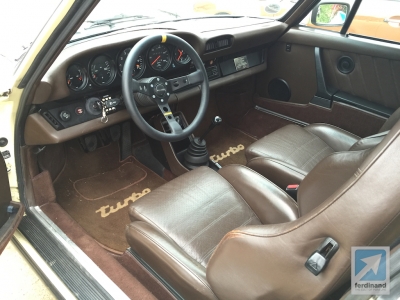
The car was found in California by Tuthill’s US buyer around the same time I bought my 912E. At the time, Tuthills were rallying that white 930 on Midnight Sun and I did think this might end up as a rally car. As quite a unique colour and spec – Bamboo Beige with dark brown Recaro sports trim – it was one of the first impact bumper 911s I was hoping would not be modified! Not my usual approach, but this was low mileage and really quite nice. Happily, it found a fine home as a road car.
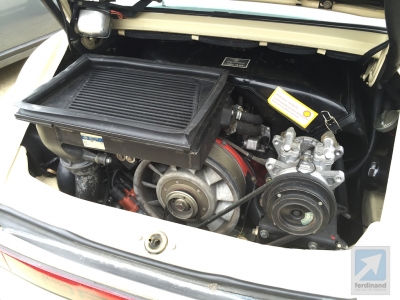
On arrival in the UK, it was given a thorough inspection and much work was done to recommission the Bosch CIS K-Jet fuel injection system, including fitting a brand new fuel tank. Earlier this year, Paragon Porsche fitted new suspension, before it came back to Tuthills for a diff rebuild and new clutch. The car has only done 46,000 miles or so, but the owner has never shied away from spending money on it. He tells me he is selling to buy a horsebox for his daughter: how the other half lives!
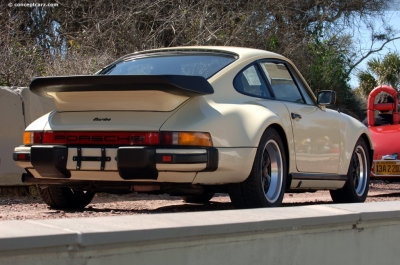
The estimate for this car is £40-46k. As a left-hand drive, low mileage 930 in a rare colour, it may find the interested parties it needs to get some competition going on bidding. My only real bugbear is the polished Fuchs, but it would be easy to repaint the centres in proper satin black, as above. Then the car would look like quite a special impact-bumper 911, in my opinion.

by John Glynn | Oct 8, 2014 | Classic Porsche Blog, Project Cars
This freshly-built Porsche 911 RSR replica recently enjoyed its track day debut at Spa Francorchamps. Replica, homage, interpretation: call it what you will, it’s a widebody version of the classic 911, but still more compact than your average modern sports car. Owner Tony tells it like this:
After much consideration on what style of sports-purpose Porsche to build from my 1979 Porsche 911 SC, I opted for an early 911 that packed a punch and would one day enable us to possibly race at international events. I therefore choose the 1973 2.8 RSR as the ultimate aim for my project, with the end result hopefully of a car with FIA papers.
Whilst researching and preparing my budget, it became obvious that the cost of such a project was going to be considerable. We therefore decided to break the project into two phases.
Phase 1 would include chassis, suspension, brakes, bodywork and paint. I knew that, as an ex-Porsche Club GB championship car, the SC had a strong and willing power plant. Therefore, if I added rigidity, removed weight and upgraded the brakes and suspension, it would be an exciting drive. Phase 2 would be all about more power. Phase 1 thus became:
- Strengthened shell, built within the FIA rules, including revised rear crossmember
- Wide body with lightweight panels
- Coil-over suspension with Porsche RSR front Bilstein struts, Reiger dampers and monoball top mounts
- Early adjustable RSR anti-roll bars with RSR strut brace
- Brembo brakes (not FIA)
- Custom Cages T45 historic cage
- 8 x 15″ Fuchs front wheels and 9 x 15″ Group 4 rear wheels
- Michelin TB15 tyres: 215mm F/270mm R
- Front-mounted oil cooler
- Lightweight windows inc heated front screen
- Lightweight fuel tank (bag tank)
- Target weight sub-1000kg
The Porsche project 911 2.8 RSR replica commenced in March and was due for completion in time for a track day at Spa Francorchamps on July 14. I got to know some great people during the course of the project. A special thanks must go to all the guys at Track Torque Racing for building the car, as well as Dan Sutherland at Dansport and Mark Bates at EB Motorsport for Porsche parts, advice, support and expertise, without which the car would never have been completed.
Despite a few teething problems immediately prior to leaving for the Hull ferry, the trip was fantastic, with circa 1000 miles through Belgium and on track at Spa. The car was unbelievable. It delivered astounding performance in the wet conditions in the morning and was capable of running very quickly in the dry PM session, however it was clear the grip level would not last forever in the dry conditions and that Michelin TB5s would be more durable.
Regardless, I now have a car which always delivers a great big smile to my face, whether in the garage or when I’m behind the wheel. Ultimately the car is fast, light, agile and fun: exactly what a Porsche should be all about! The best thing of all is I still have Phase 2 to look forward to!

by John Glynn | Sep 27, 2014 | Porsche Cayenne, Project Cars
I drive my Cayenne S as the makers intended, which frequently means doing fairly high speeds while approaching roundabouts, junctions and the rest. You sit high in the Cayenne, but the PCM radio screen position is low in the dash, under the dash vents. So checking the sat nav display on the head unit could be dangerous in the wrong situation.
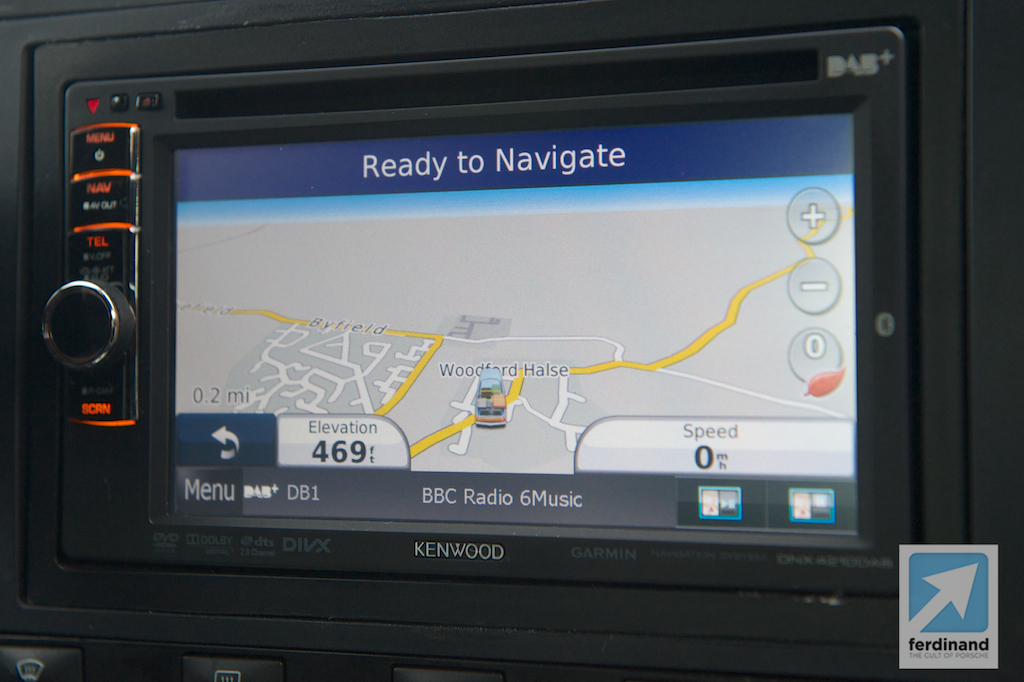
It’s not a huge issue if you retain PCM, as the display in the centre of the clocks gives arrow indications of directions ahead, and Cayenne models later than my 955 have a beautiful multi-colour sat nav screen to play with. However, PCM does not readily integrate iPod/iPhone music support, or postcode navigation, or Bluetooth for phones, or DAB radio. I wanted all of these, so I upgraded/updated the PCM 2 supplied with my Cayenne as standard and fitted the Kenwood DNX4210DAB instead.

With iPhone control, superb Garmin navigation, DAB+, 3 2v RCA preouts and an interface for the multifunction steering wheel controls, the 4210DAB has proved almost perfect to use. But by switching to an aftermarket unit, I’ve lost my dash direction display, and frequently find myself looking down by the gear lever to check my GPS speed, position and route ahead. I don’t like this on unfamiliar roads, and definitely would not be a fan on foreign motorway journeys, a few of which are already pencilled for next year.

So I’ve sold the Kenwood 4210 and replaced it with a Kenwood DDX4025DAB: has all the same features as the 4210 including DVD player and so on but without the navigation. The screen is not quite as nice, but the sound is great. I am looking at ways to integrate my separate Garmin 2595LM navigation unit into the dashtop or add one of the latest head-up displays for smartphone GPS navigation into the Cayenne.

I’ve recently picked up an iPhone 6 Plus 128GB, so it could be that this with the Garmin iPhone app and a head-up link is the way forward for my in-car navigation. Would be interested to hear from anyone using head-up displays in their car. It looks to me like the 955 Cayenne dash will not allow head-up directly in front of the driver due to the screen angle and depth of the dash binnacle, but I am going to see what I can get my hands on to try out. It’s pretty easy to get used Cayenne dashboard parts on eBay to cut up for trial fit.
by John Glynn | Sep 24, 2014 | Classic Porsche Blog, Race and Rally
Essex legend and friend of Ferdinand, Dave Dennett, recently debuted his 935 K3 replica at the Porsche Club national event. The 935 was on track at Brands Hatch amongst a plethora of Porsche Rennsport machinery, where Gary Hand Motorsport Photography got some excellent photos.
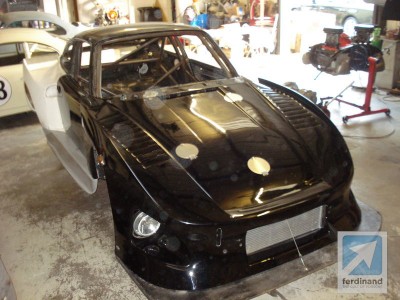
The 935 came to Dave’s DSD Motorwerks a while back, in a part exchange deal against a 964 race car. Then painted black, the shell had started life as a left-hand drive 1986 3.2 Carrera with 45k miles on the clock, imported to the UK from Japan in 2011.

With a single turbo flat six making 650 bhp and a dog box G50 with 80% LSD, it’s an obviously complex machine. The body uses mostly DP Motorsport parts but, under that skin, the rust free shell has been comprehensively modified.
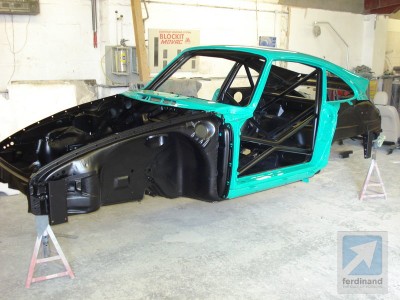
935 running gear needs a lot of space, so the rear panel was cut and replaced with an engine brace and rear frame, allowing room for the giant turbo. The front end lost all of its roadgoing parts, to be replaced by a single-piece 935 K3 clamshell. A custom rollcage makes it stiffer: much needed when you stick 650 horsepower through a production 911 bodyshell almost thirty years old.
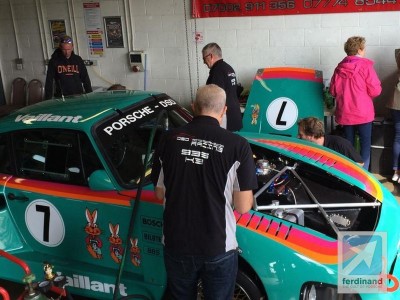
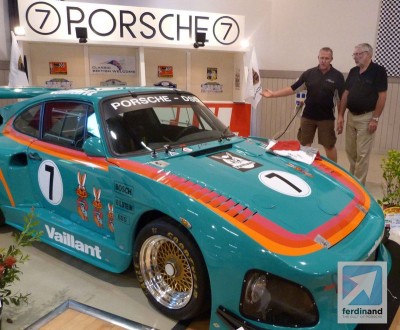
The engine spec is interesting. 930 crankcases were gas flowed and shuffle pinned. The 930 std/std crankshaft was fitted with Carrillo rods with 22mm little ends for Omega 935 CTR pistons. Capricorn barrels mate to 930 heads, ported and twin plugged. Schrick cams run Motorsport rockers, as Dave tells Jürgen Barth here:
The inlet is modified 3.2 Carrera with ‘big’ injectors. Turbo is a Garrett ball race GT45, with a Turbosmart wastegate and bespoke intercooler. An Omex 710 ECU controls the motor, which breathes out through a custom exhaust. “You can’t buy these pipes from Kwikfit, Derek,” says David.
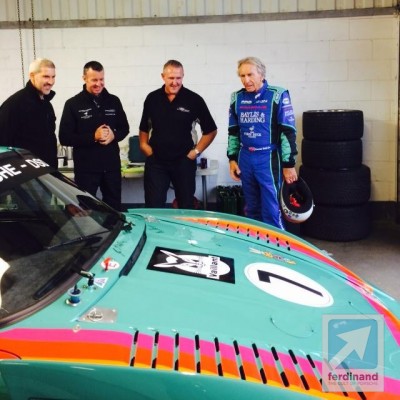
Originally built by Ninemeister, the engine was subsequently rebuilt by CTR and tested at 600bhp on the Judd engine dyno. Dave has since made a few more modifications and the latest dyno run produced 650bhp. I’m hoping to attend some test sessions with the car in the near future: should be a lot of fun, as there is never a dull moment with Dave in the house!