by John Glynn | Apr 20, 2016 | Classic Porsche Blog, Race and Rally
Opened my emails yesterday morning to find a late-night message from the Yorkshire Bullet: Mark Bates from EB Motorsport. “Testing at Silverstone with Tuthills tomorrow, come over for a catch up if you’re free.” Five minutes later, I had thrown on a Tuthill top and was in the Cayenne, en route to Silverstone.
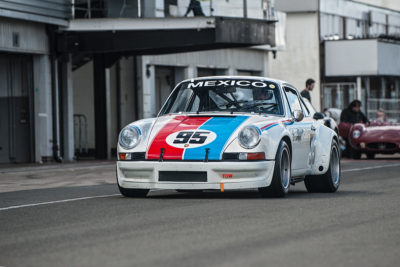
After eleven sunny Northamptonshire miles, I arrived at the circuit and found the garage but no sign of Tuthills. Instead, Mark was there with top man Neil Bainbridge from BS Motorsport and a smart RSR in Brumos colours. Tuthills had asked Mark to come down and test drive the RSR with the owner (who also owns a few Tuthill-built cars), trying the setup and suggesting some tweaks ahead of the car’s first outing this year for the CER race at Spa Francorchamps.
After many race miles in the two EB 3-litre racecars and the super 1965 911 that did so well at Goodwood last year, Mark is an excellent 911 test driver and has previously set up a number of non-EB 911 race cars, for circuits in the UK and Europe. He jumped at the chance to try an original RSR, making a five-hour round trip to have a go. The great weather was a real bonus.
Having already made a few misguided assumptions that morning, why hold back and break the habit of a lifetime, so I shot straight into another one, assuming this was the replica Brumos car built by Tuthills a few years ago, now fitted with BS Motorsport 3-litre power. Asking the owner about the new engine’s recipe, he smiled and put me straight. “This is the RSR that won the 1973 Mexico 1000 kms.”
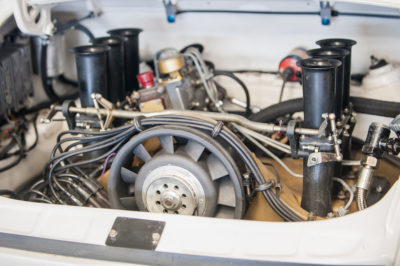
Brumos Porsche 911 RSR 911 360 0865
Chassis number 911 360 0865 was delivered to Peter Gregg at Brumos in April 1973 (happy 43rd birthday). Fitted with the 911/72 engine – a naturally aspirated 2808cc flat six making 308 bhp at 8k rpm – the car was sold to Mexico’s Hector Rebaque, who owned it until mid 1977. In the years he had the car, Hector took three wins in Mexico City, twice on the famous 1000 kms race.
After Hector, the car went to Guatemala for a while, eventually ending up with our friends at the Blackhawk Collection, who sold it back to Europe: first living an Italian collector for twenty years, and then to another Porsche collector in Monaco, who had it restored by the now-defunct Scuderia Classica at the start of this decade. I don’t yet have the full story of how the current owner came to possess it, but watch this space.
The track day was organised by my next-village neighbours at Goldtrack, who run a tight ship and bring in some very nice cars as a result. Parked up amongst the latest supercars and plenty of race machinery, this air-cooled classic Porsche turned few heads beyond the cognoscenti, until Bates turned the key and got the engine started.

Porsche 911 Track Day Noise
Even with tailpipe extensions, intended to mute the exhaust a touch for track day dB meters, this Porsche has a proper bark on startup. The engine has a tight, pursed tickover that is so much sweeter than the all-bass soundtracks of later Porsches sporting exhaust systems apparently designed originally for industrial chimneys. I feel an audiophile comparison of most attractive tickovers coming on.
Rolling out into the pitlane, the roofline of the tall RSR runs well above the massed Radicals, Ginettas and Scuderia Ferraris that dominate Silverstone’s start-of-race-season track days. But with 300 bhp pushing less than 1000 kilos along, it goes down the road rather nicely.
“I’ve already spun it once,” Bates confesses. “Fourth lap, pushed a bit too hard and the back just came around. It’s not what our car would have done.” I asked him what else felt different to his own 3.0 RSR build, which has proved so successful in historic racing in the seven years he’s been racing it, winning back-to-back Masters Historic titles and last year’s Nürburgring Trophy race (rumour has it that Germany’s cancelled the race now the English have won it).

Porsche 911 RSR 2.8 vs 3.0-litre
“They are quite different cars. Ours feels sharper after so many years of development. It’s lighter – closer to 920 kilos than the 970 or so of this one – so our brakes bite harder and suspension has a bit less to do. It’s not quite surgical in its precision, as no air-cooled car could ever be surgically precise, but our car is very sharp and reactive to drive. This one feels authentic to the period: very 1970s.”
Testing went well, with the RSR showing a clean pair of heels to most modern machinery. It flew past me on the old pit straight, holding its own against a featherweight Radical and shrugging off modern 991 GT3 RS and new BMW M3s. The delight in seeing real RSRs used with such glorious abandon – the owner encouraging Mark to thrash it and see what it is utimately capable of – was a joyous experience. Ultimately, it was left to Mark to decide how hard he drove it.
“It’s not my car and we’ve already been ticked off for noise and told to keep it under 7k rpm, but there’s enough going on to see what could be looked at. Our car runs lower gear ratios, which offer more opportunies to exploit the engine’s torque. We have some suspension tweaks specific to our car and this year we also have our own dyno-developed exhaust system coming. That makes a difference to the power on tap.”
“It’s been a good morning and we’ve learned quite a bit, changing tyre pressures and moving some ballast around,” said Neil, who has extensive personal experience of racing 2.8 and 3.0-litre RSRs. When I suggested that he may have been one of the last people to race a proper 2.8 RSR around Silverstone in period (not including club races and historics since then), he had a think before sharing a great story of racing a non-turbo RSR against an Autofarm 934 back in the day. But that’s a tale for another time.

by John Glynn | Apr 12, 2016 | Classic Porsche Blog, Project Cars
My 1980 Porsche 924 Turbo restoration has made great progress since I reset my work schedule and committed to spending the weekends working on my own projects rather than sitting behind a laptop. My bank account is slightly less happy about the restoration, but payback will come in due course.
I’ve now clocked up a couple of hundred hours on this car, and poked around most of it. While there is unsurprising evidence of parking dents and other traumas from its former life in Italy, underneath all that it’s a really great example, especially now I have reconditioned most of the moving parts fixed to the bodywork. Dropping all the mechanicals to do a full restoration is very tempting, but I must resist.

Retaining Porsche Patina in Detailed Restoration
Perhaps the most engaging part of the rebuild after the 924 Turbo’s bodywork was so nicely stripped, prepared and repainted by my old friend Rob Campbell at Racing Restorations has been deciding what to keep and what to ditch, in hope of retaining some patina and original character to compliment the delightful new paint.
For example, none of the locks matched, so I junked all of them, pulled the smoothest ignition barrel out of my stash of 924 & 944 parts and then bought a full set of VW tumblers and rebuilt and rekeyed every lock on the car to match. This led to stripping the latch mechanisms and locks, new door seals, new hatch seals – you know how it goes.
The dash was a mass of old alarm wiring and leftover radio installations so all that got junked. The black speedo trim ring was rusty for whatever reason, so I tossed that and stripped another speedo to find one in better condition. That led to stripping all the clocks and cleaning the dials and glass faces so they all look great now.

Porsche 924 Turbo Strip & Rebuild
Everywhere I look on the 924 Turbo now, I see bit that have been stripped and rebuilt. I stripped the electric window regulators including the motors and sorted all those out, bench testing them before refitting to the car. I haven’t done anything about the wiper motors yet but I bet it happens. Having all of the trim out of the inside meant I could clean it up properly and Dynamat quite a bit, so the doors now shut with that satisfying clunk and none of the rattles that used to soundtrack entry and exit.
Having junked so much stuff, I also found a few bits I wanted to keep. The Italian plates are back on the car, just because I love them. I riveted the rear plate together, which is not strictly correct but it means bits of it can’t get stolen! I tossed the LED-infested centre console gauge surround and bought another mint one in black, but kept the slightly crappy cigarette lighter from my old one, as a well-used cigarette lighter in an 1980s Porsche is just so Italian, darling.

I fitted a replacement glass hatch with a good condition spoiler (the original was utterly ruined) and polished all the original glass, refitting it in a mix of new and good used seals. I liked the Italian anti-theft alarm window sticker so I kept that. Under the driver’s seat carpet, I found a 200 Lira coin from 1978, so that is now the keyring. I kept the original dog-leg gearlever but replaced the shift boot and sent the ratty steering wheel off to be restitched – I hope they can retain the original leather. I have a nice three-spoke for the car if not. I ordered a full gear linkage rebuild kit from AutoAtlanta in the US, but that has not yet arrived.

I fitted new rear speakers (long story) and decided not to cut the original front door panels to fit another pair of speakers – the rather spartan black vinyl has survived this long without cutting and deserves to be left alone. I stuck a centre speaker back in the dash to add some noise up front. I decided not to change the cracked dash: you can get new ones but 924 owners are generally well used to cracked dashboards. The original rear view mirror is a non-dipping version and I’m slightly on the fence about keeping or saving. I have a pair of dipping ones with the glass mounts in my stash so I may change that.

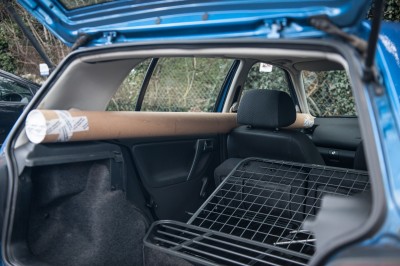
Original seat belts are in good condition so still in place: they were likely never used in Sardinia! The car is quite low mileage anyway, so they are fine. Refitted the original roof aerial as, while it is not the shiniest thing ever, it is perfect for the 924. I fitted a new rubber trim to the rear bumper (just squeezed into the Polo in the massive tube it ships in from Porsche) and new seals on the door mirror, door handles and boot lock.
I rebuilt the front bumper light clusters: you’d be surprised how long that took. One indicator reflector was completely rusted out so I stripped the reflector off another one and plastic welded it back together (the fun of playing with £5 parts). I cleaned and refitted the Italian side repeaters as, while they are not very attractive, they are original to the car. Stripped the window switches, sorted them out. All very satisfying. I have been keeping things as tidy as possible, but you’ll see from the photos that it needs a lot of cleaning when it is eventually back together: I am quite looking forward to that.

Classic Porsche Build Quality in spades
So many hours later, with many more left to invest, I continue to have great respect for classic Porsche build quality with the 924. The way it’s built is inspiring to work on when you’re not in a rush; so much intricate detail signposts the hours of highly skilled labour it must have taken to build each one. The assembly is very like my old E28 BMWs and Mk 2 Golf GTis: plated screws and high quality metal clips everywhere. It is time consuming to make things better – stripping the fusebox and wiring out to clean up the corroded earth points behind for example – but once done, you get the feeling it will last forever.
I feel sure I will buy another 924 to work on once this one is sold and I have cleared out a few more cars. The Signal Green 1977 924 we saw at Essen a few years ago is still very strong in my memory – that’s the sort of old-school 924 I would like to do some miles in if Turbo prices have soared out of reach. Small but modern 1.4 engine transplant, little Turbo, careful gearbox build, classic trim.

by John Glynn | Apr 3, 2016 | Classic Porsche Blog, Project Cars
The average week puts me in touch with a stack of people seeking 911 projects. “I want a cheap SC/3.2/964, let me know if you come across anything.” A quick email to enquire about their plans usually leaves me depressed, as the Porsche hot rod has mainstreamed to Magnus and Singer, with most other builders going back to factory spec. Singer is by far the biggest influence nowadays.

There is nothing wrong with factory spec if that’s your bag and you do it properly, cutting no corners: a crisp early 911 is a very beautiful machine. But the idea that owners of SCs and 3.2s (and 964s and 993s) have suddenly been appointed as rolling museum curators just because values have shot up continues to be a major pain in the arse for those of us who enjoy individuality expressed through classic Porsche. There are lots of these cars in the world and plenty of nice original examples. Bring something to the car which is all about you, other than your name on the annual service bills.
Of course there are some fine hot rods in build at Porsche specialists all around the world, but those builds could be said to be slightly diluted by the professional suggestions that inevitably infiltrate the process – specialists are not exempt from the idea of conservation and what is “period correct”. Pics received from Neil this week offered some light at the end of the tunnel: people are still building Porsche hot rods to express their vision of the essence of Porsche.

Neil’s car was built by Neil, in his garage and to his taste. You might do some things differently, but individual expression is the point. Based on a 911 SC, this 3-litre has the Jenvey throttle bodies we would all like to fit to junk the ageing K-Jet intake. Neil has added DTA engine management and a straight through exhaust (I presume this is headers) into a custom silencer. The car makes 236 bhp, so there is a good chunk of budget gone, but a lot of fun added and a big leap in throttle response and fuel economy.

With more power on tap, the obvious next step was to take weight off and Neil found the answer in the EB Motorsport catalogue. Lightweight front wings and bonnet, much lighter bumpers and the rear quarter panels and engine lid have taken at least 100 kilos off the car. The diet continued with polycarbonate windows and lightened doors. The engine was treated to GRP tinware on the lighter engine (losing that winding exhaust junks a lot of heavy scrap too).

Neil hasn’t told me what his car weighs, but given the parts used, I am confident it’s less than 1,000 kilos. I’m sure it makes a great noise and he has plenty of tyre options with those 17″ Fuchs-style wheels. Of course you would do it differently, but instead of telling us all how you would go if you were building a hot rod, send us the proof that you’ve done it. Curators don’t get a say in the hot rod world.
by John Glynn | Apr 3, 2016 | New Models, Classic Porsche Blog
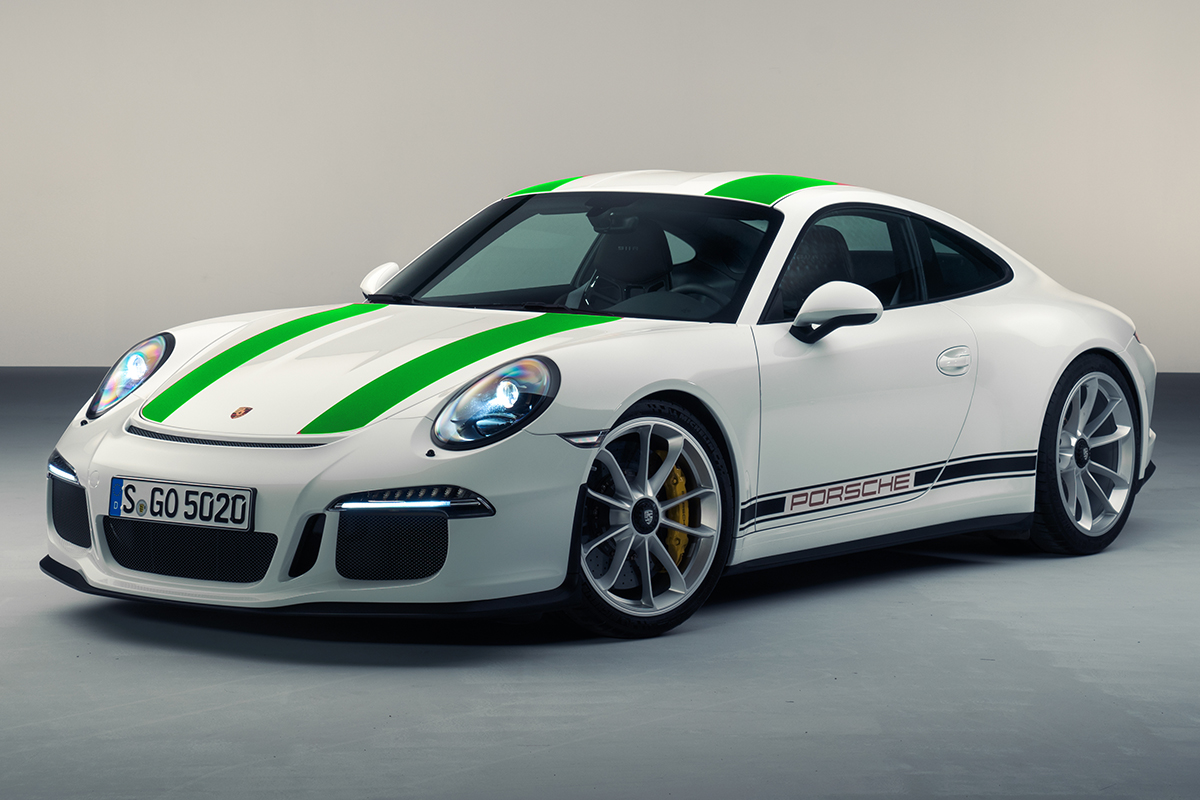
The all new Porsche 911R is one to forget for most Porsche would-be buyers, as Stuttgart continues to apply a policy of limited production range-toppers, which instantly doubles prices once the cars are flipped on to the used market by speculator purchasers.
Marketed as ultimate driver’s cars, the irony is that the majority of the nine-hundred and ninety-one 911Rs to be built will not be driven by their first owners. Most will either be mothballed on delivery and stuck in pension-fund car collections or sent straight back to market at up to £200k more than the UK cost new of £136,901.

Porsche 911R Factory Options
Obviously that cost new does not include the options that most buyers who manage to secure a build slot will go for. Choice of seats is standard (although there is really only one choice), as are the mechanical LSD, six-speed gearbox and ceramic brakes. But a quick look at the car configurator shows the other boxes likely to be ticked, based on the most common GT3 RS options out there (i.e. what Porsche dealers will advise customers to add), including:
- Wheels in Satin Platinum: £400
- Extended Leather: £2000
- LED headlights in Black: £2100 (or cheaper Black Xenon for £800)
- Lightweight Battery: £1500
- Single Mass Flywheel: £2024
- Front Axle Lift: £2024
- Sport Chrono: £1525
- Climate Control: £0
I pick the green stripe no-cost option, as any good Irishman should. Adding heated seats for early-morning starts means I would have to give up the 918 seats, which I wouldn’t do. So no 911R for me. Adding the DAB Radio means also adding PCM Navigation (no cost) and Telephone Module, so a £500 increase. The system won’t let you unhook Porsche Vehicle Tracking system at £1100, so your invoice total is now £147,000.
Porsche 911R Used Prices
Send in your deposit and finance the rest: don’t worry about interest. Sign your finance agreement when the car arrives at the dealership. As soon as the car is delivered, stick it in the Sunday Times at £350,000, which is the price 991 GT3 RSs were changing hands for when the first ones hit the UK and what my dealer friends expect ‘black market’ flipped 911Rs to fetch in the first weeks after delivery. Pay off your finance and buy the best 997 Carrera GTS you can find, as that is super fun to drive. Enjoy your free 911 and all that money for nothing.

What Porsche to buy if you can’t buy a 911R
Porsche must be happy for buyers to flip for profits: just look at the prices one-owner 911 GT3 RS models are selling for under the radar through its own dealer network. If Stuttgart was serious about building driver’s cars accessible to everyone, it would only make one less 911R than the market called for, and then we could all look forward to the day they depreciate to 997 Carrera GTS levels, which in my opinion currently offers the best mix of affordability, excitement and driveability in the 911 line up. I’ll have mine in white with green R stripes.
I would love to try a 911R with this six-speed transmission: no doubt the six-speed manual gearbox is huge fun in a 997 Carrera GTS and the seven-speeder is not great in a 991. By ignoring 991s and looking at Gen II 997 Carrera GTS instead, you really do not have to spend a fortune to buy the most enjoyable and guilt-free driver’s 911 of the VW-Porsche era.

by John Glynn | Mar 31, 2016 | Classic Porsche Blog, Project Cars
Watched a cool project in progress at Tuthill Porsche this morning, with my ex-BTCC tech mate Chris Defriez fitting EXE-TC dampers to a Porsche 964 RS track day machine.

EXE-TC suspension is a high-end option for Porsche 911s that has been used to great effect on many Tuthill rally cars over the years, but decent suspension is just as important on road and race cars. EXE-TC kit is now available for most 911s from 1965 onwards. These remote reservoir 964 dampers are beautifully manufactured, featuring mega adjustable billet top mounts, which gave a wide range camber and castor adjustment at the top and bottom of the suspension leg on this particular 964 RS.

The kit being fitted to all four corners of this RS created an interesting challenge for Chris, as he worked out where to site the remote reservoirs. Front is not too bad, as there is a handy strut brace sitting there ready to mount damper reservoirs, but the engine compartment on a 964RS is pretty packed, so not many options in the back. I’ll head back over in a few days to see what he decided.

964RS is still the one for me – they are absolutely fantastic cars. I am another one of those who almost bought a 964RS many years ago when they were circa £30k, but decided against it. I can live with the decision but, every so often, it does niggle me that I will never actually own one of my own. Prices will never return to that sort of level.
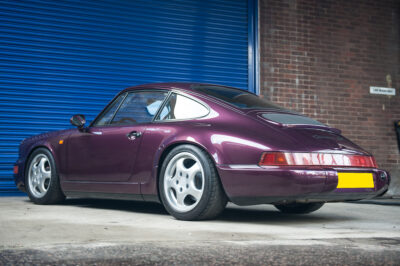
Prices for proper Porsche 964 RS models now start circa £120k and rise to much bigger numbers for original, low mileage RHD examples, so this well used LHD track car is still worth serious money by normal standards. There are a few 964 RS models up for sale at the minute, including a 964 Cup Car for sale at just under £200k. I’m not about to remortgage my house for a 964 Cup Car, but how cool to have bought one when they could barely be given away.

by John Glynn | Mar 31, 2016 | Classic Porsche Blog, Race and Rally
Had an email from friend and illustrator Guy Allen last week, sharing details of his latest Porsche print. Having both bought Guy’s own prints and commissioned him to create art for me, I’m a confirmed fan of the man’s work, and the newest one is no exception.
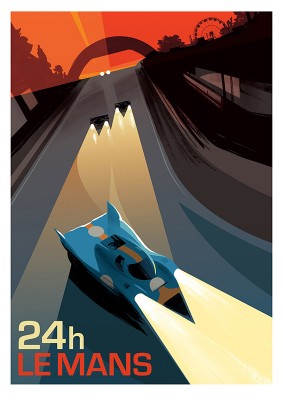
This year marks the tenth anniversary of my first trip to Classic Le Mans and my first experience of watching a 917 racing in anger at night. It was an unforgettable weekend of classic Porsche fun, neatly remembered by this art print. Working to a 24 Hours of Le Mans theme in an evocative mix of shapes and colours, Guy has captured the 1970 917 Kurzheck racing past the Dunlop Bridge during a balmy Sarthe sunset.
Porsche 917 Le Mans print
I’m sure some Le Mans anorak out there will decide there’s a bit of artistic licence at work here regarding track layouts, the combination of short tail and Gulf liveries and the weather for Le Mans in the early 1970s, as such folk are wont to do. Personally, the timeless theme resonates with me and I really like the print, which is sized to A2 large format (420 x 594 mm) and limited to 200 copies. My print has been put to one side for the new garage, whenever it gets finished: got a lot of art to hang in there now. Buy your copy here: Guy will ship worldwide.