The original 911 Turbo was a revelation. Introduced in 1974, the first 930 models had a 3-litre engine, producing 260 horsepower at just 5,500 rpm with relatively soft levels of boost and a 6.5:1 compression ratio.
The first journalists to sample the 911 Turbo were literally blown away. ‘To be shoved so hard in the back that you need highback seats to keep your head on, yet neither to feel nor hear anything more than a muffled hum, is a very odd sensation indeed”, wrote Roger Bell back then.
In 1977, the 930 grew to 3.3-litre engine capacity, and got some decent brakes. The addition of an intercooler took power to 300 horsepower, with 303 lb/ft of torque. 60 appeared on the speedo around 5 seconds after take off, and 160 would appear in short order: if you kept your foot in.
On paper, the 930’s big turbo and leggy four-speed gearbox is hardly ideal for use as a rally car, but that has not stopped Richard ‘Project’ Tuthill from picking one up in Eastern Europe and putting it through a rebuild process at Tuthill HQ in Wardington, just down the road from Ferdinand.
The car has been through a strip and interior tidy, with new seat rails and fire extinguisher install. The engine and transmission are out for an overhaul, the car is being completely rewired and made ready to rally in anger. It has also just had brand new Turbo brake calipers, straight from Porsche.
“One challenge is having the fastest car in a straight line,” says Richard. “But also, there’s more to rallying than the British Championship. Some great events take place in Europe, where Turbos are highly regarded. I think this will strike a chord with the fans: the few miles I did in it before we took it to pieces were amongst the craziest I’ve ever done in a rally car!”
I’ve driven a lot of Tuthill cars over the years but this lightweight Turbo off-roader is a whole other kettle of fish. I can’t wait to try it out!
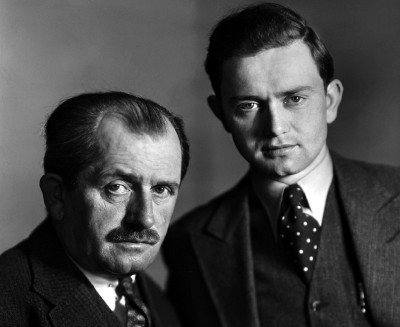
“Independence, then, has always been the attitude at Porsche. To do not what is expected, but what we feel is right. It is said that so many creations today are just like all the rest. This is why Porsche must remain small and independent. Without independence – the freedom to try new ideas – the world will not move ahead, but live in fear of its own potential.”
These are the words of Ferdinand “Ferry” Porsche: a unique individual, whose post-war work to save his father’s legacy, and lifelong efforts to preserve the independence of the Porsche brand should never be forgotten. Ferry is literally the father of the cars we love, and his hard-fought independence is about to disappear.
The assimilation of Porsche into Volkswagen will be completed by August 1st, 2012. Between now and then, Porsche Automobil Holding SE will surrender “its holding business operations, including a 50.1% interest in Porsche’s operating business to Volkswagen AG” (quote: Porsche). The deal will officially render Volkswagen AG sole owner of Porsche’s business operations.
The current Porsche range is widely acclaimed as perhaps the best ever, and sales are strong. VAG understands the benefits of supporting heritage through community, and appears to encourage its sporting brands to strive for excellence in motorsport. All good news for Porsche fans, but there is no way to dress this up: August 1st will send a knife through the heart of Porsche independence.
Purists will forever argue the question: what makes a real Porsche? Never one to get too hooked up on minutiae, my favourite Porsches stem from the dynasty: when a man called Porsche walked around his factory, and inspired his teams to greatness.
Anyone familiar with classic Porsche from behind the wheel knows that older cars have an attitude that was lost some years ago. The end of independence is bound to up the ante for cars built in simpler times, and emphasise that missing ingredient in everything there is to come. I’ll let The Doors play this one out:
Working as Mighty Motor Media promoting Porsche specialists gives me great access to some of the best Porsche workshops.
On my last visit, I was talked through a GT3 RS inspection (on lift behind this 911T). The car was a well-known track day ride, and the owner’s not known for sparing horses. After buying KW suspension for his GT3, the owner discovered the workshop was booked up three weeks in advance. So he took his car to a Porsche crew in Berkshire who claimed they could do the job. It did not work out so well.
As with the cracked ceramic disc episode that saved the owner fifty quid but cost fourteen grand to correct, the GT3 man collected his car from the other crowd, paid a big bill and instantly noted a steering issue. The garage brushed it off as dampers bedding in, but a few days’ driving led to urgent Porsche attention.
They found a series of problems: some potentially deadly. The struts had been installed the wrong way around, so left was right and right was left. The top bearings that should allow the assemblies to swivel with the steering were fitted wrongly, fixed with the wrong top nuts and trashed in short order, so the springs had started turning on their perches. The other garage had not tightened the grub screws holding the perches in position, so the car was unscrewing the ride height with every turn of the wheel, sinking 40mm in a week.
A new Cargraphic silencer had been fitted slightly sideways and wiring for one O2 sensor was cut to fit around it. The wires are heat-resistant stainless which cannot be soldered, so were extended by wrapping copper strands in. The ‘fix’ had not worked and, as these sensors operate in a range of less than one volt, the car was running terribly. Truth is, the wire did not need cutting to fit: it fits without modification.
A simultaneous service had lost the bungs for the airbox, but most worryingly of all, the mechanic had repaced the brake pad pins incorrectly, and the pins were falling out. At some stage, this GT3 was going to have no brakes.When I arrived, the guys had just started stripping it. The work would take at least two days and some new parts to fix.
Two big bills and many new parts, versus a three-week wait with the chance of a cancellation? OK, it’s aided by hindsight but I probably would have waited. Ever had a similar experience? I am always interested in hearing how good garages are, or not.
The Talented Mister Rast continued his current Porsche winning streak today with a resounding victory in Carrera Cup Deutschland at the Norisring.
It’s a great result for the capable and entertaining German, always a delight to watch at speed in a 911. Rast stormed off a simmering 35-degree grid from pole position and never looked back. Steering clear of a first corner incident, the winner led Siedler and Edwards across the finish line.
The win puts 2008 champ Rast back on top as we head into race 9, which Porsche says will stream live on their website at 9:05 German time tomorrow morning.
“That was a relatively easy race for me today,” said René. “I got away cleanly and I saw the mayhem behind me in the rear vision mirror. This gave me a major advantage and all I had to do was bring it home. The only problem was the heat.”
French breathalyser rules could affect Porsche drivers. The UK Institute of Advanced Motorists (IAM) claims half of all British motorists heading to France this year risk trouble with the Gendarmes by not carrying the correct breathalyser in their car.
A legal requirement for all cars driven in France from the 1st of July, only breath-test devices carrying the blue circular NF logo, the French equivalent of the UK’s BSI kitemark will satisfy the new law.
French Breathalyser Rules
In IAM research amongst 2300 motorists heading to France this year, 80 percent said the new breathalyser rule would make no difference to drink driving in a country renowned for excellence in alcohol. Looking at the bigger picture – testing the morning after and having the ability to check on any doubts – I think it will probaby will have an effect in the long run. The legal limit in France is 50 mg per 100 ml of blood, lower than the UK’s 80mg limit, so a big night on the beer after a track day could make you unwittingly unsafe to be behind the wheel.
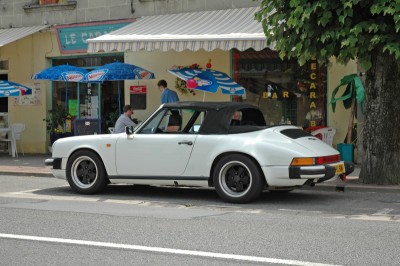
I love driving in France – both pics here are of my own 911s en France. The roads are generally excellent, autoroutes are well priced and there’s plenty of space to play in. Making the individual largely responsible for their safety on the road is better than nanny-state England, with its speed camera vans and talk of satellite tracking all cars – my politics do not fit with dumbing down the individual.
Carry an Approved French Breathalyser in your Porsche
If you’re heading to France for Classic Le Mans, remember the approved breathalyser(s), the GB plate, headlamp deflectors on RHD cars, obligatory set of spare bulbs, high-vis waistcoats you can reach from the drivers seats, plenty of water and a decent map! Having a good map to hand can lead you to some epic roads.
I can’t wait to get back to France – hope to see a few of you at the Circuit de la Sarthe.
Update: breathalyser fines postponed indefinitely. Cliek here for the latest French driving fines.
American consumer research giant, JD Power, has given top marks to the new 911 in its latest “Initial Quality Study”. The research is carried out three months into ownership, when the halo has not yet worn off and the car is clocking up beauty miles.
Porsche reports that 230 2012 model year cars were sampled, with 228 questions addressing all aspects of customer satisfaction. The new 911 took top spot in the luxury sports car category, as well as recording the lowest number of complaints in the entire survey.
It’s hard not to wonder about these surveys. After three months, you are still getting oohs and ahs from friends and colleagues, and most buyers have barely reached first-service mileage. How likely would buyers of new Porsche sports cars be to record extreme disappointment after 12 weeks of ownership? Thumbs down would hardly be a good reflection on their own ability to spend 70 grand wisely. What might they say – “bit boring, no one lets me in in traffic, sat nav seems expensive for what it actually does?” Maybe that last one was covered in the questions.
More important to new and used car buyers is how the car stands up to 12 months of use, then 24 months and 36 months. Hard to imagine 100% of 996 and early 997 buyers giving gold medals to Porsche after 24 months.
I recently spoke to a guy whose 997 needed an engine rebuild at 25,000 miles, is now up to 28,000 miles total and needs another engine. He is not taking his 911 back to the supposed specialist putting a lot of tuppences into this 53-page thread on Porsche 996 and 997 engine failures. As for my recent education on cracked 997 suspension springs – seems that is no small issue either.
Gen 2 997 seems to be holding up well (better), but always interested to keep track of emerging issues and reliability trends. Hopefully 991 can continue the Gen 2’s good work: let’s see another JD Power report on the same cars this time next year.
This website uses cookies to improve your experience. We'll assume you're ok with this, but you can opt-out if you wish.AcceptRead More
Privacy & Cookies Policy
Privacy Overview
This website uses cookies to improve your experience while you navigate through the website. Out of these, the cookies that are categorized as necessary are stored on your browser as they are essential for the working of basic functionalities of the website. We also use third-party cookies that help us analyze and understand how you use this website. These cookies will be stored in your browser only with your consent. You also have the option to opt-out of these cookies. But opting out of some of these cookies may affect your browsing experience.
Necessary cookies are absolutely essential for the website to function properly. This category only includes cookies that ensures basic functionalities and security features of the website. These cookies do not store any personal information.
Any cookies that may not be particularly necessary for the website to function and is used specifically to collect user personal data via analytics, ads, other embedded contents are termed as non-necessary cookies. It is mandatory to procure user consent prior to running these cookies on your website.