I’ve spent the last few days thinking about my great California Porsche feature trips. The times I’ve spent out there have been absolutely magic: great weather, great drives, great cars and, above all, great friends.
Friends are key to what classic Porsche, and the Classic Porsche Blog is all about. Sharing proper Porsches with friends – and I include blog followers and magazine readers in that category – is the whole point of what I do. It’s about the mission: not the money.
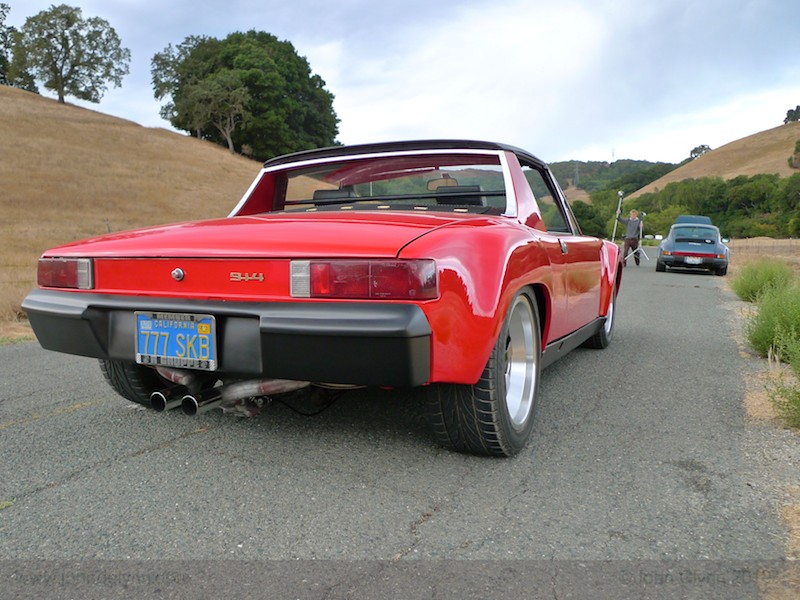
I was led to this train of thought by a recent video discovery. This is two Porsche friends enjoying their 914s in sunny Southern California. The sun is gorgeous and the soundtrack perfect. Good times, no doubt about it.
Behind the joyous visual lies a tinge of sadness. The driver of the camera car, and man who posted the video, is no longer with us. His name was Howard Dranow and, if the tribute thread here and the amazing Howard Dranow forum here are anything to go by, he was an inspirational character and a good Porsche buddy to many, many Porsche people. Anyone who leaves this sort of positivity behind has spent their time on Earth well.
RIP Howard. I’ll be thinking of your video next time I’m out shooting Porsches in your glorious home state.
Classic Le Mans was HOT. Too hot! As we were so busy with shooting a Total 911 piece and sorting bits for Jamie’s uber-cool Renault 8S, I didn’t get much time to wander around the car park to see anything resembling a Porsche hot rod either.
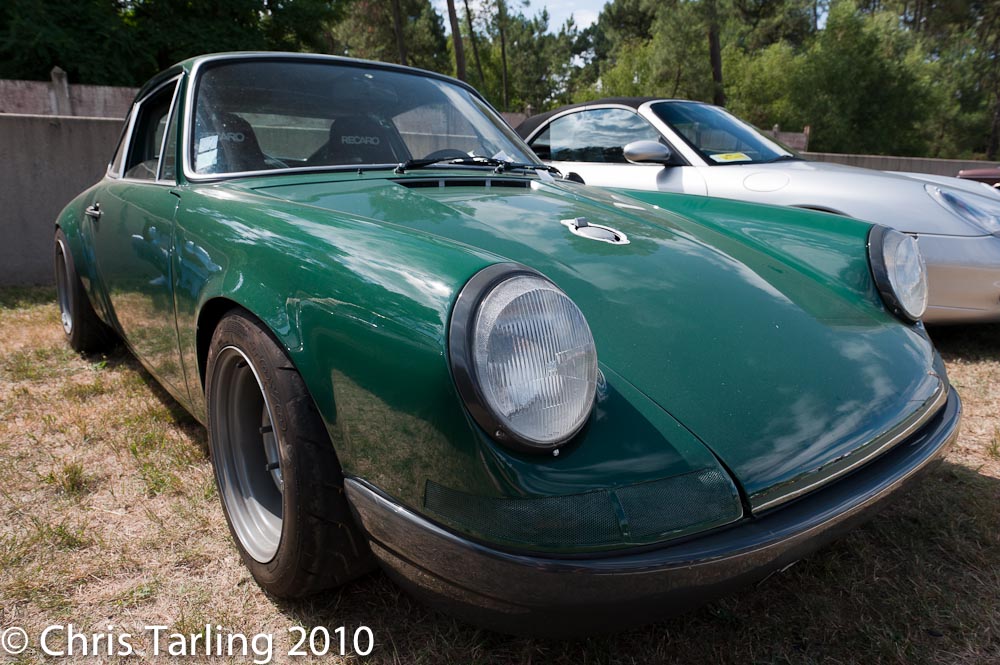
Thankfully, I can count on some stalwart Porsche pals to help me out with keeping an eye on the public parking. My buddy Chris Tarling took a couple of shots of an interesting early 911 (since discovered to be an SC backdate).
The colour on this hybrid Porsche hot rod looks like Irish Green. I love the front flares and curved rear quarters. Black-rimmed rear lenses do the business. Contrasting bumpers and engine grille are groovy, and loud pipes save lives!
Banded steels and sticky tyres are a look – no idea what it must drive like with all that dish.
The front end is love or hate, with grilled-out markers and indicators and the black-rimmed lights. The flip up centre filer is sweet, and I love the wiper-off look. Like being back in California. I think the whole thing is old-school cool.
I’ve been giving serious thought to selling my Carrera 3.0 and building something irreverent on that early T shell I have. I’m sort of on the fence over whether to sell the T as a potential rally car project or just do something with it and buy another Varmint-type SC from the US. I’m not dead set on owning an all-original early 911, but this car gives me the hots for the early 911 outlaw look. Tough to decide which way to go sometimes.
If this car rings a bell with anyone, get in touch!
Things are crazy around here at the minute. Millions of words to write since landing back in the UK post California, trying to tidy up loose ends on my day job so I can leave with a clear conscience, and also trying to get moving on clearing out some of my projects. I figure it’d be better to put some cash back into the house at the minute and get my extension going. Realistically, that leaves little time for projects.
First one advertised is my 911 T on eBay here. (edit 19/04: the Buy It Now has just been pressed after I took the price down to £10,750 – it is sold).
The car is a non-sunroof ’71, originally from California. A few years back, it sold to a guy up in Canada who wanted to build an RS replica. He spent a lot of money on the body: new sills, RS arches, hours spent on prep for paint and a decent enough job on the finish, in lovely Gemini Blue.
The engine is a 2.2E motor which we were told was recently rebuilt with S pistons and cams. It runs MFI. It came on a pallet and was just bolted in for transport so I have never fired it up: lack of time really. My plan was to buy a past-it SC targa in less than pristine condition out in California and drop all the running gear into this. I hasd planned a rally interior with a cage and all nicely trimmed. I seriously am never going to have time to get stuck into this so it has to go.
I’ve put it on at €12500, which is £11,000. It would cost more to buy an average LHD T, sort a non-sunroof roof out and then do the body and paint it all. I think it’s priced right but we’ll see. The pics are a bit crap (dusty dash and loose headlining) as I didn’t even clean it after I picked it up, just put it straight into storage. If it doesn’t arouse some interest, I’ll bring it home, give it a clean, do some reassembly and put it back on a bit higher.
Failing that I’ll advertise the Orange. £30K would see my 1976 Carrera 3.0 Coupe off to pastures new: Australia maybe. They love 911 Carrera 3.0 coupes down there and mine has some nice light bits following a full bare metal resto. I think it’s old enough now that the LHD doesn’t matter. I have lots to move on, lots and lots. Busy busy busy!
Just back from another Porsche features trip to Northern California, with ace photographer Jamie Lipman.
As ever, the visit was a blast. Flying in to San Francisco on Wednesday, we stayed with good friends that night, before heading to Monterey for RGruppe Treffen on the Thursday. Mrs Glynn reckons she was worried about us on the first night, as I texted this: “Arrived safe. Picked up hire car. Crashed at H’s place.”, which she took to mean we had wrecked the rental. Not so.
Thursday evening was fun, with dinner at the very cool Baja Cantina, where we hooked up with Porsche buddies for all the news on what they’d been up to since last year. Our first car park search found a very nice ST rep with an ex-Seinfeld engine in it, which we shot the following day: fabulous car.
Friday was all about making new friends. We met some great guys for lunch and then spent the afternoon waiting for our ST. When that arrived, we shot it right by the sea, in windy but wonderful conditions. Friday night was a hella overpriced meal at John Pisto’s Whaling Station: the ponciest restaurant I have ever been in. The calamari starter was excellent, and great value at $9, but was not worth the rest of the seahorse-shite sales pitch that was foisted upon us by an unbearably pompous waiter. I still cringe at the memory of it. Service was goddawful and I pitied the bus boy who was a nice guy, shouldering the weight of morons. Don’t bother with it if you are ever down in Monterey! $520 later, we had learned our lesson.
Saturday was good fun. We were out the door at 5am, to shoot Alex Motola’s brand new Fraise ST, built by TRE in Los Angeles. The shoot went well, with the dawn light really playing ball. Jamie and I followed our successful early start with breakfast and pancakes at a great nearby cafe before heading out to Laguna Seca, to recce locations for another shoot that afternoon.
The shoot was on Steve McQueen’s very own 1976 930, in special order Slate Grey. The SCCA guys running Laguna that weekend couldn’t have been nicer to us, and we found some great locations in and around the track. We’ll be back for sure.
On Sunday, we shot some tracking on another 911 before leaving the coast in a friend’s incredible 3.6-engined early car. This is quite probably the greatest all-rounder of its kind anywhere, and the miles north were a real delight. Jamie has some really great pictures ready to go to print.
Monday afternoon was spent scouting San Francisco for locations on a Bullitt-style shoot we had pencilled in for the following day. Good fun being tourists: packing in some ‘Cable Car’ pizza, hitting the visitor hotspots and ending up eating Ben and Jerry’s ice cream at Haight Ashbury. It was a great day in the city we had both seen so much of on screen. Calling a potential feature on the way home was entertaining – never been hung up on so quickly.
Tuesday we dropped in to see Chris at the Blackhawk Collection. Chris is a great guy working in a great place, but more of that later. We were there to make arrangements for a piece we were doing a few days after. All thumbs up so we headed off to do our ’67 S shoot in the hills of San Francisco. It was fantastic.
Wednesday was a trip to Emeryville to see a 914 for sale, then a ride through Oakland before lunch at a great little cafe in Albany – The Four Corners. We then headed up to Novato, and shot a turbocharged 1975 911 S. Sweet car.
On Thursday we did the wickedest classic Porsche at Blackhawk before heading out to see a plane for sale in Brentwood. Turned out the seller was a good friend of the Hemi Cuda owner we shot on our last trip in September 2009. The piece has just appeared in Classic Cars magazine and it looks very good.
Friday was our last day. We visited our friends at Canepa to shoot their original little 911 L rally car, then came back up to say goodbye to all at WEVO, before jumping on a plane and arriving back in the UK next day. In the rain.
The pics here are from Friday. The transporter was taking a wicked Cobra away. He’d come all the way from Toronto and was originally from Walthamstow!
There you have it: 9 days in the USA and every one a winner. Where to next?!
This pretty little Porsche might look like a factory hot rod, but it hides a guilty secret. John Glynn went to California to find out more.
Engine transplants have been the backbone of hot rodding since Moses was a boy. Nothing is more renegade than running an excessive engine in a chassis that was never designed to handle tons of torque. Overdosing on power-to-weight, and then making that package work is what custom car construction is all about.
When Bob Marx took the temporary motor from his 454 Chevrolet Chevelle SS, to refit the rebuilt original powerplant, he was gifted a great-running V8 with nowhere to go. Later that week, while cruising a friend’s E36 BMW M3 Cabriolet down to a Silicon Valley car show, the thought occurred that building an open-topped European vehicle with all-American power might be kind of fun.
Spotting a Porsche 914 at the show, Marx took a closer look at the engine bay. He was convinced that the spare V8 would fit in the mid-engined location. The hunt began, almost immediately uncovering this car just a few miles from Bob’s home in Pleasant Hill, on the outskirts of San Francisco.
Marx’s machine began life as a 1700cc 1972 914.“A rust-free California car was what I was looking for,” recalls Bob, “and the owner assured me it was exactly that, so I went and had a quick look. I noticed a few things I didn’t like, but we agreed a deal and I brought it home to get to work. As I began stripping back to the bare tub, I uncovered more and more rust, along with some shocking hack jobs on things like the wiring. It was not the best of starts.”
Although classic Teener rot spots, such as the hell hole (the area under the battery tray), front floorpan and rear luggage space needed nothing bar a quick wire brushing, extensive corrosion was uncovered in the sills, floorpans and battery tray. Bob cut out the rust and welded in new repair panels, before taking the exterior down to bare metal and welding on the steel GT arch pack, key to the look of this car.
Sold new with mid-mounted 1.7 or 2.0 litre engines, cooking versions of the 914 were never intended to take the power of a small-block Chevy motor. Strengthening the chassis was essential to deliver a safe, confident drive. To achieve this, Bob welded in the longitudinal and rear arch stiffening kits, to minimise rear flex under power, which would ultimately have cracked the back end. He also ensured that the factory stiffening was still working as it should.
Porsche had only ever fitted air-cooled engines, so work was needed to house the water cooling required by the incoming Chevy. A custom rad was fitted in the nose, with homemade ducting to direct cold air through it. Lightweight Gates hoses carry coolant back and forth. The front valance was modified to let the air in and then painted satin black. At the back, a bi-folding engine grille was built, again for better airflow. Both look great. The reflection of the grille in the rear glass, set between the side buttresses, is a really sweet aspect.
With the chassis work now just about complete, Bob sent his wide-arched shell off to be blasted with baking soda. Once this was done, the attractive bare-metal bodywork was returned to Bob’s workshop, for final parts fit before the whole thing was painted in Porsche Guards Red. The colour looks perfect in this California light: not too brash and not too boring.
The engine is a 1968 327 cubic inch V8, built in Detroit and originally fitted to a Corvette. 327 cubic inches is 5.4 litres: over three times the size of the original. Prior to installation, Bob rebuilt the motor with some trick parts. The block received a light hone before Keith Black 10:1 pistons were slid into the bores. An Edelbrock intake manifold, topped with a 610 cfm carburettor from the same manufacturer was securely fastened to the top end. Stock Chevy headers flow into sexy, GT40-style exhaust pipes. Power is an (under)estimated 345 bhp.
The 901 gearbox is a Porsche classic. Though never built with 350 bhp in mind, it’s a strong, reliable unit which, driven considerately, is nicely suited to the lazy torque of a big V8. The 901 is often seen in historic 911 rally cars, and normally requires no more than a strengthened sideplate and new crown wheel and pinion to make it bulletproof. But that’s with a hundred fewer horses stampeding their way through the transmission. Though this application is more car show and less Tour de Corse, it’s still a big ask.
The 901’s weak point is the dog-leg first gear, located left and back on the shifter. Too much power can twist the separate first gear shaft away from the rest of the internals, so Bob uses the engine’s humungous torque to pull away in second. I do the same in my 911s – it’s no big deal. Thanks to a parts wait, the tail shift mechanism is still fitted to the transmission. Meanwhile, Bob has switched to the slicker side-shift setup, to get the best out of swapping ratios. Future plans feature a more robust 911 Turbo transmission install.
Stance is everything on a hot rod and this one hits the spot. Sports cars sold in the USA have long suffered from vertigo, induced by the towering statutory ride heights that resulted from Ralph Nader’s safety campaigns of the 1960s. Returning the car to European ride height is a popular mod amongst US Porschers.
Tuning the suspension of a chassis that’s had its power tripled overnight is a tricky business, but Bob reckons he’s got things under control. Considering the stock front anti roll bar is thinner than an anorexic stick insect, and there’s no bar fitted to the rear, this sounds hard to believe, but it all looks flat as we follow the car to our photo location. The front is held up by torsion bars and controlled by Bilstein Sport dampers, with Bilstein coilovers and 200 lb springs at the rear.
Hiding behind those 7 and 8” replica Fuchs rims, wrapped in 225 and 245 Fusion ZR1 rubber, are front brakes from a 911 SC, and stock rears. Doesn’t sound like much with the power that’s on tap, but then this car is light, and the brakes have been fully refurbished with a new master cylinder, flexible hoses, caliper seals and the rest. The suspension has also been overhauled, with new bushes and joints all round.
Inside, the classic Porsche-designed cockpit has been left alone, with a three-spoke steering wheel and supplementary gauges the only new additions. Sitting into the car for the first time, I strap the harness tight and brace myself for action; this could be quite a ride.
Turning the key is cause for celebration. The Chevy cranks quickly into life and settles into that classic V8 fast/slow/fast tickover rhythm, which adds a dash of urgency to the low-slung seats and go-faster view along the sleek bonnet. I’m properly excited and we haven’t moved yet. Slipping the lever forward into second, I add a drop of gas and let out the clutch. The car slips from the kerb in a civilised fashion, encouraging me to try another gear.
Rolling on an ocean of torque, the Teener pulls effortlessly; normal speeds in third are a whole heap of fun. As we hit a stretch of smooth dual carriageway, I throw open the throttle and let the V8 sing. The Fabulous Fourteen unleashes like a cartoon Roadrunner, pouring hyperspace between us and the cars behind. This thing is more addictive than chocolate-covered coffee beans.
The direct gearshift and dependable brakes work well together. Thanks to the wider track, the steering feels fantastic. Although the front end ride is perhaps a little stiffer than I would prefer over rough roads, it’s early days for this car’s development: Bob’s only recently got it fully on the road. At the minute, he is concentrating on maximising the miles and just driving. Can’t say I blame him; it’s a wicked little grin machine.
A few days after we arrive back in the UK, I get an email from Bob about the car’s first show appearance. It’s gone down well, with lots of positive comments and face-wide smiles from those who don’t initially spot the V8 in the back. It’s all the validation needed to justify the blood, sweat and tears that went into making it.
My hat comes off to guys like Bob, who can take a concept, add weeks of work and almost single-handedly see it through to completion. This sweet little missile strikes a direct hit for men in sheds everywhere.
This website uses cookies to improve your experience. We'll assume you're ok with this, but you can opt-out if you wish.AcceptRead More
Privacy & Cookies Policy
Privacy Overview
This website uses cookies to improve your experience while you navigate through the website. Out of these, the cookies that are categorized as necessary are stored on your browser as they are essential for the working of basic functionalities of the website. We also use third-party cookies that help us analyze and understand how you use this website. These cookies will be stored in your browser only with your consent. You also have the option to opt-out of these cookies. But opting out of some of these cookies may affect your browsing experience.
Necessary cookies are absolutely essential for the website to function properly. This category only includes cookies that ensures basic functionalities and security features of the website. These cookies do not store any personal information.
Any cookies that may not be particularly necessary for the website to function and is used specifically to collect user personal data via analytics, ads, other embedded contents are termed as non-necessary cookies. It is mandatory to procure user consent prior to running these cookies on your website.