Unsurprisingly for a house shared by a writer and a teacher, this place is packed full of books and I just added another big pile of them. As work on my new office and garage continues, I recently cleared out my old office and ended up bringing several boxes of books and magazines home. I now have to figure out what to sell and what to keep.
I started buying my own books using book tokens and pocket money before I was ten, but eventually became a huge fan of car magazines, as my favourite motoring writers appeared in print every month: I didn’t have to wait years for their next piece of work. Joining their ranks became my primary ambition.
When I left Ireland and moved to London in the late 1980s, I brought only a handful of books with me, but it didn’t take long for the weekly book buying to start again in the UK, topped up by numerous monthly car magazine subscriptions. Living in a camper van for a couple of years meant getting rid of several hundred magazines and I’ve probably recycled thousands of magazines over the years, but some have survived every clear out and remain in my current collection – I’ll share some of these at some stage.
The Internet has calmed my library size down, as I now tend to buy the stuff I want to read secondhand and then either pass it on to someone else via Facebook or put it back on eBay and see what else is about. Behind the in-and-out regular reads lies a decent sized reference library, all centred on Porsche.
The collection began when I started writing for Porsche magazines alongside writing for Autocar and realised that some of my favourite journalists had written their own Porsche books several years previously. David Vivian and Mike McCarthy’s 911 books were the first ones I read, but Chris Harvey’s excellent book “Porsche 911 in all its forms” – the 1988 edition – remains perhaps my favourite of the journo creations and can often be found for less than a quid on eBay.
As Ferry Porsche was the root of my Porsche fascination, I bought everything Ferry ever had a hand in, so all of his various auto/biographies and some of the books he wrote forewords for, including another of Harvey’s Porsche books. Ferry’s own Cars are my Life is a great read and under a fiver inc delivery from the Air Ambulance shop on Amazon.
I’ve never really been into the brand trophy books, as some of the titles marketed as ultimate reference works are out of date almost as soon as they are published, and the world these cars exist in is always changing. Not to mention that errors are soon found by the forum experts. I prefer the collections of road tests like the Brooklands compendiums, that give real insight and period reaction, as well as comparing the cars to their contemporaries and of course these are much cheaper to buy.
That said, every Porsche library needs one or two trophy books on the shelf. Dieter Landenberger’s advertising collection – Porsche – Die Marke. Die Werbung: Geschichte einer Leidenschaft – is a lovely piece of work, even for someone who doesn’t speak German. Jürgen Lewandowski’s book on Porsche Racing Posters, Porsche – die Rennplakate, is another nice one.
Rainer Schlegelmilch’s compilation of his photos of sports car racing from 1962-1973 is still just £30 to buy at this time and offers a great insight into racing of the period: so different to the re-run events like Le Mans Classic and Mille Miglia Historic which often seem to be aimed mainly at marketing departments “and the one percent”, as my friend John Gray would say.
I’m quite picky in what I keep and many of these office refugees will be off to eBay soon, but I have seen some mega Porsche libraries over the years and know some of you have excellent collections of your own. So my question to answer in the comments is: which ONE Porsche book would you keep if forced to get rid of them all?
The first race of the brand new 2.0L Cup was held at Peter Auto’s Spa Classic event last weekend. A grid of almost forty pre-’66 2-litre 911s took to the circuit to do battle in an exciting first race, which ran for an hour (twenty laps) until torrential rain brought out the red flag.
Porsche Classic has joined the fray with Porsche GB’s 2-litre race car, which was last used in the 911 50th celebrations during 2013. The 1965 911 has an extensive programme of events ahead this season, with the Spa Classic just one of eight outings this year. The rest of its calendar looks like this:
May 18 – 20: May Peter Auto Spa Classic, Spa-Francorchamps, Belgium
June 17: HSCC Guards Trophy, Silverstone, GB
July 6-8: Le Mans Classic, Le Mans, France
July 20-22: Silverstone Classic, GB
August 10-12: OldTimer Grand Prix, Nurburgring, Germany
August 25-26: HSCC Guards Trophy, Oulton Park, GB
September 2: Porsche Classic Trophy, Brands Hatch GP, GB
October 21: HSCC Guards Trophy, Silverstone, GB
Anthony Reid paired up with former Porsche Carrera Cup GB Champion Josh Webster in the PCGB car for the 2.0L Cup race, but the duo were forced to retire on lap nine. Regular 2.0 racers Historika, Tuthill Porsche and EB Motorsport finished on the podium in that order after a great race. Led initially by the Duel Motorsport car, which set a top speed of over 203 km/h on the Kemmel Straight, the rest were 5 or 6 km/h slower on the Kemmel, but the fastest lap of 3:02.586 was set by Nigel Greensall in David Huxley’s Brumos Porsche-liveried 1965 911.
[metaslider id=20983]
“Thanks to both David and Richard Tuthill for such a terrific weekend,” said Greensall in an email with a link to the video below. “We have a really great team.” A proper 911 driver who has claimed many excellent results in SWB cars, the video shows a terrific scrap at the front from Nigel’s in-car camera.
Porsche 2.0L Cup racing costs
The technology involved in 2-litre Porsche 911s may look simple and the homologated spec is very straightforward, but getting these cars to run competitively and finish well is not easy or cheap. Proper 2-litres are expensive to build and expensive to run: a rebuilt set of the mandatory Solex carburettors costs twelve thousand pounds and a full-spec, plug and play 2-litre engine including carbs and exhaust leaves little change from £85k.
It’s good to see Porsche fielding a 911 prepared by its approved classic specialists amongst the 2.0L Cup cars. Looking back at the 911s results from 2013, Robertson/Horne finished third out of three 911s in the 2013 Brands Hatch Masters and their fastest race lap at Silverstone Classic was some five seconds slower than Greensall’s best of a 3:02.267 en route to coming home as first 911 in the International Trophy for pre-’66 GT cars.
Next event in the four-race 2.0L Cup is the Grand Prix de l’Age d’Or at Dijon from June 8-10. With Dijon some 600kms from the coast. I decided to save the miles on the RT and do something else instead, but let me know if you’re going.
Ferdinand blogs my freelance adventure with Porsche at the centre. To support the blog or engage with me in other ways, you can:
As April draws to a close and we put the first proper month of the season behind us, the shape of the 2018 classic Porsche market has begun to emerge. While high-end 911s with low mileage, low owners and all the right spec are still enjoying some demand, only the bravest observer would describe things as buoyant at the lower end of the market.
The long cold winter across Europe was definitely felt in Porsche showrooms and what little fever there was around air-cooled classics towards the end of last year has not increased. This has tempered sentiment towards the most populous production models including all turbocharged 911s. This trend is shared across the pond: bids on two apparently nice 93os offered at the recent Amelia Island sale fell well short of bottom estimate, but the cars were sold nevertheless. The softer demand also seems to have spread to average 996 and 997 Turbos unless very well priced or gifted with excellent spec.
Normally-aspirated air-cooled 911s have not escaped the softer conditions. While the number of late-eighties Carreras offered to market in recent months has been lower than expected, prices for average examples are off the boil. 911 SCs in A1 condition have been holding up well, as the numbers are lower and demand for chrome-trimmed ’70s 3-litres remains healthy when the cars are priced right.
A quick look on Pistonheads shows the state of supply in the UK right now. Searching for air-cooled 911s up to 1983 listed by UK sellers brings up 96 results. Roughly 20% of those cars are listed as POA, with several listings detailing cars coming up for auction in the next month or two. Looking specifically at cars offered below £50k, there are just eight air-cooled 911s available in the UK and only five of those are SCs.
Looking at 1984-1989 911 Carrera 3.2s on sale for less than £50k in the UK right now, there are 24 examples listed on Pistonheads, with prices starting from £25k for a project and ending at top whack for a 150k-mile 3.2-litre backdate. Twenty four cars is six times the number of SCs up for sale on this site in the same price range. Eight 3.2s are listed from £50-70k and there are a couple more over that, making more than thirty cars available.
Porsche 911 supply dictates price limits
Supply of these cars is a big part of price. When there are more cars than buyers, anyone looking to sell will have to be competitive on the condition of the car they are offering and its asking price. While buyers are still out there for the very best cars, air-cooled 911 owners considering a switch into water-cooled during 2018, or away from air-cooled 911s altogether would be well advised to sharpen their pencils and spend some money putting their cars beyond reproach.
Get a classic Porsche Valuation
Ferdinand blogs my freelance adventure with Porsche at the centre. To support the blog or engage with me in other ways, you can:
It’s been almost five years since I took my 1981 Porsche 924 Turbo apart for a repaint and the car is still not back together. Family life and motorbike fun just keeps getting in the way of my available time to work on this beautiful old car and get it road legal in the UK.
The most recent burst of activity on the 924 Turbo stopped after I bought my 1150 GS Adventure two years ago. Last year’s addition of another boxer – the 2004 BMW R1150RT that middle daughter Ciara and I enjoyed two great European tours on last year and which I fully rebuilt bar the engine during this winter just gone – meant that the 924 was left unloved for another twelve months. However, it is now in the way of another big project, so I’ve been putting that right at weekends and it’s looking much more like a car again.
The latest work is reassembling the engine and getting it running again, so I can move it to finish the inside of my new garage build. I took the induction apart in 2015 to check gaskets and vacuum leaks, powder coat some parts and to get to the cam belt to change it, but soon realised what I really wanted to do was to pull the engine, transmission and front and rear suspension to refurb everything after my complete body repaint and full strip and rebuild of the interior. I decided to just have a good look, tidy things up and make a list of bits to start collecting for a more detailed refurb at a later date.
I really like looking at and working on this car and am excited to begin working on a complete powertrain refurb at a later date once this new garage workshop is sorted. Good-as-new mechanicals and underside parts will really make the 924 Turbo something special. My intention now is to get it running cleanly, take it for another MOT to help get it UK registered and then send it away for the summer while I sort this garage space for project use.
I took a few pics when ripping this all to bits in 2015 and am I glad I did: the brain soon forgets where stuff goes. During reassembly, I’ve found a couple of bits that could do with changing and ordered some more new parts which should hopefully get here this week. One thing that would really be nice to change is the the vacuum capsule, which has a cracked bracket, but I can’t find one in my stash at the minute. It is on the list for the future.
I have a few more bits to put back together, then the brakes need to come off: discs will be de-rusted and the calipers will be dismantled before a system flush with fresh fluid (it is absolutely black at the minute) and then we can run it and see what else needs looking at. I bought a set of tyres for the original wheels and have fixed everything thrown up by the previous MOT, so fingers crossed that it all works out.
Ferdinand blogs my freelance adventure with Porsche at the centre. To support the blog or engage with me in other ways, you can:
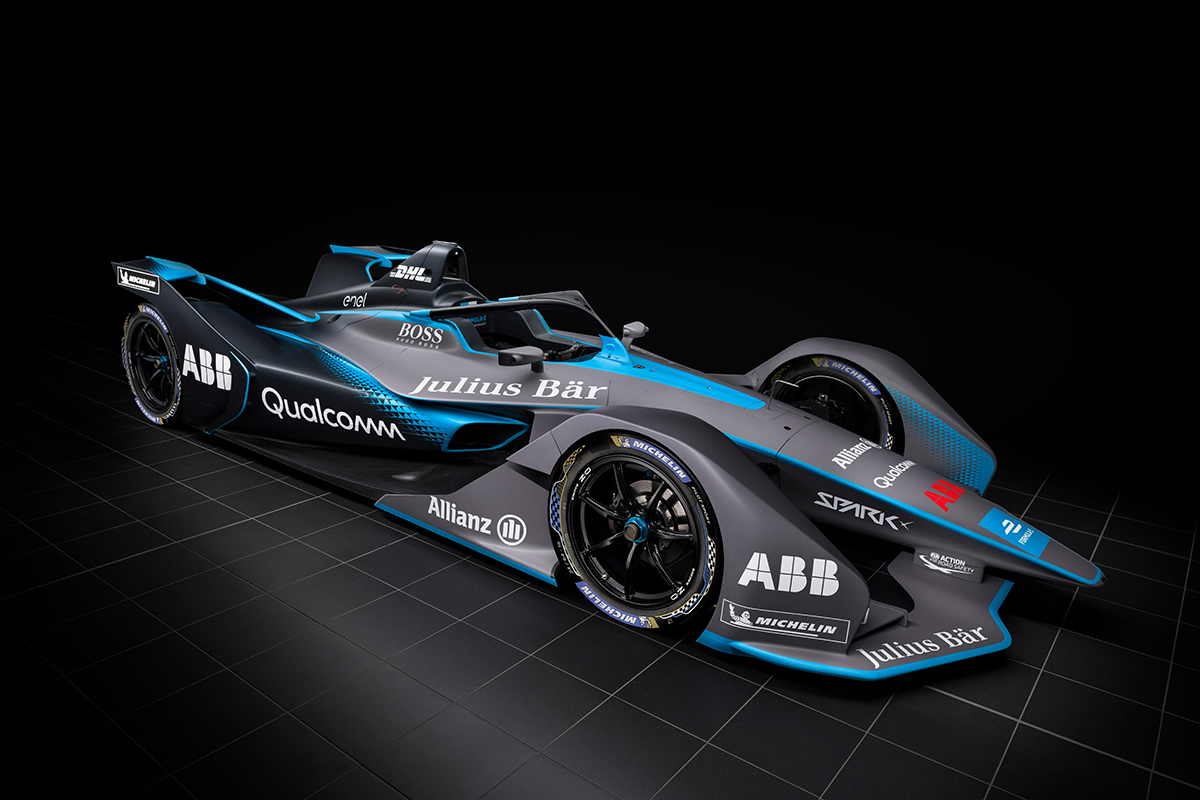
The FIA has confirmed Porsche’s entry into the 2019 Formula E championship. Porsche’s Formula E debut will coincide with the launch of the production version of the Mission E: Stuttgart’s first all-electric sport car and part of the six billion Euros being invested into electric mobility up to the end of 2022.
Former head of the 919 project, Andreas Seidl, will be responsible for the technical development and the execution of the Formula E programme. “The possibilities and performance of electric cars have been a central topic at Porsche for quite a while,” says the Team Principal. “The deeper our engineers get into the topic, the more fascinating the solutions become. We can’t wait to receive our first vehicle in early 2019 and to test our own powertrain in it.”
Porsche unveiled the Mission E Cross Turismo at this year’s Geneva Motor Show: another take on the 800-volt Mission E Concept car blessed with 600 horsepower giving more than 500 kilometres of range. The production version may end up with slightly lower numbers, but it definitely won’t be cheap so it will need plenty of toys to show for the money. Four-wheel drive and four-wheel steering with the usual electronic driver aids should still take the four door, four-seater to sixty in 3.5 seconds, which will obviously keep people entertained.
The Gen2 Formula E car will also create some added entertainment compared to the current model, as drivers will finally be able to run a complete race without needing a car change in the middle of it. As a motorsport fan who pays no attention to Formula E, the upgrade is unlikely to have any impact on my perception of the series or of the brands taking part, but for those marketing the new Mission E to a generation that links E with excitement rather than lean-running eco superminis, the connections are excellent.
This website uses cookies to improve your experience. We'll assume you're ok with this, but you can opt-out if you wish.AcceptRead More
Privacy & Cookies Policy
Privacy Overview
This website uses cookies to improve your experience while you navigate through the website. Out of these, the cookies that are categorized as necessary are stored on your browser as they are essential for the working of basic functionalities of the website. We also use third-party cookies that help us analyze and understand how you use this website. These cookies will be stored in your browser only with your consent. You also have the option to opt-out of these cookies. But opting out of some of these cookies may affect your browsing experience.
Necessary cookies are absolutely essential for the website to function properly. This category only includes cookies that ensures basic functionalities and security features of the website. These cookies do not store any personal information.
Any cookies that may not be particularly necessary for the website to function and is used specifically to collect user personal data via analytics, ads, other embedded contents are termed as non-necessary cookies. It is mandatory to procure user consent prior to running these cookies on your website.