by John Glynn | Apr 18, 2015 | Classic Porsche Blog, Modified Porsche Hot Rods
Watched some Variant 1 KW Suspension going on a Grand Prix White Porsche 964 Targa earlier this week. It was interesting to follow the Porsche project as the rusty old factory dampers came off the 911, to be replaced by KW kit.
When it comes to upgraded Porsche suspension, KW kits are amongst the best available. The German brand with a penchant for finding fine detail on its ex-Formula 1 hydraulic test rig is a favourite of many winning race teams, particularly in the exhilarating VLN championship, so it’s no surprise that KW Suspension Variant 3 kits are common on Porsche cars used for fast road and track days.
The new three-way KW Clubsport adjustable coilover kits are one of my favourites amongst the firm’s 997 GT3 RS track day crowd, but the cheaper V1 and V3 kits are an affordable, quality upgrade for worn-out original suspension.
With prices starting at just over £1,000, the KW Suspension Variant 1 coilover kit is hard to beat. The struts are made from stainless steel, with corrosion resistant springs and bump stops. They also come with the top mounts, which are usually ruined on old 911s. This saves a few quid.
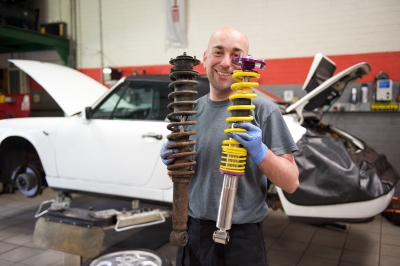
Variant 1 is TUV-approved, so maximum lowering is restricted to no more than 70mm: not that you would want to go quite this low in a classic 911, assuming you were serious about driving. Experienced suspension tech Ricky (above with old and new) carefully set the ride heights before fitting the kit, but the rust-resisting trapezoid thread and composite collar will move freely at any stage in the future, so a new owner could easily raise or lower the car using the supplied KW toolkit.
KW Suspension says that each Porsche suspension kit has been specifically tuned for the car in damper setup and spring rate. The new dampers reduce body roll when the suspension is in compression and give much sharper handling than anything fitted to 911 road cars as standard.

It probably sounds like I have swallowed the KW blurb on this, but I’ve road tested quite a few KW cars and no doubt they feel better to drive. One interesting comparison would be the Bilstein setup fitted to the 964RS I lived with for a few months. That was special, but there seems very little in it when the cars are on track.

by John Glynn | Mar 9, 2015 | Porsche News
Guido Lorenz has the job of Business Counsellor for the district of Rottenburg-Stuttgart. A student of Catholic theology from 1974 to 1980 at the University of Tübingen (home to some of the most influential religious thinkers of modern times), Guido took on his current role in 1983. He has been a sounding board and social advisor for Stuttgart’s workforce ever since.
Within weeks of starting his almost impossible appointment, Guido paid his first visit to the Porsche Zuffenhausen assembly lines. Last month, Lorenz spent two weeks working on the production lines, getting to know his workmates and understanding how things have changed at Porsche across three decades.

The Spirit of Porsche
“The previous structures were much more hierarchical,” notes Guido. “Today, every member of the team knows how to carry out every single operation. This improves the mutual understanding within the group. There is a really good team spirit among the colleagues here, regardless of gender, age or origin. Team leaders, shop stewards and foremen all make their contribution to this.
“It’s impressive how strongly all Porsche employees identify with the brand. When you look at the sports cars, it’s easy to understand why.”
Guido Lorenz on the Porsche production lines makes a decent PR story, but this man is not here to make companies feel good. His vocation lies with the workforce. As people will not open their hearts to him at the drop of a hat, he often works alongside his compatriots to develop trust and encourage communication. Previous missions have included spells as a bin man, mailman and long-distance truck driver.
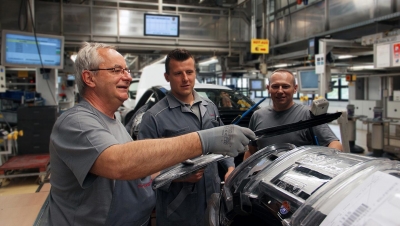
With additional qualifications in marriage guidance and psychological counselling, Lorenz has expanded his remit over the last thirty years to include both employed and unemployed people. Decent conditions, jobs for young workers and fair wages and distribution of wealth have never been far from Lorenz’s agenda, which one assumes must have caused some friction through his career.
Dean of Stuttgart, Monsignor Christian Hermes, recently led a celebration of Lorenz’s contribution to working life in the city. “I know that you experience solidarity with the workers, but also amongst the unemployed. Man and his work have not only an economic value, but a human dignity: we must not let this be threatened by our own consumption needs and the mechanisms of repression.”

Brought up as a Catholic, I met no end of inspirational people through that faith over my formative years. None were doctrine obsessed: they understood the joy of shared effort, and possessed a huge internal appetite for work. This is something I have certainly absorbed.
Any sprinklings of religious fervour left me long ago, but there is an enduring sense of solidarity and collective spirituality in the connections people make. It is comforting to see that Porsche is not oblivious to the gentle power of Guido Lorenz and others like him. Those gifted with Guido’s faith in humanity can help so many people to experience a meaningful life, without bringing heaven and hell into it.

by John Glynn | Feb 8, 2015 | Classic Porsche Blog, Project Cars
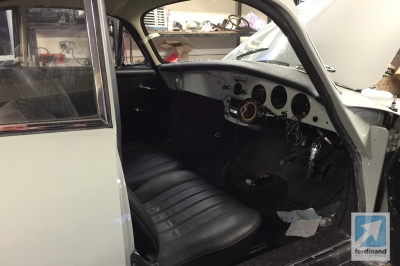
This smart Porsche 356 Carrera 2 is currently going back together following a forty-year spell as a project car. Owned by the right reverend Francis Tuthill, the main man took it apart in the 1970s when it had a bit of rust in the sills. It’s taken a mere four decades to find time to put it back together.
Before the 356 boys chime in with a million questions, I don’t have all the details to hand at present: it was a flying visit en route to somewhere else when Francis grabbed me with the usual: “you don’t want to be taking pictures of that. I’ll show you the real story.” One does not refuse such offers.

I hear this car is one of four right-hand drive cars manufactured: other sources reckon there were six. This is not Fran’s only four-cam project and it is going back together to be driven, although I don’t quite know where to at the minute. I’ll definitely be blagging a spin in it when done.
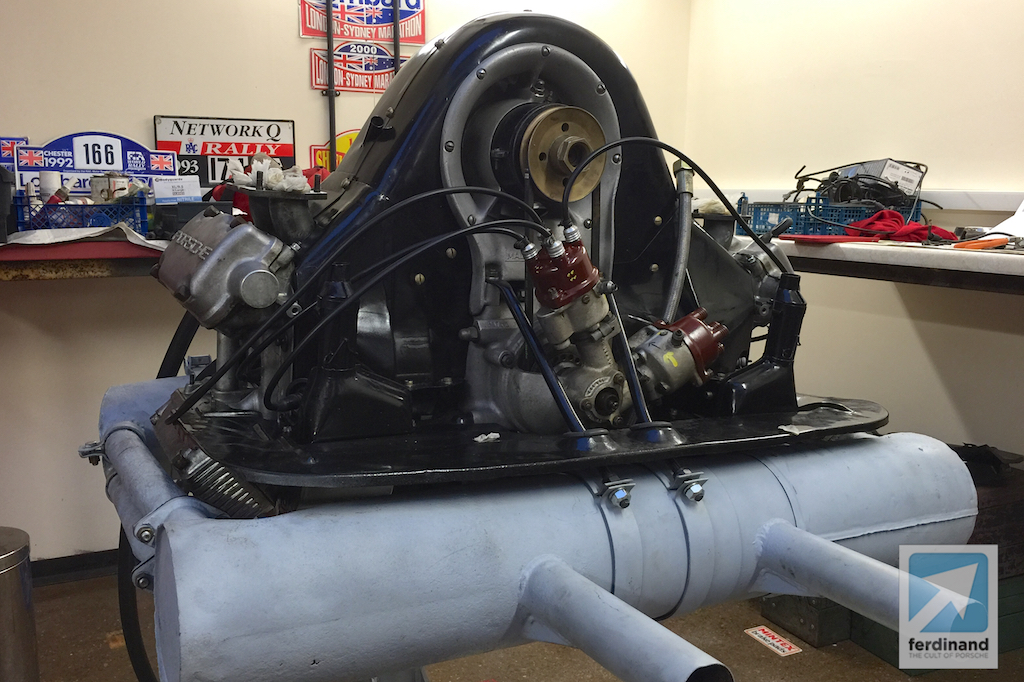
The Carrera 2 remains a rare bird, especially in right-hand drive. Fuhrmann’s four-cam engine reached its peak here in the Type 587 version: 1966cc of revvy flat four, delivering around 130 bhp.

The engine is shown here in a stand, which is where most servicing must be done with the four-cams. Wider than the normal engines, these four-cams come out when its time to do the plugs: hence why Francis called me down for a look. “You won’t see a thing when this is back in the car.”

I do like the Porsche 356. It still has such a great shape and Carreras were right on the pace of the early 911s: one reason there was so much dissent when the 356 was displaced by the new boy. Driving a ‘regular’ 356 is easy, relaxed, evocative. Light, direct steering and a welcoming cabin makes a very comfortable environment for mile after mile. How much it changes with a four-cam, I hope to report sometime soon.

by John Glynn | Jan 15, 2015 | Classic Porsche Blog, Modified Porsche Hot Rods
Swapped some good emails with Jonny, a fellow impact bumper 911 man earlier this week regarding an agreed insurance valuation for his newly-restored Porsche 911 SC. The car is just about finished, so it’s time to make sure that this investment is properly protected in case anything should happen. The car is absolutely lovely: well worth sharing on Ferdinand.
“The brief for the car was an ‘everyday’ hot rod based largely on standard components and some period accessories – hence ‘stock rod’,” says Jonny. “The car as purchased was scruffy but largely sound. The shell needed repair to both kidneys, sills, one inner wing and the oil tank aperture.”
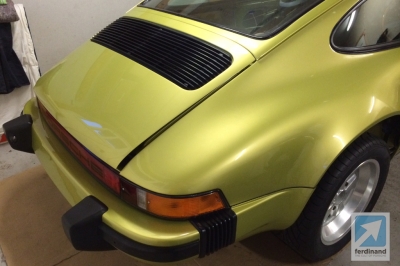
Porsche 911 SC Hot Rod begins
“I contacted well known body man, Barry Carter, about tackling the bodywork. He was at the right end of the country for me and has done some lovely metal restoration on 911s. Barry’s mission was ‘search and destroy’ all rust. After a lot of detailed repair work, I believe this has been accomplished.
“While Barry was working on the rust problem, he also addressed the metalwork in other areas that I was changing, to make the shell perfect. This included a mirror hole delete, side skirt delete, side repeater delete, rear fog light delete, front spoiler delete and rolling the wheel arch edges.
“When the bodywork was done, I stripped the car back to bare metal myself and the shell then went to Steve Utting at DC Coachworks. Steve carried out a complete colour change to Porsche Delphi Green – a 914 colour, similar to some 911 shades. The new paint extends to the wheelarches, engine and luggage bays.
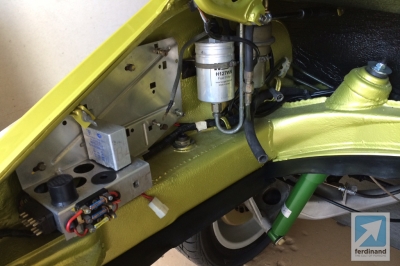
“Former Paragon engine builder, Lee Colbran, rebuilt the engine with standard pistons and cylinders (rebored and Nikasil coated) 964 cams, and SSI heat exchangers. We also backdated the heating: taking the secondary air blower out of the engine compartment. I rebuilt the Bosch K-Jet CIS injection and had the fan and housing refurbed. Mike Bainbridge rebuilt the transmission for me, also fitting a Quaife LSD to the car.
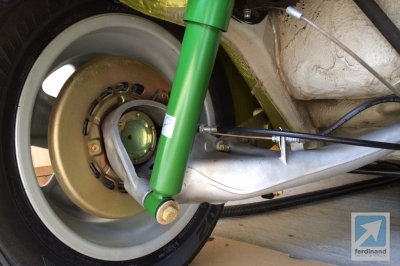
“There’s nothing wrong with standard SC brakes, so no upgrade was necessary. I had the calipers reconditioned by Classic Brake, and replaced every part of the braking system. All the suspension was also removed, stripped and refinished in the correct plating or powerdercoat. New suspension bushes are a mix of standard and Superpro, as this is not a track car. Rear torsion bars went to 26mm, with a 22mm front anti-roll bar. Turbo tie rods were fitted to my 911 SC, as they make a difference.”
Jonny is an electrical engineer, so there are some clever bits and pieces on the electrical system – more on that in a later post. The interior is very period, with the original brown dash, door caps and trim, some manual Porsche sports seats and very smart Mercedes “Brazil Brown” carpet, as it tones well with the Porsche palette. The door panels and rear quarter trims are covered in “Domino” Alcantara. Rear seat backs have been deleted but the handy “jump seat” cushions are still in place.
Kudos to Jonny for getting in early and snapping up an SC before prices went crazy, then working his way through a detailed “update” restoration so the car can be used every day. Undervalued for far too long, the 3-litre 911s are still my favourite and I love what Jon has done with the Delphi Green stunner. Looking forward to having a drive sometime soon.

by John Glynn | Dec 12, 2014 | Classic Porsche Blog, Project Cars
Spent a morning this week at Tuthill Porsche, watching a proper 3.0 911 RSR engine go together. The most interesting thing about this engine is it was built using rare factory sand-cast engine cases: something apart from the norm and a nice link to RSR heritage.
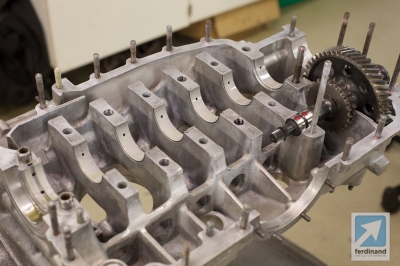
Richard Tuthill has always promised to help with a top end rebuild on my Carrera 3.0 engine, currently resting with tired valve guides and a cracked head stud. The C3 engine has much in common with the RSR motor, so there was plenty on this build that would also apply to my own. I’d seen these cases when they first arrived in the parts washer, so looked forward to watching them come back to life: it was going to be educational.

Engine builder Anthony served as Francis’ apprentice and has since built countless Porsche engines and transmissions, using a mix of Fran’s teachings and knowledge gleaned from other engine gurus. It will be a few years before he has the wrinkles to countenance his impressive store of knowledge, but no doubt he’s en route to the top of his field.
As you’d expect, this was not the first time the race engine had been stripped, and some bits needed a rethink. When the original crank was found to need oversize bearings at three grand a set from our German friend, it made more sense to keep the ancient crank safe, and prepare a new crankshaft to RSR spec.
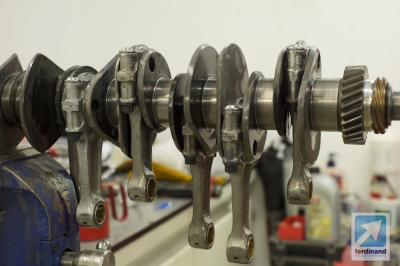
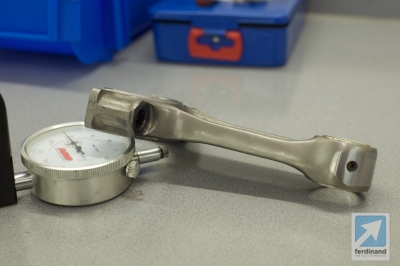
The 6-bolt crankshaft was knife-edged, polished and nitrided (hardened in a 72-hour process) before being fitted with the original connecting rods. These were original and I thought quite lovely. Edges had been ground and polished before the rods were shot peened: nothing overly dressy. These engines are all about go, not show.

One illuminating job on the crankshaft assembly was stretching the rod bolts using a rod bolt stretch gauge. The bolts are at max clamp load when stretched by 10 thousandths of an inch, so Anthony’s junior held the ARP gauge while the bolts were stretched up to spec.
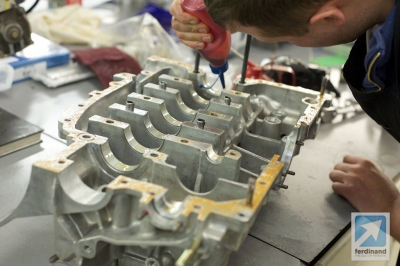
With the crankshaft assembled, the builder spent a long time cleaning and lubricating the first case half, installing oil seals, oil pump, timing chains and intermediate shaft before dropping the crank in, adding more seals, using a variety of sealants to prep the case further, then turning his attention to the other case half.

This was given the same close attention: lots of cleaning, lubrication and then a different sealant. When everything was ready, the case halves were joined together and Anthony worked quickly to get it all buttoned up while the sealant was curing. Next job was to install pistons and cylinders and measure the heights and CCs, so they could be sent off for finishing. More on that next time (it’s good).