by John Glynn | Mar 13, 2013 | Porsche People
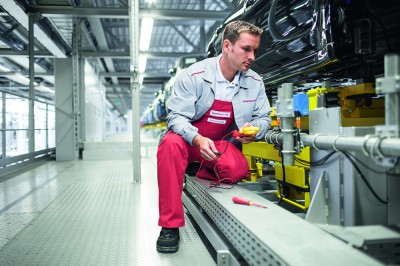
Porsche’s Leipzig plant currently employs 1,150 people. This seems like a low number, but if you watched the ‘superfactories’ programme on the facility, you’ll know how much technology is used there.
Today’s announcement that the Leipzig labour force will double when Macan arrives in a few months says everything about volume aspirations. Porsche’s baby SUV could be the motoring equivalent of the iPad, and Stuttgart is gearing up to take full advantage when demand kicks in.
Porsche has just announced a recruitment programme for 1,000 production workers at Leipzig, including 400 engineers for production planning. The company seeks “skilled employees with professional qualifications in body construction, painting, assembly and quality assurance – to include operators, staff for ultrasonic testing, staff for metal sheet forming (and others).”

Unsurprisingly, interest is through the roof. The company has already received 16,500 applications with a further flood expected to follow the official announcement. “The facts speak their own language,”said Siegfried Bülow, Lepizig’s Chairman. “[We offer an] attractive environment and an emotional product. Moreover, the jobs here are future-proof, because in Leipzig all signs point to growth.”
Insert something here about pride and falls, but I doubt Siegfried is wrong. Porsche is putting €500 Million into converting the site to a fully-fledged plant with paint shop and body assembly: its biggest building project ever. “In the summer, we will commission the new paint shop, so the first customer vehicle will roll off the assembly line at the end of the year. The schedule is a challenge, and the plant extension a truly mammoth task. But we are going all out for it,” declares the boss man.
Link here to more information on the Leipzig Porsche plant extension and 1,000 new jobs on offer.
Learn more about Porsche Jobs on Ferdinand Magazine – you know you want to!

by John Glynn | Mar 13, 2013 | New Models, Porsche News, Race and Rally
Porsche has upgraded the 997 GT3R ahead of the 2013 season. We’ve already covered some of this in our earlier Falken Porsche N24 RSR blog, but it’s useful to look at Porsche factory pictures of the R.
The most obvious changes are to the aero package. Front bumper, wings, sill trims and underbody diffuser have all been optimised to produce additional downforce. The rear wing has been widened to full body width.
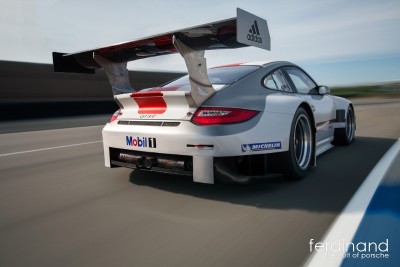
Longer wheelbase, increased track – 50mm wider front and rear – and 12-inch front wheels combined with improved aero performance allow higher cornering speeds.The 4.0-litre flat six produces 500 hp, sent to the rear via a 6-speed sequential dog ‘box with air shift and steering paddles. This is fast and smooth, and should be reliable.
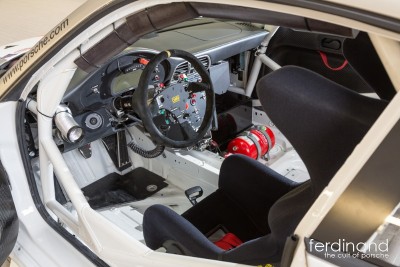
Porsche offers a conversion kit for older GT3Rs at €45,500 plus tax. I wonder how many Euros that is per Nurburgring tenth of a second.
by John Glynn | Mar 7, 2013 | New Models, Market & Prices
Let’s consider a Porsche 911 GT3 Manual to PDK comparison. You grew up driving with three pedals and enjoy using a manual shift. You currently own a 997 GT3 RS: potentially the last RS to be made with three pedals. Porsche now says you should abandon the idea of a manual shift and embrace two pedals forever. So what are the chances of that happening?
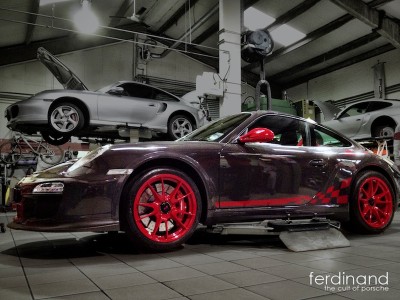
This spotless Gen 3 997 GT3 RS has just 1,100 miles on the clock. Recently offered for sale, it went in under 24 hours. “The 991 GT3 situation with PDK-only has increased enquiries for the best examples of 997 GT3 RS,” says the salesman. “We have a growing waiting list for these cars and always want to find more used Porsche 911s for sale.”

No matter how PDK is put over: with launch control, paddle shift, seamless acceleration and all the rest, it’s still essentially an automatic transmission and that’s just not for everyone. I like manual transmissions: the feel of a clutch pedal, the action of the shifter, the process of matching revs with conditions. But I am not a GT3 owner and am unlikely to be in the very near future, so my opinion makes no odds. What do owners think? Do you jump from the three-pedal Porsche train to two, or hang on to your three-pedaller?
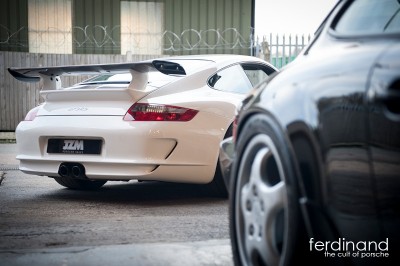
Cost to change is one consideration. Latest data from Porsche dealerships says a Porsche owner in the UK running a late-ish Gen 2 997 GT3 with under 10k miles will need the car plus £40K to get a 991 GT3. It’s going to take a lot to loosen those purse strings.
Porsche 911 GT3 Manual to PDK comparison
Will the new car be such a huge step forward? Gen 2 997 GT3 RS has 444 hp in 1370 kilograms, if you abandon some options and add big bucks for ceramics and lightweight seats. The RS has slicker induction and higher compression than the GT3. A single mass flywheel connects to shorter gearing, and the whole lot shrieks through a titanium exhaust. Max RS torque comes higher up the rev range, but those tighter ratios mean it’s more fun to scream.
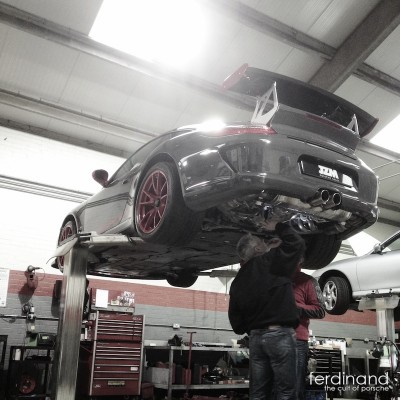
However good the 991 GT3 and RS derivative prove, the 997 GT3 RS is huge fun. The controls are responsive: old-school steering offers exceptional feedback and is never too heavy. Wider track front and rear means that only on track will you get to the limits of grip: owners of so many UK GT3s regularly take them to the Nürburgring, and any track day at Spa shows a few RSs in the mix.
Set up to deliver excitement on track, the GT3 RS offers a monumental 911 experience. There are driver aids, sticky tyres, dynamic engine mounts and more, but you still have to work those three pedals to get the best from the car.

Given how good the old car is, it’s hard to see how shaving a few tenths off using two pedals and paddles will improve upon driving rewards. A high cost to change now versus uncertain long term return on investment asks quite a bit in this economy, and Porsche dealers may rue Stuttgart’s PDK-only decision.

by John Glynn | Mar 5, 2013 | New Models, Porsche News
The new Porsche 911 GT3 is packed with technology, but one of the most interesting aspects is this active rear-wheel steering.
Active rear-wheel steering/four-wheel steering is perhaps best remembered on the Honda Prelude of the late 1980s. In typical Japanese style, the effects were overly obvious, so I remember the Prelude as curious to drive, but the Honda’s mechanical 4WS system (below) was much vaunted by one of my favourite motoring writers (and noted Porsche hater), LJK Setright. BMW used the system on the 850 CSI, and it is still found on current 5-series.
Porsche patented a form of passive rear-steer on the 928, with its famous Weissach Axle, but active is a whole new ball game, made easier by the introduction of electric power steering. Active rear wheel steering has been added “to achieve higher precision and lateral dynamics”. Depending on the speed, the rear steers in the same or opposite direction of the front wheels, improving stability and agility.
Other new modules to improve dynamics on the 991 GT3 include a fully variable electronically-controlled rear diff lock (sounds very very trick), and the dynamic engine mounts. The 20-inch forged alloy wheels with centre locks are also new.
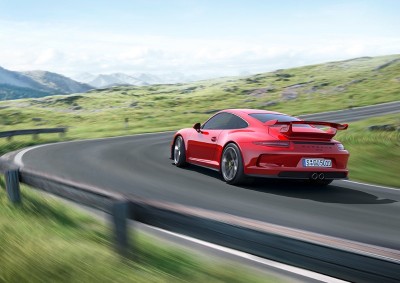
Based on the light, yet stuff aluminium body of the current 911, the 991 GT3 is 44 millimetres wider than a 911 Carrera S across the rear axle. Porsche says that the fixed rear wing makes a decisive contribution to the ‘exemplary’ aerodynamics of the new 911 GT3, which combines low air resistance with even more power.

That’s about as much as I can say on new 991 GT3 tech until we get some cutaway drawings from Stuttgart – normal service is henceforth resumed! I will blog about the 928’s Weissach axle, as that is quite interesting.

by John Glynn | Mar 5, 2013 | New Models, Porsche News
Initial response on the 73,000-likes Ferdinand Facebook page to first official pics of the all-new Porsche 991 GT3 – latest and greatest of the 911 line – can only be described as muted. Unless you want to talk about the lack of a manual transmission option.
I understand the rationale of a PDK-only production choice for the latest supercar, but am predicting a number of implications for the used Porsche market.
- Bragging rights for the “best driver’s 911” will now go to the 997 GT3 RS with ceramics and manual transmission.
- There will be an aftermarket manual transmission kit for the 991 GT3 down the road.
- Cost of PDK repairs on 991 GT3 will feature large in future buyers’ guides.

Regards bragging rights, 997 GT3 RS still has a ton of driving aids, so what negative difference the PDK as standard makes I don’t know. But predictions don’t always have to make sense – ask your man Nostradamus. I predict the debate will be less about outright lap times and more about driving pleasure: the feeling that you actually have input and control over the car. It won’t make sense to the lap time gods, but watch the forums for lift-off.

Aftermarket manual transmission on a 991 GT3 will be a huge headline and someone will definitely sink money into achieving this. The PDK version will still be faster, and the manual conversion is likely to be less than pretty, but someone will do it as there’s a buyer out there. They will need to solve a whole lot of software problems first, though.

PDK is heavy and who knows how reliable in the long run. One look at a technical drawing for the transmission shows what could go wrong with water or a voltage spike frying the gearbox ECU and sending everything moving forward at once. Never say never!
What do you think about the 991 GT3? Looking forward to buying one or not? I know you have an opinion! Mine is that a 1000-kilo 911 with 200 bhp and no aircon is enough for me just now.