Life as a Cayenne driver continues. Still loads of people asking what they are like to own, so time for another Porsche Cayenne running report.
I’m about 2,500 miles or so in now and fuel economy is bearable versus my Subarus: roughly 18-20 mpg over a mix of jobs and terrains. It’s about £107 to fill up on 95 RON, then you will get roughly 320-360 miles from a tank, which is just over 20 mpg at best. If you know a Cayenne tank is 90 litres then my maths includes leaving 10 litres in there as a constant.
I’ve been looking at later Cayennes: maybe 2008 GTS. Later cars have slightly different trim and are said to be more sorted (debatable) but the downside is probably £12-13k current cost to change. Really don’t want to spend that while there is no roof on the house (builders are in), and all I am really missing right now is heated seats, so will keep my 2004 for a while. Reliability is looking good, although this starter issue I have had since buying it is bugging me now, so I am going to change that part.
Keeping it means I really want to fit my fuel of choice: LPG (propane). A conversion is circa £1600 using proper gear, tank fits in the wheel well and gives quite a nice price advantage at around 52p a litre plus VAT, but it would take me 18 months at current mileage (1200 monthly) to earn the cost back. Not sure I will keep this for two years so up in the air at the minute. If I get another client further away and my miles climb past 1500 monthly, then I will start thinking about it seriously.
DIY jobs are ongoing. I took it to Rob Campbell at Racing Restorations in Pershore last weekend to work on my 924 Turbo rebuild, but of course we started messing with the Cayenne. The car is Cat D salvage: accident repaired following a tap on the front right corner, so we had a look at the panel gaps on that and adjusted the front wing and bonnet. Turned out my NSF headlamp was rattling around so that was fixed (I could write a feature on how these are fitted to the car). We also straightened the driver’s door, which was slightly twisted. Rob is great at this sort of stuff so took less than an hour.
The wing is still a bit bent where it was repaired, and I could be fussy about the paint, so I may fit a new one. I know if I get into that then I have grown attached and LPG will be next. I’ve also fitted a replacement towbar with Rob’s help and bought some winter wheels and tyres. These were CHEAP so I am chuffed. In fact, everything so far has been very affordable.
Running costs to date on Porsche Cayenne S:
Pollen Filter £8
2 x sets wheel Centre Caps (originals nicked) £14 (ebay)
Wireless DVD headphones new foam £3 (ebay)
Used Detachable Towbar plus Ball inc carriage £60 (ebay)
New footbrake return damper £23 (Porsche Silverstone)
Set 18″ wheels for Winter £102 (ebay)
Set part-worn winter tyres £30 (ebay)
Total spent to date: £240
The wheels and tyres were excellent bargains. Tyres have enough for this winter and I will buy another set with more of a mud profile, so good for thick snow. Don’t give me any grief about buying part worns – I’ve run good part worns on my own cars for most of my driving career and never had a problem on them. New tyres for the Cayenne are £800 to £1000 a set and no way am I paying that with nine other cars in the fleet. Your own car is on part-worns right now: check and inspect them properly and err on the side of safety is my philosophy. That said, I put new tyres on the wife’s CRV, as I don’t get to check it that often.
Anyway, I can see my Big Pig is enjoying its tyres, so am already watching out for good road rubber. Brakes are cheap enough, with Mintex discs and pads costing about £120 for front axle set, £110 for the rear. This starter will cost about £100 to be reconditioned, plus the cost to pull the manifold off and back on. Apart from that, it will be due a service soon to get ready for winter. I plan to change the brake fluid, drop the coolant and make sure that rear screen washer system is all tip top. Last thing I want is a floor full of screenwash in the middle of winter.
Just re-reading what I am writing, I think we know I am eventually doing LPG on this car. Must start tracking down the history.
SHARE • EXPLORE • SUPPORT
Ferdinand blogs my freelance adventure with Porsche at the centre. To support the blog or engage with me in other ways, you can:
I’ve had this irritating wiring problem with the gearshift on the Cayenne since I bought it. The manual shift on the Tiptronic shifter/gear lever doesn’t work, but the steering wheel buttons are fine. After a few miles driving, the gear display in the gauge cluster will default to ‘D’ and no gear is shown when using manual shift.
You want to see the gears and shift a Cayenne manually, as driving along in D is the least rewarding way to go. Porsche Tiptronic is all about performance with convenience and when it’s working, it does well with the V8 engine. Shifting on the buttons or the stick as you exit a corner or approach an ascent is the way to keep these things cooking: waiting for the ECU to decide to shift down or kicking down and burning needless fuel is hopeless.
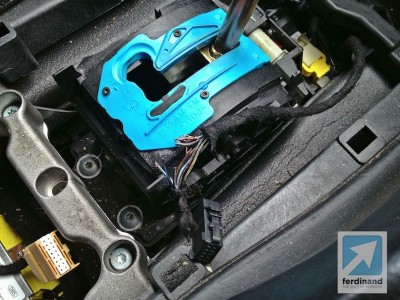
I found this thread on Rennlist where two pointers were raised: magnets on the shift cover or water in the footwell. I stripped the entire centre console out and had a look. Turned out my problem was neither: the wiring to the shifter was chewed up, for some reason. I spliced in some new stuff, heatshrunk over it and put it all back together, giving the centre console gubbins a good clean at the same time.
Starting the Cayenne up, the display worked and shift looked good. Manual was now appearing in the cluster and the stick was working well. I call that a win: maybe it will solve some other stuff too.
SHARE • EXPLORE • SUPPORT
Ferdinand blogs my freelance adventure with Porsche at the centre. To support the blog or engage with me in other ways, you can:
Needed a break from writing today, so took a hour off to chase some mechanical niggles and do some DIY maintenance on my 2004 Porsche Cayenne S.
I’ve not been super impressed with the audio quality from the PCM 2.1 system so far. It’s hard to believe Porsche could ship such bad sounds. Radio reception is absolutely tragic, and playback from CD not much to write home about.
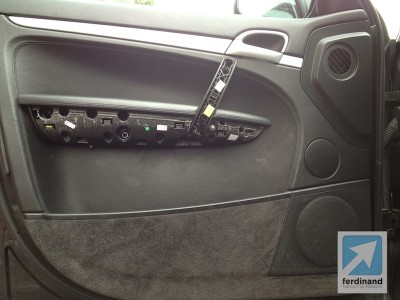
As a long-term car hi-fi geek, I’ve got a lot of quality audio components in the garage, so thought I’d strip a door card off and look at what the Cayenne packs into those massive enclosures. Getting the card off was easily done thanks to Renntech – membership there is the best money I’ve spent on this car so far. It seems like every Porsche tech question you could ask is covered on Renntech or the Rennlist Cayenne Forum: I would be stuffed without them.
I found the PDF for the door card removal and off it came. Look at that woofer! Should definitely sound better than it did. I checked all the connections and fixed a dislocated rubber speaker ring that was rattling. Then sat in the truck and played with some audition discs. Turning the loudness off was a big step up. It sounds a lot better now, though I may still do something with the front end and get more bass in the trunk.
As I’m not selling the PCM this week, I left it playing and did a few more bits. I had been warned me about the rear washer pipe which can become disconnected behind the driver’s A-pillar, so I had a look at that. Apparently that can pour water into the ECU – which has already been replaced on this Cayenne.
Taking the A-pillar trim off was easy thanks to Rennlist. Getting it back on was a pig but let’s gloss over that. I found the pipe and also a kink in the line – no doubt a cause of the thing popping off. I used a cable tie to stop the kink, and put it all back together.
Turning on the squirt was an experience, as it streamed down the width of the screen. I got one of the kids to work the switch and it was coming out from around the third brake light. Obviously a pipe was disconnected.
Rennlist told me how to get that light out – you split the spoiler from inside the tailgate. There’s a lot of gear underneath that roof spoiler! I reckon one of my aerials might be U/S so will have that checked out.
Anyway, I got the brake light out and shot some compressed air though the jet, put it all back together and it works, although there is still a bit coming from the light. I’m sure the connecting pipe has gone hard, so will get a new bend to replace it.
Got a few more jobs to do but am on some deadlines for tomorrow. Back to work!
SHARE • EXPLORE • SUPPORT
Ferdinand blogs my freelance adventure with Porsche at the centre. To support the blog or engage with me in other ways, you can:
Ferdinand Porsche Magazine’s Project 924 Turbo restoration was finally covered in fresh paint yesterday. I might be slightly biased, but the finished product really floats my boat.
You remember I bought the silver 924 Turbo on eBay last year from a Porsche barn up in Norfolk. I had the car delivered to best mate Robert Campbell at Racing Restorations in Pershore, Worcestershire, where Rob’s guys started picking through the mechanical work.
This included some rewiring, an alternator rebuild, steering rack overhaul and other works. I still have some bits to do before it can go to MOT, but the focus recently turned to bodywork when an unexpected slot opened up in the Racing Restorations paint schedule. While vintage sportscar specialist Rob is normally booked up six months in advance, delays on an Alfa Romeo restoration meant the 924 could claim a week and slip in.
Car guys talk lots about paint and how long it takes, but painting takes next to no time: just four hours on the 924. The preparation for paint took a full five days! Thanks to a rust-free chassis and (some) good panels, bare-metalling the 924 and getting it in primer took from Monday to Wednesday. Rob primered it on Wednesday night, and left it to bake for a day.
Flatting the primer took another day, so on Saturday this weekend, we drove it into the paint booth just vacated by a custom-painted McLaren MP12-4C, then spent a couple of hours degreasing the bodywork and wiping it off with tack rags before the painter did his thing.
The 924 Turbo now has four coats of the most expensive two-pack primer I could buy. The body has three coats of paint – Porsche code L97A – and three coats of lacquer. It looks pretty good and won’t need much polishing: a quick mop, pick out a few flecks of dust and that’s it.
I’ll start putting this back together next week – should be some fun getting it done. No doubt I’ll spend much more on new body trim bits than originally intended. Let me know if you’ve got a NOS rear bumper rubber lying around!
Last Saturday was spent in the Ferdinand Cayenne, doing some eBay pickups and drop offs in London and the wilds of Essex before heading to a client to catch up on what’s been happening there. I found this big shed in a field (above).
It was a boiling hot day, with temps on the dash display showing a stunning 42 degrees when I got into my lovingly-nicknamed ‘Big Pig’ to come home. Before that, the delights of Palmers Green and Cockfosters in London on a typical Saturday, with meandering seniors parking anywhere and everywhere, and stopping their cars mid-street to talk to neighbours. Can’t wait for my turn.
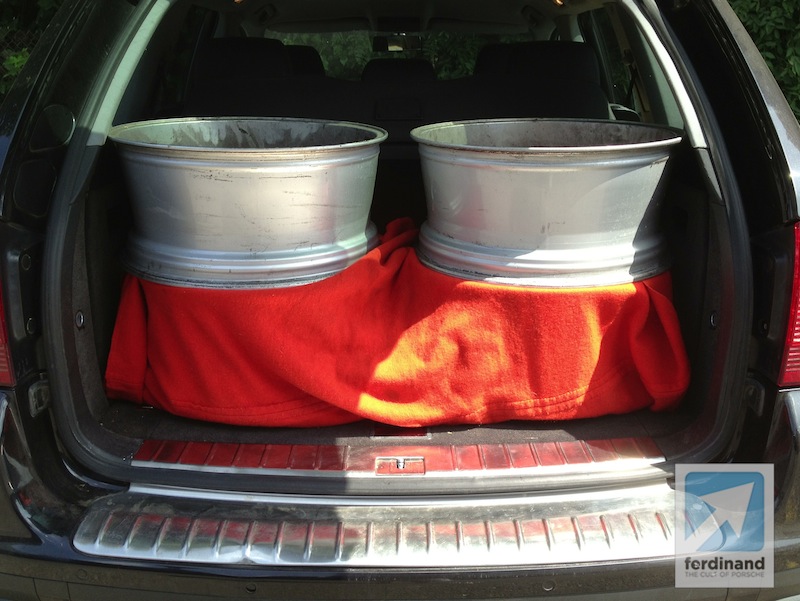
Once I’d sorted the PCM sat nav by sticking my Garmin to the front of it, the Cayenne made light work of the morning’s challenges. That boot (trunk) showed its limits when I arrived at a breakers to collect a set of 20-inch wheels I had won. Four wheels that would fit flat in the Subaru had to be stacked in the Pepper: not a great tribute to luggage space.
One weak point of the Cayenne since pickup has been the air con. I had it apart last week for a quick visual check, but the fan was still screaming when run at full tilt and struggling to cool the car down in these temps. I’m happy to knock Porsche a bit for selling shoddy engines in 996s and Boxsters (latest thing now affecting engines is stretched timing chains), but even I know they can make working air con, and much of the system in mine is brand new.
Mike had a think before suggesting pollen filter as a likely culprit. Apparently the filters get greasy, sucking up air from right above the exhaust manifold. Sure enough, when he took it out it was choked with a greasy film of dust. A new one cost all of £8.60 – who said Cayennes were expensive to run?! Problem solved in less than a minute: palatial cabin restored.
Next was a code read on the just-updated Porsche PIWIS system, so all the very latest diagnostic codes. A few things came up, including a camshaft position sensor which is known to be an issue on some of these. First logged many miles ago but ‘not present’ on code read. This means it is popping up but not stuck on all the time. It was pretty cool to watch real-time cam timing coming off the engine: very interesting.
We’ll watch this cam timing sensor and change if it it keeps on. Also had a play with setting rear park sensor proximity live on PIWIS to no avail – I’m going to have to change a few. My gear selector on manual is not working – some issues with dashboard gear display also. It locked in neutral on me once while in London traffic: more nosey poking required.
Ferdinand’s Porsche V8 is holding steady at 20 miles per UK gallon with mainly B-road and school run use. Rises swiftly towards the mid-20s when on the open road and the sometimes maligned six-speed auto is more than enough for UK motorway speeds: even 90-ish is not too loud. That nose might look a bit off when parked, but it does the trick for slipperyness and wind noise at speed on the highways.
A full tank will do about 400 miles if you run it scary dry. I’m filling up at 350 and running ordinary 95RON at the minute with no issues. I’ll try a few tanks of 99 soon and see what that does for it. Still loving the Cayenne, its ample strengths and its interesting foibles.
SHARE • EXPLORE • SUPPORT
Ferdinand blogs my freelance adventure with Porsche at the centre. To support the blog or engage with me in other ways, you can:
This website uses cookies to improve your experience. We'll assume you're ok with this, but you can opt-out if you wish.AcceptRead More
Privacy & Cookies Policy
Privacy Overview
This website uses cookies to improve your experience while you navigate through the website. Out of these, the cookies that are categorized as necessary are stored on your browser as they are essential for the working of basic functionalities of the website. We also use third-party cookies that help us analyze and understand how you use this website. These cookies will be stored in your browser only with your consent. You also have the option to opt-out of these cookies. But opting out of some of these cookies may affect your browsing experience.
Necessary cookies are absolutely essential for the website to function properly. This category only includes cookies that ensures basic functionalities and security features of the website. These cookies do not store any personal information.
Any cookies that may not be particularly necessary for the website to function and is used specifically to collect user personal data via analytics, ads, other embedded contents are termed as non-necessary cookies. It is mandatory to procure user consent prior to running these cookies on your website.