by John Glynn | Feb 23, 2014 | Classic Porsche Blog
The name Ferdinand comes from an old Spanish conjuncture of faro, meaning journey and nano, meaning brave. Brought to Austria by the Habsburg dynasty, it spread from there to France, but the origins of Ferdinand are rooted in Iberia, as a traditional name in the house of Castile. In Spain and Portugal, the name is Fernando.
Of course we always have Ferdinand in mind, but we remember a different Fernando today. He is Adolf Ferdinand (Fernando) Roy Stock (above, in the shades): Portugal’s first ever rally champion, finished third in the Tour of Europe and was an Iberian champion in Porsche and Mercedes. Born February 23, 1914, Fernando was celebrated by his family today. Brother Jose sent me a note for his anniversary, and so we remember him too.
Seen here on the 1953 Monte Carlo Rally, Fernando was given the number one plate as lead car on the event. One of 112 participants to depart for Monaco from Lisbon, Fernando and co-driver Pinto Basto drove their early 356 1500 Coupe as one of a record 404 total starters and a highly appropriate 356 finishers.
For all the appropriateness of the finishing tally, Monte Carlo ’53 was not kind to the Porsches. Several of the 356s entered were excluded for being 2cm too low overall, the subsequent furore compounds the mockery earned by Monte organisers over the years. Remember the Mini Coopers.
So many people confuse great Porsches with pristine, ultimate speed machines. But real Porsche is here in these pictures. It is hope and ambition, struggle and risk, joy and pain. Motorsport teaches us highs and lows: don’t forget that all Porsches are born of racing.
Obrigado Fernando, and all those Porsche pioneers. Still a big part of our family!

by John Glynn | Feb 21, 2014 | Classic Porsche Blog, Project Cars
Another fun email exchange this week was with Jim in Down Under, concerning his 1967 Porsche 911 Soft Window Targa.
“The Targa is almost complete: all very good gaps, road registered and all electrics work. Only real problem is bad rust in a difficult spot around the pedal box area, fiddly to fix but will happen. Interior is so good that I plan to detail it to within an inch of its life and leave as is.

“About the only thing missing is the ash tray and they are a bit hard to find unfortunately (email if you can help – JG). Even the Targa top which needs full restoration is absolutely complete. The early cars had a lot more thin metal detail trim than later cars and they would be impossible to find and a nightmare to make, so good that it’s all here on my car.”

The left-hand drive Porsche came to Australia from the US (left hand drive cars over thirty years old are OK in Australia) and sat in a barn for twelve years. Jim bought it from the importer and send it to Autohaus Hamilton for recommissioning, with instructions not to disturb the patina. Hamiltons flushed the fuel tank, cleaned the lines and rebuilt the carbs, sorted some failed bushes, a dud master cylinder and brakes, and it was ready to go.
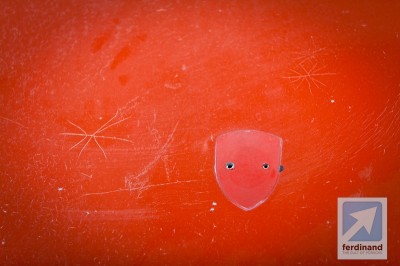
Too many people would sand and repaint this car, without savouring it as it came. Kudos to Jim for sticking with his patina-rich classic 911 Targa: it snaps, crackles and pops!
Got a Porsche project you want to share with the world? You know what we like to feature: doesn’t have to be a 911. Send us some pics and a couple of words: mail@ferdinandmagazine.com.

by John Glynn | Feb 18, 2014 | Art and Books, Classic Porsche Blog
The thrill of working with Ricoh UK to print our first Cult of Porsche book keeps growing. This week is my first design meet with the creative team, so Jamie and I have been chopping and changing the list of cars to feature in our three-book series.
We have lots of content to draw upon. As well as shooting brand new material only available in this series, there is some epic work dating back across our seven-year association. Do we try to pick our favourites for book one, or do we go with famous names, fancy locations, biggest build budgets?
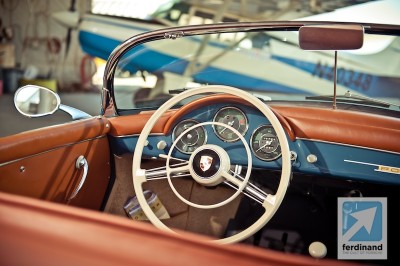
None of the above. Our work is not about money, stance or scene. It follows an atomic string of Porsche through standard cars and hot rods, race cars and projects. It is the ghost that rides in the passenger seat, occasionally inhabiting the driver.
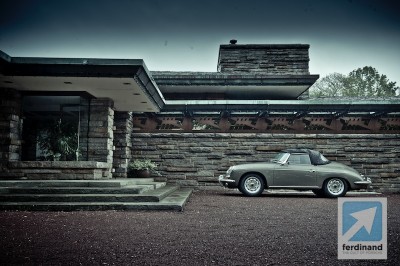
With light and shade at the heart of our material, it takes a special kind of photography to really tell the story. Jamie’s multi-layered images pull every ounce of drama from the subject. The energy Mr Lipman brings to our partnership is indescribably excellent.

Reviewing the work we’ve done to date for our first book together, I can’t imagine that many people get to experience chemistry this explosive. Working with James is the most exciting thing I have ever done. It’s not a job: it’s a match made in heaven. And so are these cars and their owners.

by John Glynn | Feb 11, 2014 | Classic Porsche Blog, Porsche News
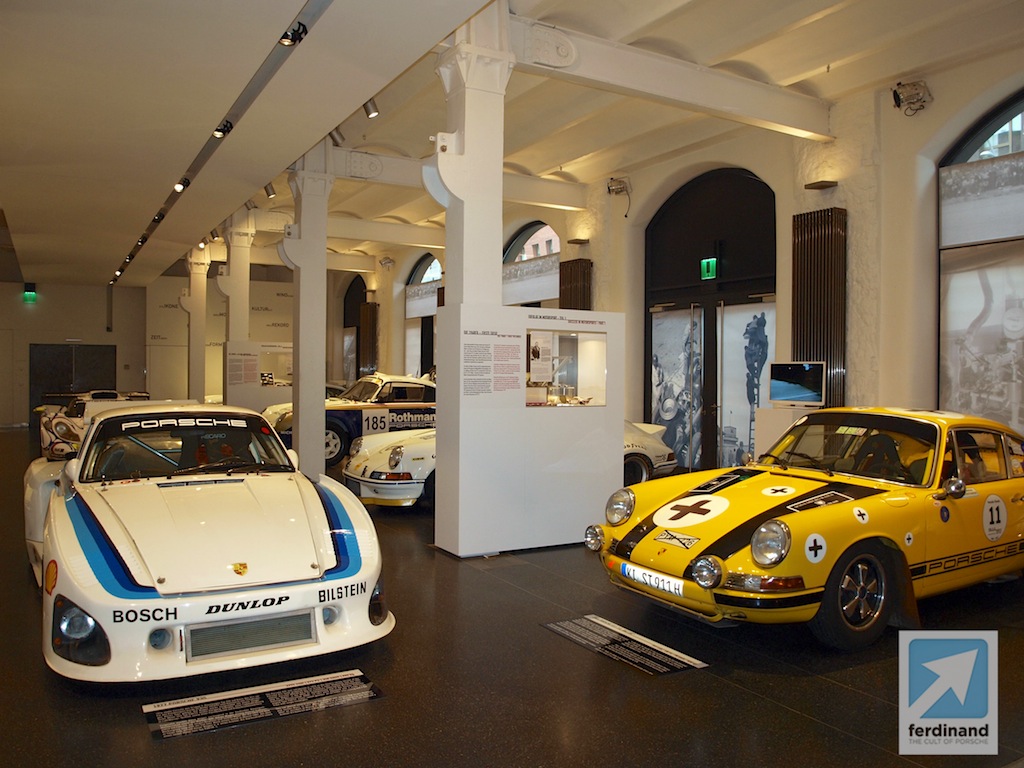
There’s a month left to see the Porsche 911 50th Anniversary exhibition at the Hamburg Prototyp Museum.
Until March 16th, the museum will be sharing cars from the Stuttgart Porsche Museum and private collectors, to showcase the 911’s varied history. In keeping with Hamburg’s raison d’etre, most 911s on show are prototype machines. The pics here are courtesy of the museum.
Exhibits include the 1959 Porsche 754 T7 prototype, 1965 Porsche 911 Targa prototype, a 1973 Porsche 911 Carrera RSR, 1986 Porsche Paris-Dakar 959 and a 1998 Porsche 911 GT1.
I’ve been meaning to visit the Prototyp Museum for years. The museum is famously home to much of ‘one-armed’ racer Otto Mathe’s collection of Porsche racing cars and assorted paraphernalia, including the adorable Porsche/Volkswagen mongrel “Fletzenflieger” racer (scrap racer).
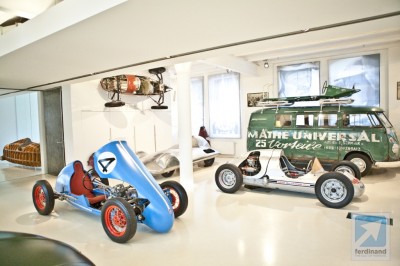
Legend has it that, when Otto arrived at the gates of Stuttgart to donate his unique Type 64 Berlin-Rome Porsche racer – sole surviving first true Porsche from a handbuilt run of three cars – back to the factory museum, a security guard told him to “move his old wreck” from in front of the gates. So it ended up at Hamburg.
Would be a very bad day at work for someone if that was true. In fact, Otto (mostly) owned the car from 1949 until he died in 1995. The plot has a few twists, but Otto’s wonderful T64 (below, centre) is now owned by another private collector and often shown at Hamburg, alongside the museum’s own recreation.

Hamburg’s replica consists largely of mechanical parts from one of the two other T64s manufactured under the direction of Ferry and Ferdinand Porsche. The parts were found buried amongst Otto’s spares collection, which was bought by the Prototyp Museum after his death. The Prototyp Museum painstakingly replicated the aluminium bodywork over a wooden buck formed by laser scanning the original.
The aluminium body now sitting in the Porsche museum is another beautiful T64 replica. I seem to remember the shell being presented as original when we visited, but no doubt I was caught up in the moment. The drama of that shape is unbeatable.
by John Glynn | Feb 8, 2014 | Art and Books, Classic Porsche Blog
I caught up with the talented artist Guy Allen this week. Guy’s the man responsible for the popular (sold out) t-shirts and print ranges previously offered at impactbumpers.com: our forum and website for fans of the 1974-1989 Porsche 911.
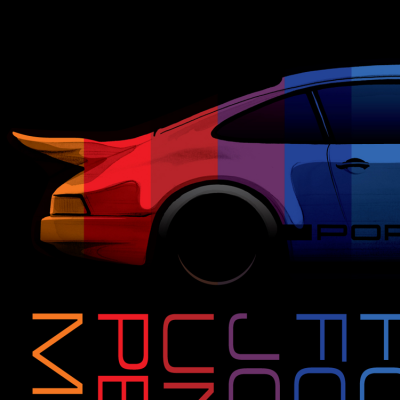
ImpactBumpers.com celebrates its 8th anniversary in Feb 2014, so I’m looking at doing some birthday shirts. While awaiting said fabulousness, take a look at Guy Allen’s latest Porsche print: the IROC Porsche 911 RSR, striped in Race of Champions colours.Very cool – of course I got one.

The sweet livery is also right on message with protests and adwork inspired by LGBT concerns at the Sochi Olympics. I read an interesting piece on Putin politics and diversionary tactics in The Guardian this morning.